The full list of Mimar Sinan's works in Edirne: the Selimiye, Ali Paşa Bazaar, Rüstem Paşa Caravanserai and more, with build dates, places and a walking route.
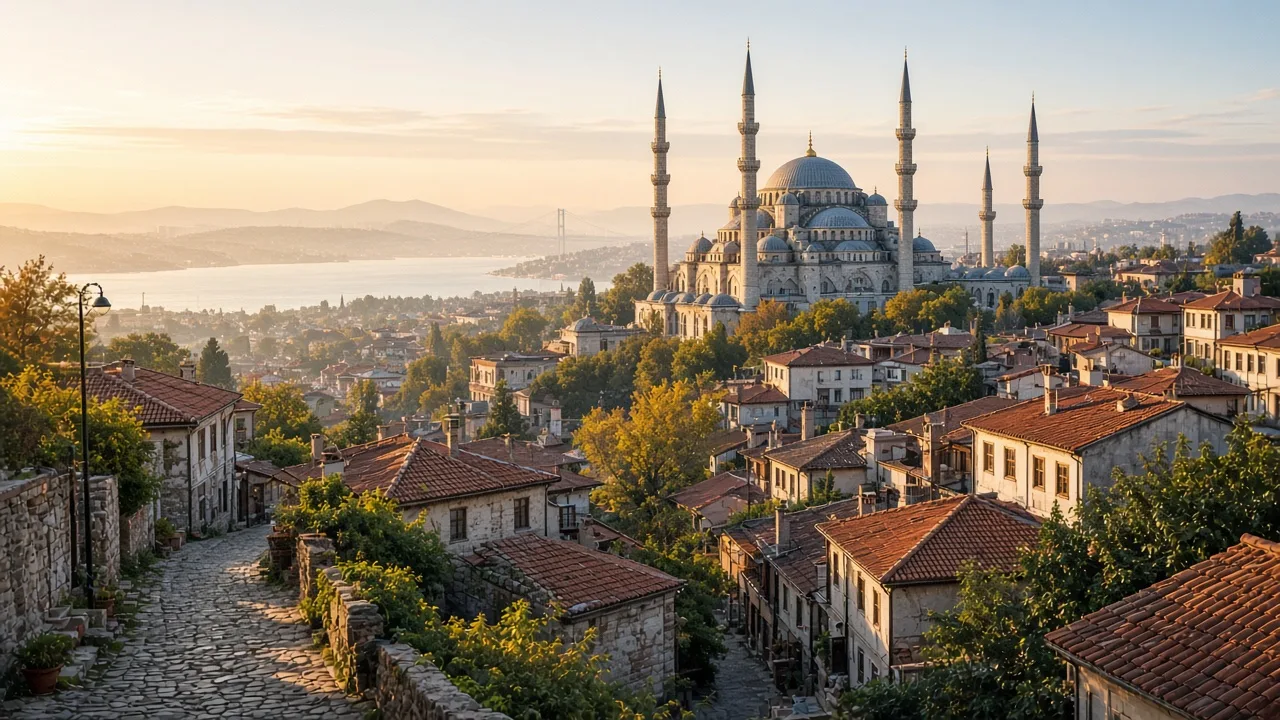
The first of Mimar Sinan's works in Edirne is the Selimiye Mosque and its complex. It is followed by the Ali Paşa Bazaar, the Rüstem Paşa Caravanserai, the Sokullu Mehmed Paşa Bath and the Defterdar Mustafa Paşa Mosque. Most of these buildings in the city centre are within a 10-minute walk of the Selimiye. Within the province, the Sokullu Mehmed Paşa Complex in Havsa is also Sinan's.
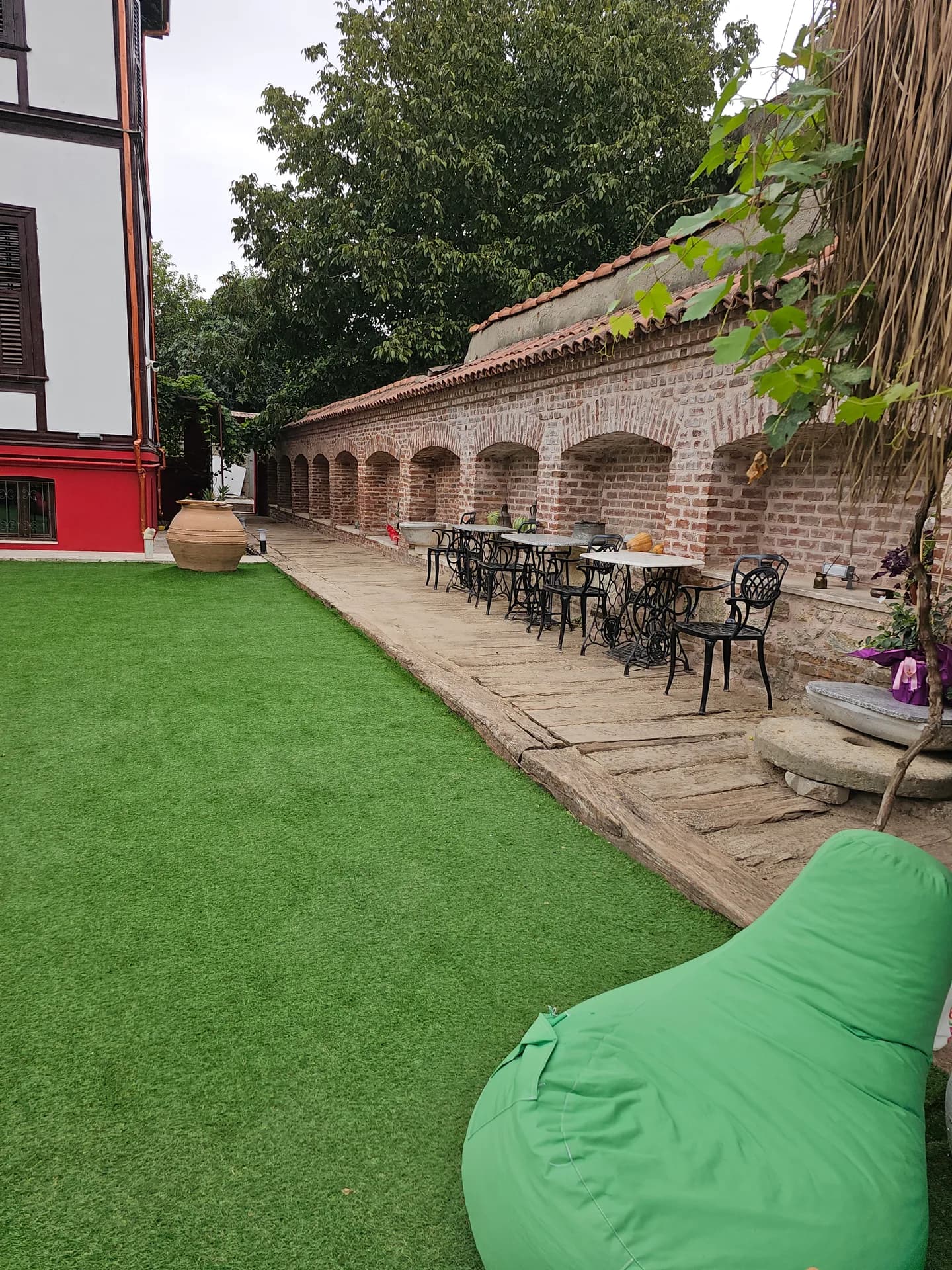
Café & Restaurant
Coffee, desserts and a relaxing break
Over about twenty years, from the 1560s to the late 1570s, Sinan changed the face of the former Ottoman capital. The works he produced under Süleyman the Magnificent and Selim II are still the city's most visited stops today.
Quick Overview
| Topic | Information |
|---|---|
| Main works with firm attribution | 9 (8 in the centre, 1 in Havsa) |
| Most famous | Selimiye Mosque, 1568–1574 |
| UNESCO | Selimiye and its Complex, 27 June 2011 (no. 1366) |
| Dome diameter | ~31.30 m (31.2–31.5 m depending on the source) |
| Minarets | 4 minarets, each with 3 balconies, ~70.89 m |
| Central route | ~2–2.5 km, half a day |
| Distance to Havsa | ~26 km, about half an hour by car |
List of Mimar Sinan's Works in Edirne
Sinan's works are known from the lists of his buildings written after his death, the Tezkiretü'l-Bünyan and the Tuhfetü'l-Mi'marîn (the tezkires). According to the TDV Encyclopaedia of Islam and Foundations (Vakıflar) sources, the buildings in Edirne with firm attribution are:
| Work | Year | Commissioned by | Today |
|---|---|---|---|
| Selimiye Mosque | 1568–1574 (opening usually given as 1575) | Selim II | Open for worship; UNESCO World Heritage |
| Selimiye Darülhadis Madrasa | Completed 1570–71 | Selim II | Museum of Turkish and Islamic Arts |
| Selimiye Darülkurra Madrasa | Between 1569 and 1575 | Selim II | Selimiye Foundation Museum |
| Selimiye Arasta (eastern shops) | 1568–1574 | Selim II | In use as a bazaar |
| Ali Paşa Bazaar | 1568–69 (1560–65 in some sources) | Semiz Ali Paşa | In use as a bazaar |
| Rüstem Paşa Caravanserai | 1560–61 (1554 in some sources) | Grand Vizier Rüstem Paşa | Accommodation |
| Sokullu Mehmed Paşa Bath | 1568–69 | Sokullu Mehmed Paşa | Standing; Foundations property |
| Defterdar Mustafa Paşa Mosque | Second half of the 16th century | Defterdar Mustafa Paşa | Open for worship |
| Havsa Sokullu Mehmed Paşa Complex | 1576–77 | Sokullu Mehmed Paşa | Mosque and some parts standing |
Dates may vary by a year or two between sources. The table follows the dates given by the TDV Encyclopaedia of Islam.
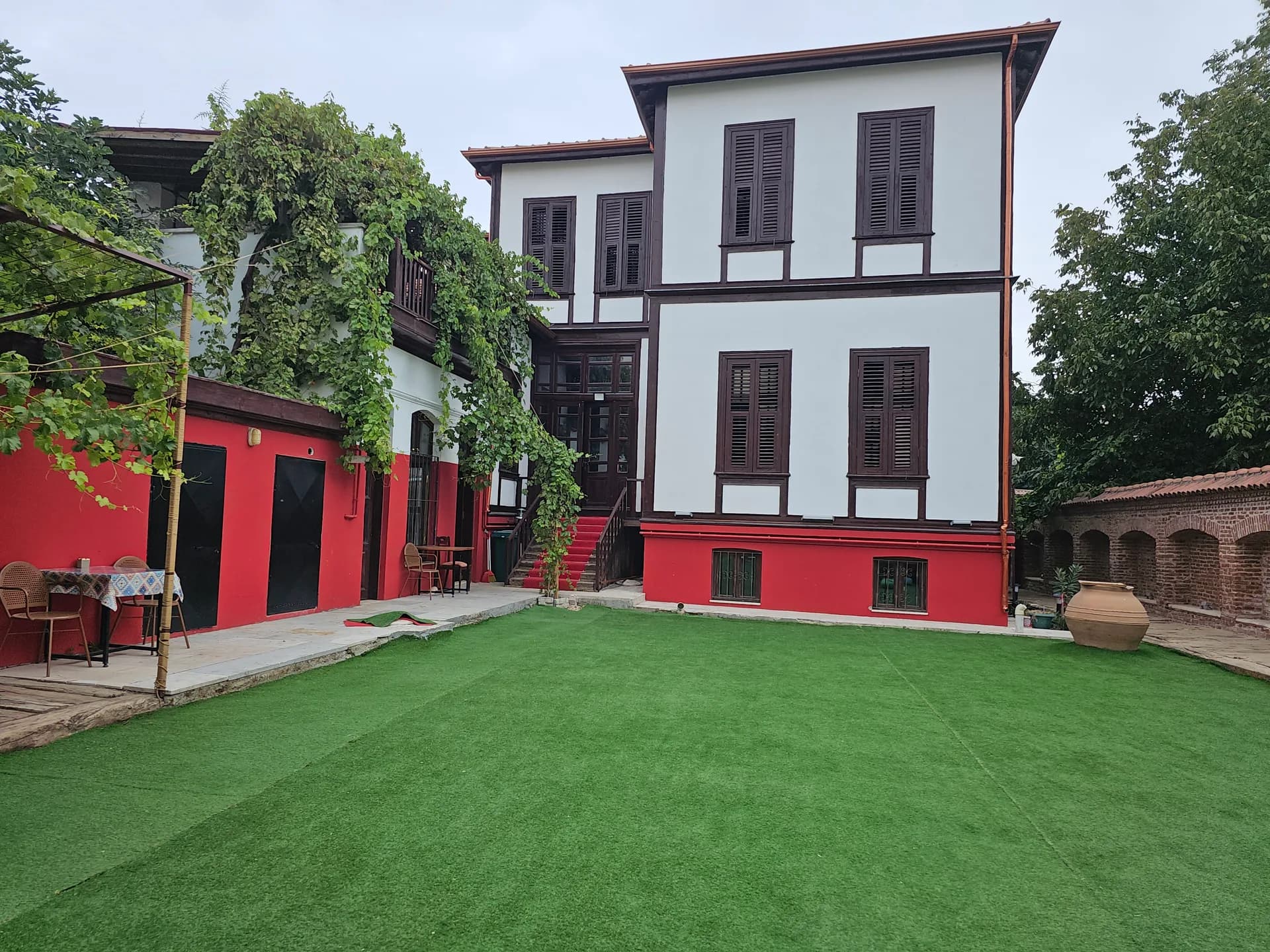
Stay
Stay in Edirne Kaleiçi with breakfast included
The Selimiye Mosque: Sinan's Masterpiece
The Selimiye was built on the orders of Selim II between 1568 and 1574. Sinan was in his eighties when he finished this mosque. According to tradition, Sinan said: "The Şehzade is my apprentice work, the Süleymaniye my journeyman work, the Selimiye my masterpiece." However, this saying does not appear in Sinan's own tezkires; it is based on the account of Evliya Çelebi. In the Tezkiretü'l-Bünyan, Sinan stresses that the Selimiye's dome is 4 zira (cubits) wider than that of Hagia Sophia.
The mosque's main measurements:
| Measurement | Value |
|---|---|
| Dome diameter | 31.30 m (TDV; 31.2–31.5 m in other sources) |
| Dome height | 42.25 m (TDV; the Ministry gives 43.28 m) |
| Minarets | 4, each with 3 balconies, 70.89 m |
| Minaret staircases | 3 separate staircases in each minaret |
| Supports | 8 piers |
| Prayer hall | 45 × 36 m |
| Outer courtyard | ~130 × 190 m |
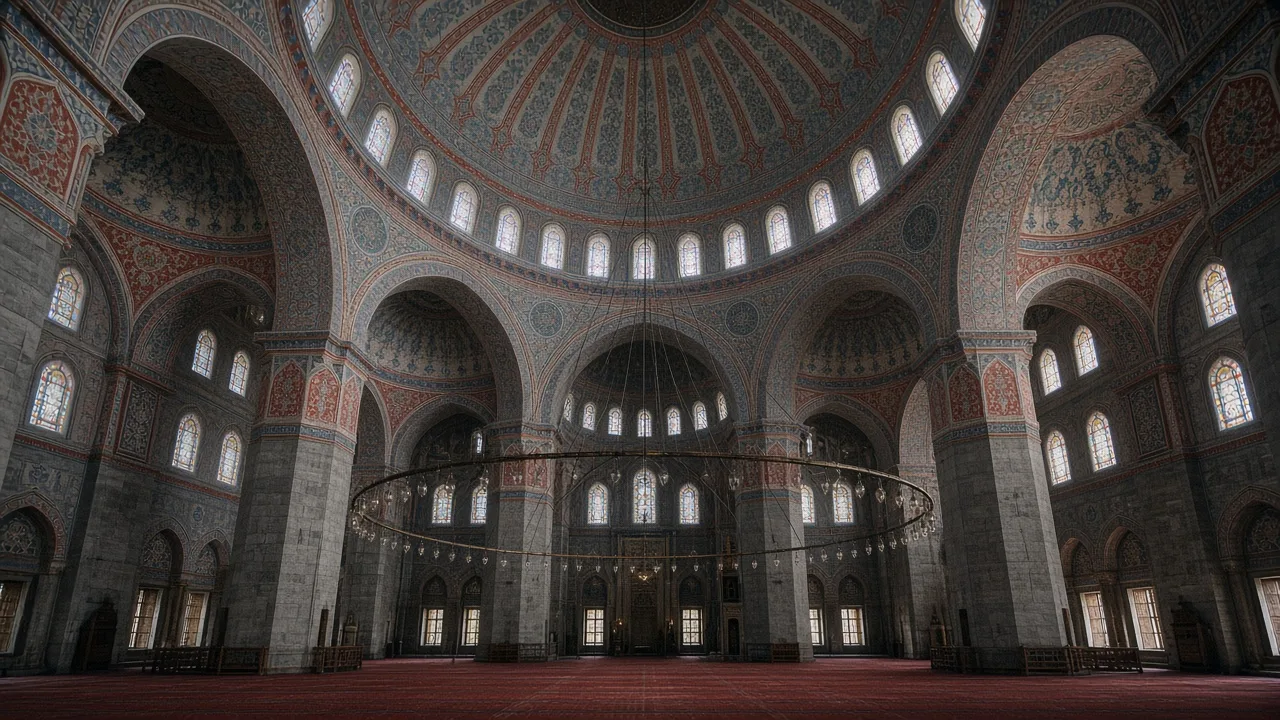
The eight piers carrying the dome make the interior look almost like a single space. UNESCO added the Selimiye to the World Heritage List on 27 June 2011 as the culmination of Ottoman külliye (mosque complex) architecture.
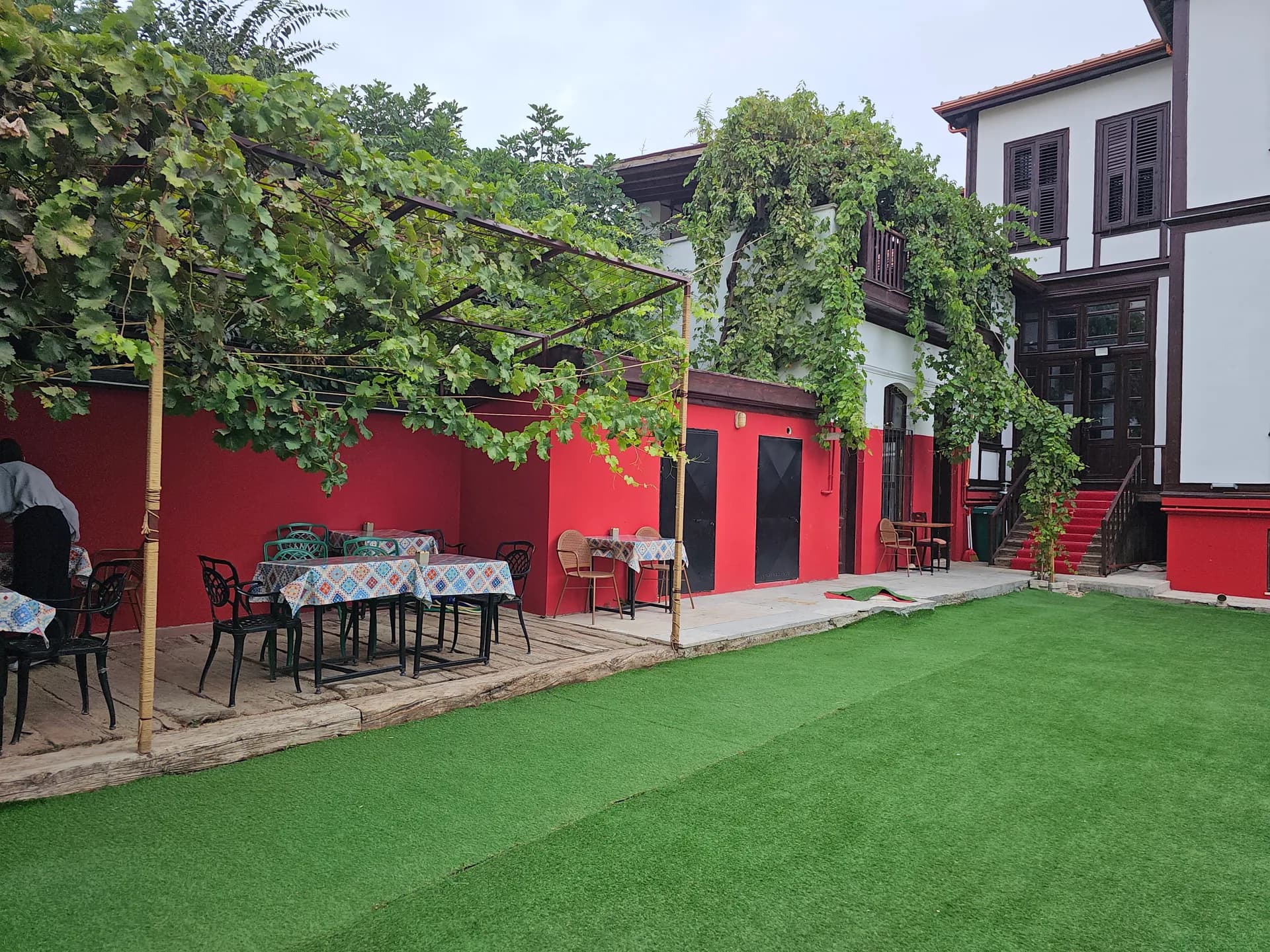
Events
Engagements, small weddings and private celebrations
After a comprehensive restoration that began in November 2021, the mosque reopened for worship with all its sections on 18 February 2026. Visits pause at prayer times. For the hours you can visit, see our Selimiye Mosque visiting hours guide.
The Selimiye Complex: Madrasas and Arasta
The Selimiye is not just a mosque but a complex. The buildings at the corners of the courtyard are also part of Sinan's plan:
- Darülhadis Madrasa: Southeast of the mosque, completed in 1570–71. It has been used as a museum since 1925 and has been called the Museum of Turkish and Islamic Arts since 1971.
- Darülkurra Madrasa: Southwest of the mosque. After the 2006–07 restoration it became the Selimiye Foundation Museum, run by the General Directorate of Foundations. The museum is open 09:00–17:00, closed on Mondays, and entry is free.
- Selimiye Arasta: It runs along the western wall of the outer courtyard. According to TDV, it is about 255 m long with 124 shops. The shops in the eastern row are Sinan's work. The western shops, the vaulted roof and the prayer dome were completed under Murad III by the architect Davud Ağa.
Today you can buy almond paste, fruit soap and souvenirs in the arasta. Suggestions on what to buy are in our historic bazaars of Edirne guide.
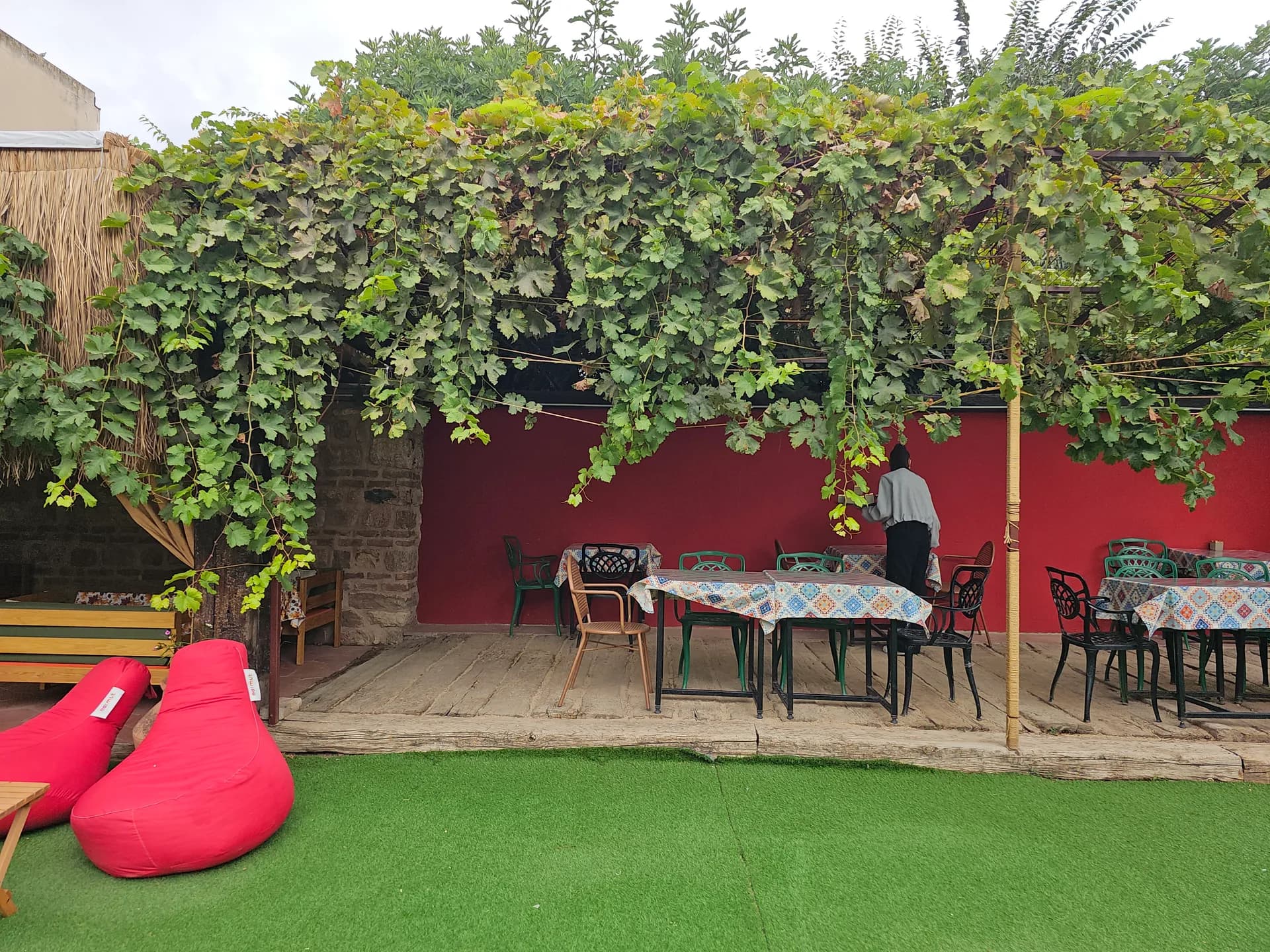
Breakfast
A generous Turkish breakfast spread in the garden
The Ali Paşa Bazaar
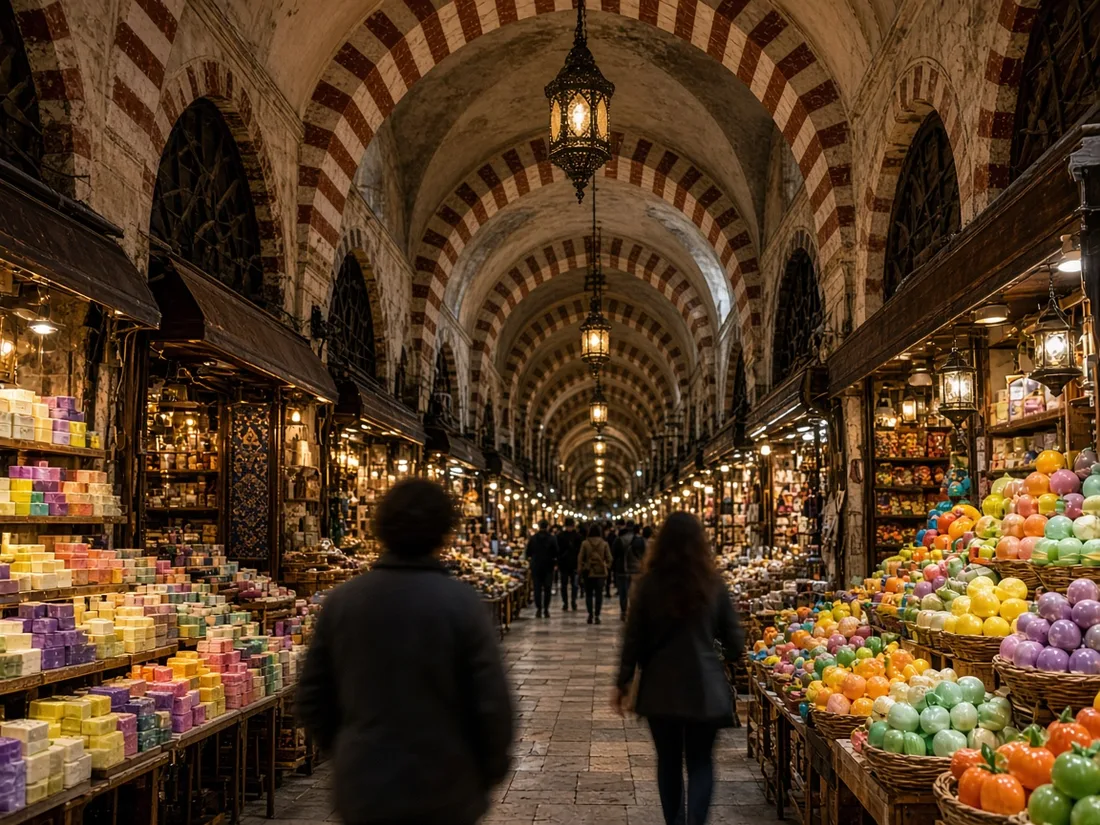
The Ali Paşa Bazaar was built for Grand Vizier Semiz Ali Paşa to provide income for his foundation in Babaeski. According to the chronogram quatrain by the poet Tîgî, it was built in 1568–69. The bazaar is about 300 m long and has 6 gates. The alternating red-and-white arches on the inner façade show Sinan's mastery of combining stone and brick.
The bazaar suffered a major fire on 28 September 1992 and reopened after repairs in 1997. Today, near the Üç Şerefeli Mosque, it is one of the liveliest shopping spots in the city centre. As it is covered, it is comfortable to visit on rainy days too.
The Rüstem Paşa Caravanserai and the Sokullu Bath
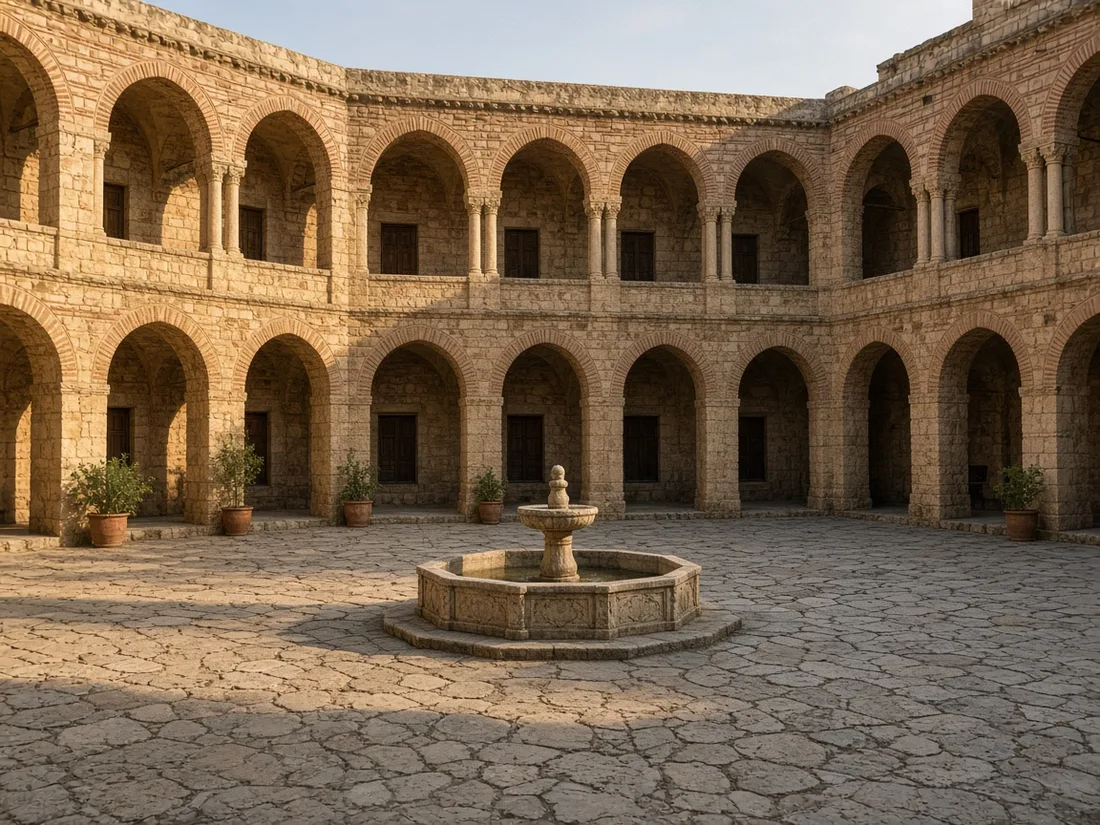
The Rüstem Paşa Caravanserai was built in 1560–61 for Rüstem Paşa, Grand Vizier to Süleyman the Magnificent. It is southeast of the Old Mosque, on İki Kapılı Han Caddesi. The building has two parts: the city inn with the large courtyard is Sinan's, while the architect of the way-station inn with the small courtyard is unknown. The Foundations restored the building between 1960 and 1965. The caravanserai opened as accommodation in July 1972 and won the Aga Khan Award for Architecture in 1980. It is still used as accommodation today.
The Sokullu Mehmed Paşa Bath is a double bath dated 1568–69, built by Sokullu Mehmed Paşa. The women's and men's sections are separate. It is also known locally as the "Üç Şerefeli Bath" because it stands right opposite the Üç Şerefeli Mosque, on Hükümet Caddesi. The building is Foundations property. As it has been restored in recent years, confirm whether it is open to visitors before you go.
The Defterdar Mustafa Paşa Mosque
The Defterdar Mustafa Paşa Mosque in the Sabuni neighbourhood cannot be dated precisely because it has no inscription. Sources place it in the second half of the 16th century, sometimes in the 1569–74 range. Its dome collapsed in the 1752 earthquake. The General Directorate of Foundations rebuilt the dome faithfully to the original in 1962. The mosque is open for worship today. It is a quiet stop, away from the Selimiye crowds.
The Sokullu Mehmed Paşa Complex in Havsa
In Havsa, about 26 km from central Edirne, there is a complex that Sokullu Mehmed Paşa built in the name of his son Kurd Kasım Paşa, who died young. According to its lost inscription, it dates from 1576–77. The complex's mosque, the arasta's prayer dome, the partly ruined bath and the sebil-fountain dated 1780 are still standing. The inn, soup kitchen and madrasa have not survived. It is a good short stop on the way if you are coming from Istanbul.
Buildings Attributed to Sinan, Disputed or Lost
Some buildings in Edirne are associated with Sinan's name but do not appear in the tezkires. Academic sources describe them as "attributed":
| Building | Year | Note |
|---|---|---|
| Kanuni (Palace) Bridge | 1553–54 (Kültür Portalı ~1560) | Crossing to Sarayiçi, over the Tunca; not in the tezkires |
| Adalet Kasrı (Justice Pavilion) | 1561 | The only surviving building of Edirne Palace; attribution disputed |
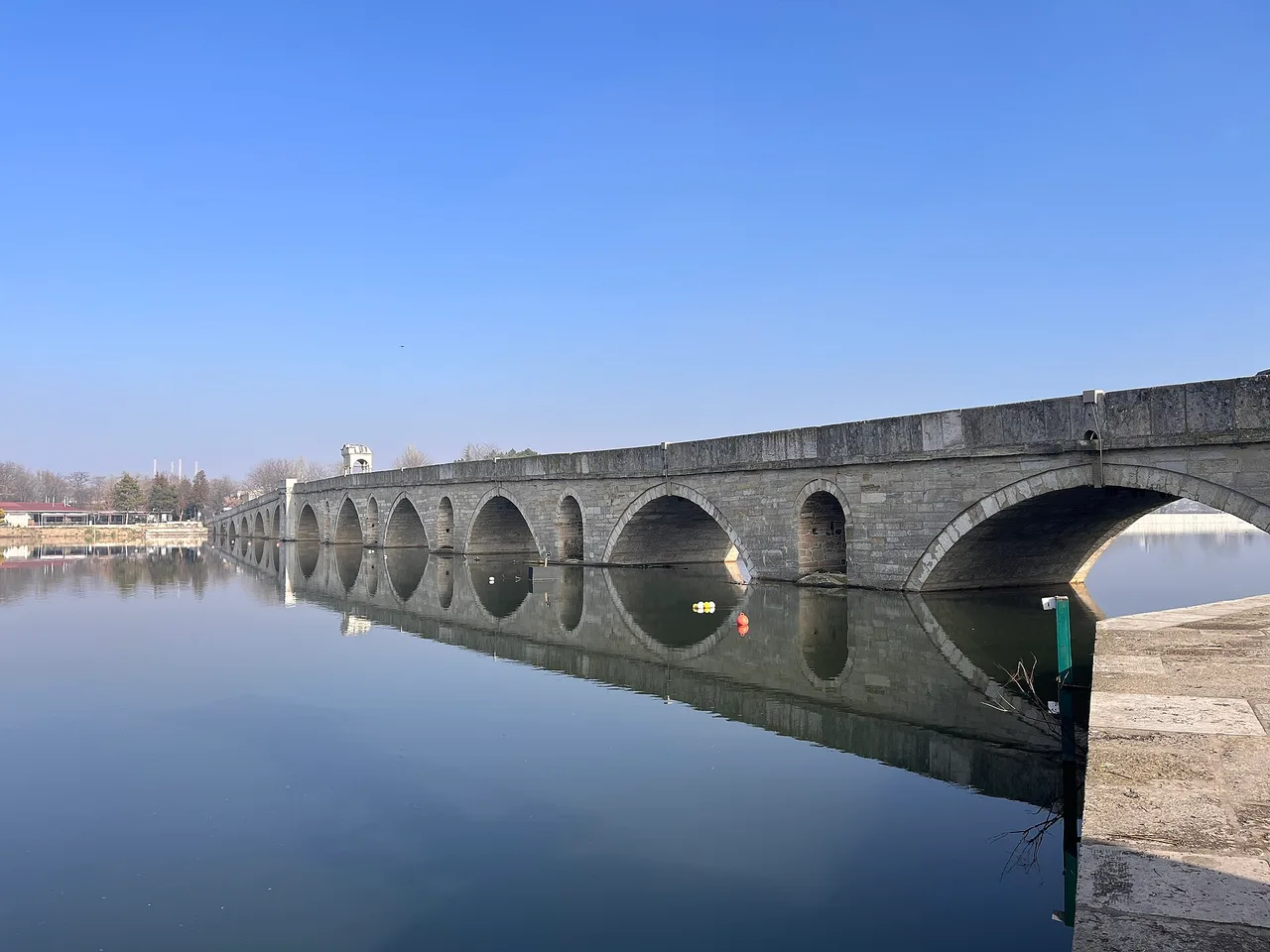
| Yalnızgöz (Tekgöz) Bridge | 1567 (1570 in some sources) | Single-arched; not in the tezkires |
One building that Sinan repaired rather than built is also often confused: the Taşlık (Mahmud Paşa) Mosque. Its foundation deed is dated 1473, and it is the work of Mahmud Paşa, vizier to Mehmed the Conqueror. The mosque was demolished in 1937 and rebuilt by the Foundations in 2006–07.
Another common mistake is the Kum Kasrı (Sand Pavilion). The pavilion and its bath date from the reign of Mehmed the Conqueror, in the mid-15th century; it is not Sinan's work. The Terazi Kasrı (1554) that Sinan built for Edirne Palace and the Yatak Hamamı in the harem are no longer standing. For the palace remains and the Kırkpınar ground, see our Edirne Sarayiçi and Kırkpınar guide.
A Half-Day Mimar Sinan Route in Edirne
Starting from the Selimiye, this route is about 2–2.5 km and takes half a day at a relaxed pace. Distances are approximate.
| Order | Stop | Walk from the Selimiye |
|---|---|---|
| 1 | Selimiye Mosque, Foundation Museum, Museum of Turkish and Islamic Arts | Same courtyard |
| 2 | Selimiye Arasta | 1–3 min |
| 3 | Sokullu Mehmed Paşa Bath (opposite the Üç Şerefeli) | 6–8 min |
| 4 | Rüstem Paşa Caravanserai | 7–9 min |
| 5 | Ali Paşa Bazaar | ~10 min |
| 6 | Defterdar Mustafa Paşa Mosque | 10–12 min |
| 7 | Kanuni Bridge (optional) | 15–18 min |
Starting the route early in the morning at the Selimiye lets you see the inside of the mosque before the noon prayer break. The bazaars and inns are left for the afternoon. If you want to extend the route with the Üç Şerefeli Mosque and the Old Mosque, our Üç Şerefeli and Old Mosque guide covers both mosques in detail.
Breaks and Accommodation on the Route
A break along the route is essential, especially at summer noon. In our courtyard, a 12–15 minute walk from the Selimiye, you can catch your breath with Turkish coffee, dibek coffee or a dessert; for the menu, see our Kaleiçi cafe page. If you would like to start the day with a full table, our Turkish breakfast in Kaleiçi is ready from 09:00 to 13:00.
Staying close to the mosque makes it much easier to start the Sinan route in the cool of the morning. You can find distances on our stay near the Selimiye Mosque page. Our location in Kaleiçi, Edirne (Google Maps) is at İzmir Caddesi No: 18. For the city's general history, see our history of Edirne guide; for all the stops, our things to do in Edirne guide shows the way.
Frequently Asked Questions
How many works by Mimar Sinan are there in Edirne?+
According to the tezkires and the TDV Encyclopaedia of Islam, there are 9 main works with firm attribution: the Selimiye Mosque, its two madrasas, its arasta, the Ali Paşa Bazaar, the Rüstem Paşa Caravanserai, the Sokullu Bath, the Defterdar Mustafa Paşa Mosque and the Sokullu Complex in Havsa. Buildings such as the Kanuni Bridge and the Adalet Kasrı are attributed to Sinan.
When was the Selimiye Mosque built?+
It was built on the orders of Selim II between 1568 and 1574; its opening for worship is usually given as 1575. It was added to the UNESCO World Heritage List in 2011.
Did Sinan really say "my masterpiece"?+
The saying is a tradition. It does not appear in Sinan's own tezkires but is based on the account of Evliya Çelebi. The Tezkiretü'l-Bünyan, however, stresses that the Selimiye's dome is 4 zira wider than Hagia Sophia's.
How wide is the Selimiye's dome?+
According to the TDV Encyclopaedia of Islam, it is 31.30 m. Sources give values between 31.2 and 31.5 m. According to TDV, the dome is 42.25 m high.
How tall are the Selimiye's minarets?+
Each of the four minarets is about 70.89 m tall and has three balconies. Each minaret has three separate staircases leading to the balconies.
Is the Kum Kasrı a work of Mimar Sinan?+
No. The Kum Kasrı and its bath date from the reign of Mehmed the Conqueror, in the mid-15th century. The Terazi Kasrı and Yatak Hamamı that Sinan built for Edirne Palace have not survived.
Can you see Sinan's works in Edirne in one day?+
The works in the centre are easily seen in half a day; the route is about 2–2.5 km. To add the complex in Havsa, allow about another hour by car.
Can you visit the Rüstem Paşa Caravanserai?+
The building is used as accommodation today. It is a good idea to confirm before you go whether its courtyard is open to outside visitors.
You may also like: Accommodation, Breakfast, Events.