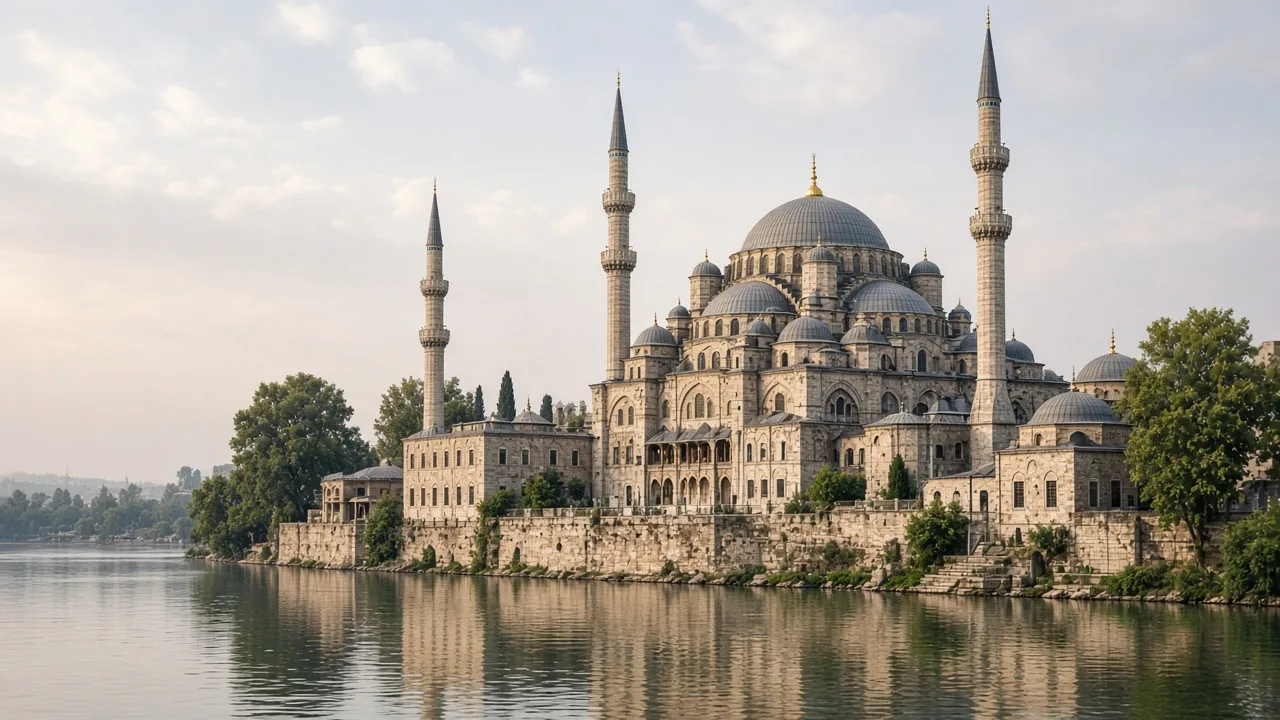
The Edirne Health Museum is in the hospital of a 1488 complex. Opened on 23 April 1997, it won the 2004 Council of Europe Museum Prize. No MüzeKart; tips.
The Edirne Health Museum is housed in the darüşşifa (hospital) section of the complex Sultan Bayezid II built in 1488 in the Yeniimaret district on the banks of the Tunca River, and it won the 2004 Council of Europe Museum Prize. Through re-enactment scenes, the museum tells the story of the Ottoman healing tradition in which mental and nervous illnesses were treated with music and the sound of water.
Café & Restaurant
Coffee, desserts and a relaxing break
If you have to choose just one museum in Edirne, choose this one. It is described as the only example in Türkiye that truly brings an Ottoman darüşşifa back to life.
Quick Overview
| Topic | Information |
|---|---|
| Complex | 1488, Sultan Bayezid II |
| Location | Yeniimaret, banks of the Tunca River |
| Transfer to the university | 1984, Trakya University |
| Museum opening | 23 April 1997 |
| Major award | Council of Europe Museum Prize, 2004 |
| MüzeKart | Not valid, separate ticket |
| Time needed | 1–1.5 hours |
The Complex: From 1488 to Today
In 1488, Sultan Bayezid II built a complex in Edirne's Yeniimaret district, on the banks of the Tunca River. The complex was not a single building but a set of complementary sections:
- Darüşşifa (hospital)
- Medical madrasa
- Mosque
- İmaret (soup kitchen)
- Tabhane (guesthouse for travellers)
- Storehouse
In other words, treatment, education, worship and food were planned within the same complex. This unity shows the institutional dimension of the period's understanding of health.
Stay
Stay in Edirne Kaleiçi with breakfast included
Abandonment and rescue
The complex's story did not follow a straight line. The difficult years that began with the Russo-Turkish War and worsened especially during the Balkan Wars led to many buildings like the complex being abandoned. Because of economic problems and neglect of cultural heritage, the buildings faced the danger of disappearing completely.
The turning point was 1984: the buildings were transferred to Trakya University and, after restoration, began to be used as an educational institution. Having completed the restorations, the university converted the darüşşifa section into a museum with the approval of the Ministry of Culture and Tourism's General Directorate of Cultural Heritage and Museums. The Trakya University Sultan Bayezid II Complex Health Museum opened to visitors with a ceremony on 23 April 1997.
Treatment with Music and the Sound of Water
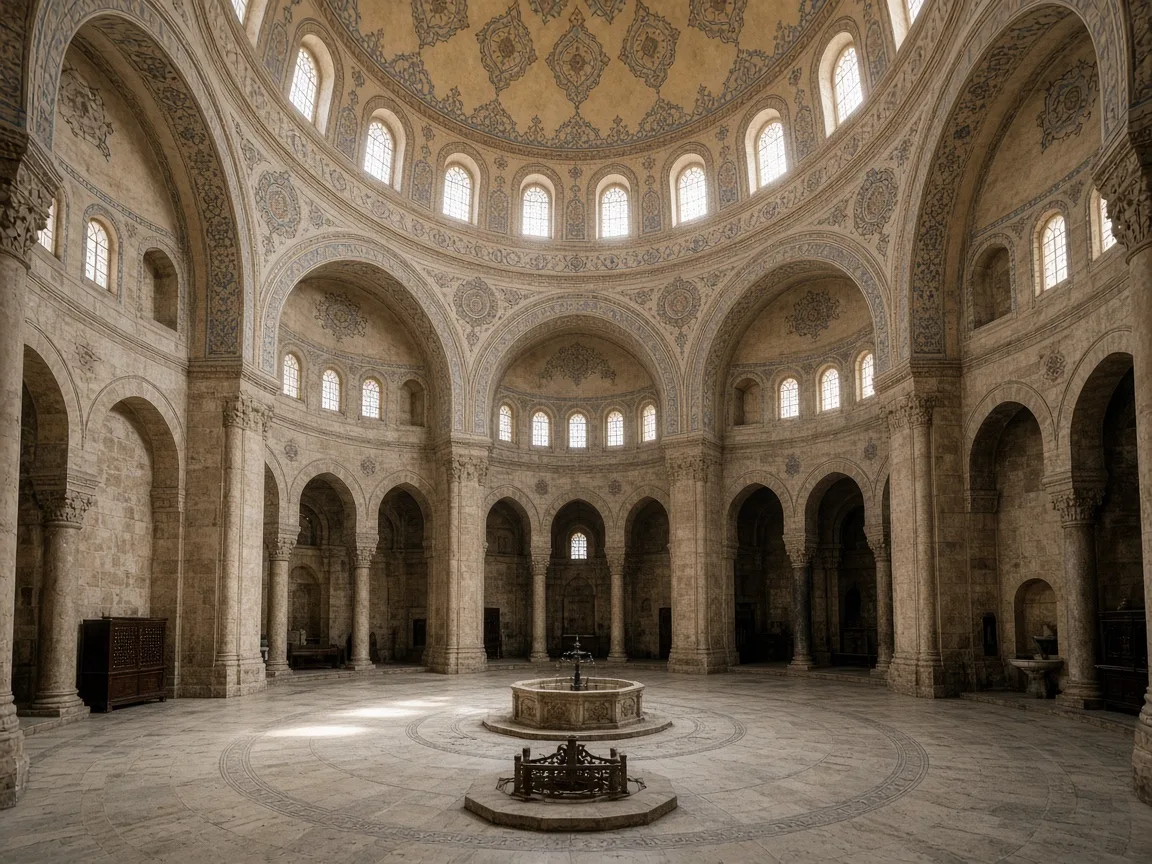
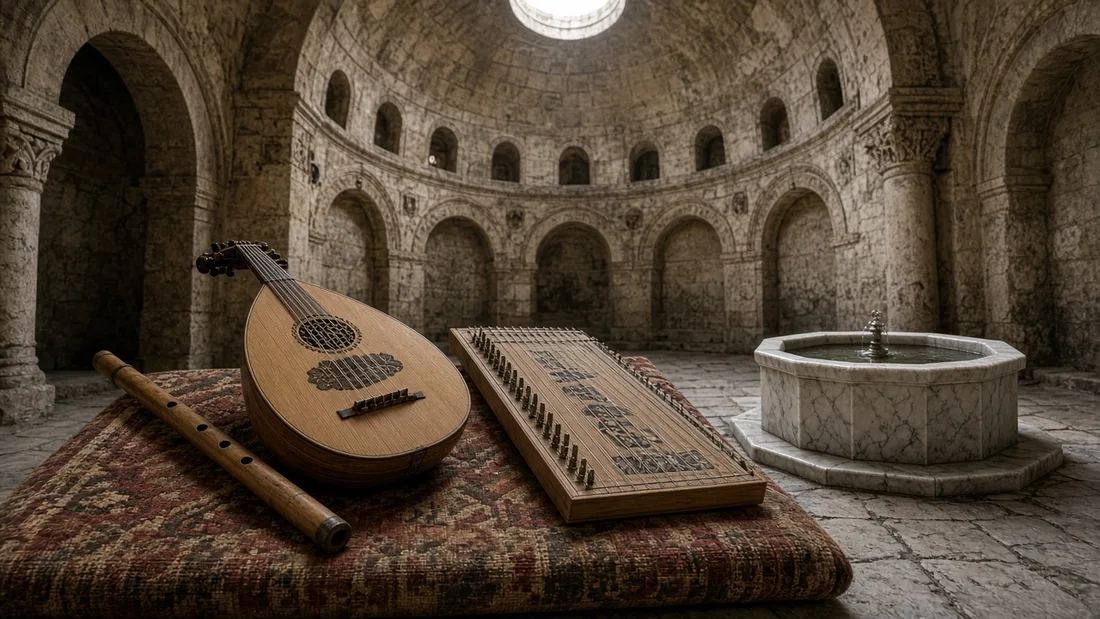
This section is why the museum attracts worldwide interest. The darüşşifa went down in history as an institution where mental and nervous illnesses were treated with music and the sound of water. Sources report that besides music, the sound of water and scents were also used in treatment.
Events
Engagements, small weddings and private celebrations
The importance of this approach becomes clear when it is considered in its own time: an approach of this kind to mental health problems reflects a very advanced understanding of health compared with the general practices of the period.
The museum has built its exhibition with re-enactment scenes true to the period; in other words, instead of display cases, it uses a narrative that reconstructs how the space itself worked. The collections showing what the darüşşifa did over the centuries focus especially on mental health.
Awards
The museum's international reputation rests on concrete awards:
Breakfast
A generous Turkish breakfast spread in the garden
- 2004 — Council of Europe Museum Prize: One of the world's most prestigious museum awards. The prize has been awarded since 1977, and the Health Museum is one of two museums from Türkiye to have received it. It was one of the three main museum awards given in Europe that year (2004).
- 2005 — Dubrovnik (Croatia): At a meeting of award-winning museums from around the world, it was chosen as the second-best presentation.
- European Heritage Association "Excellence Club": The museum was admitted to this club.
- 2007–2008: Sources also report that it received a best presentation award from the European Cultural Heritage Association.
These awards show that the museum is a reference institution not only locally but also on an international scale.
Visiting in Practice
The MüzeKart is not valid
This detail surprises many people at the door: as the museum belongs to Trakya University, the MüzeKart (museum pass) is not valid here; you buy a separate ticket. By contrast, the MüzeKart is valid at the Edirne Museum, the Museum of Turkish and Islamic Arts and the Hıdırlık Redoubt Balkan History Museum, which belong to the Ministry of Culture and Tourism. For the city's full museum map, see our Edirne museums guide.
Time and pace
Allow 1–1.5 hours for the darüşşifa section with its re-enactment scenes. As other parts of the complex can be visited too, there is no need to rush; the museum is one of Edirne's most visited historic sites.
Hours
Visiting hours may change between summer and winter. As it is part of the university, there may also be differences during holiday periods; it is best to confirm the current hours before you set off.
How to Fit It into Your Route
As the museum is on the banks of the Tunca, it does not fit into the same walk as the mosques in the centre; it needs a separate block. An efficient flow:
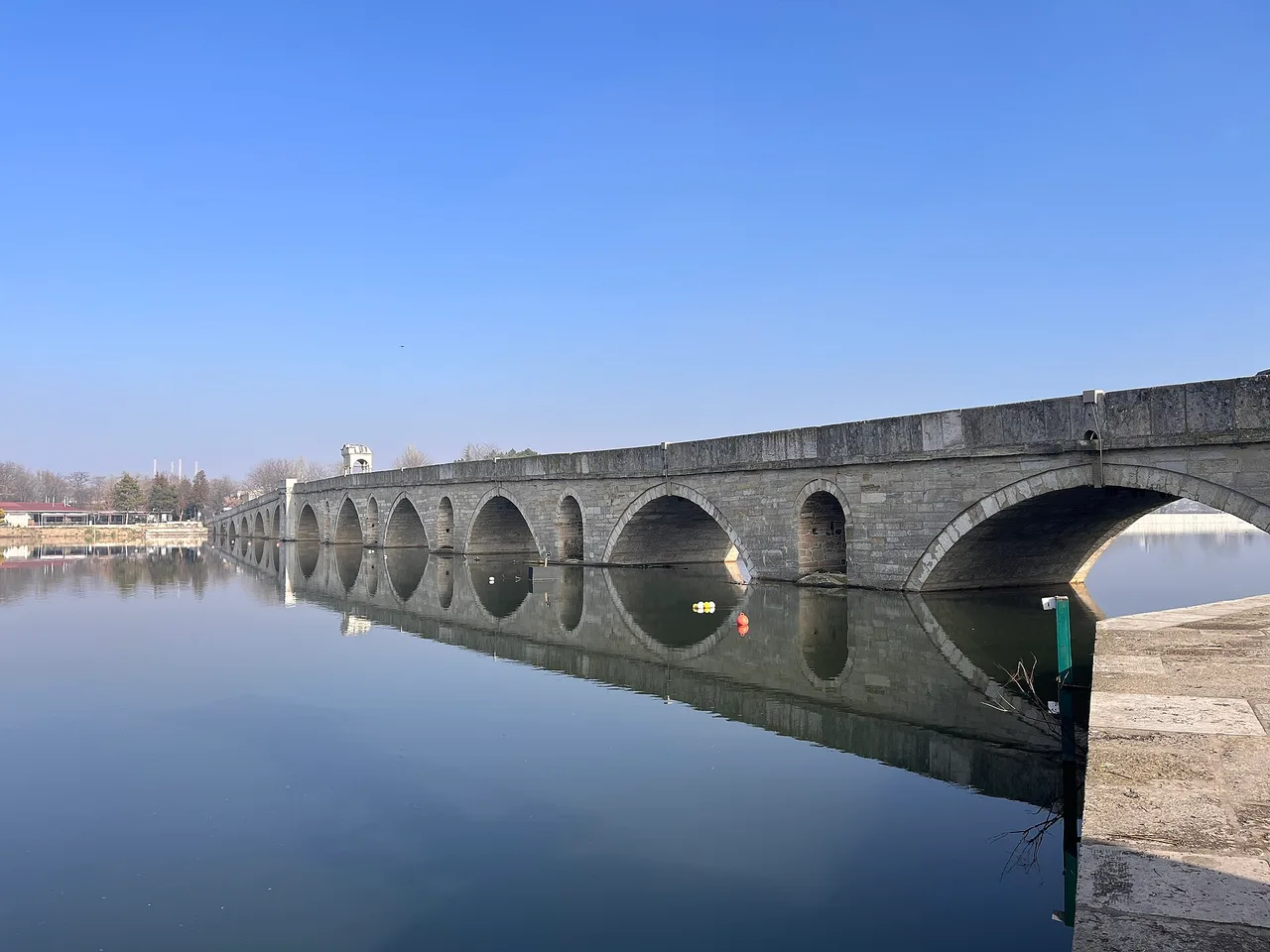
1. 09:30 — Health Museum: 1–1.5 hours. 2. 11:30 — Historic bridges: The Gazi Mihal Bridge (184.18 metres long with 16 spans, according to Highways measurements) and the Saraçhane Bridge (1451, 120 metres, 12 arches). 3. 14:00 — Sarayiçi: The remains of Edirne Palace, the Adalet Kasrı (1561) and the Er Meydanı, where Kırkpınar is held. Details are in our Sarayiçi and Kırkpınar guide. 4. 16:00 — Hıdırlık Redoubt: Built between 1886 and 1888, the redoubt is today the Balkan History Museum.
This block suits the second day of a two-day trip or the second day of a three-day programme. For programmes, see our 2-day Edirne travel guide and 3 days in Edirne guide. If you have only one day, you will need to drop another stop to include this museum; details are in our Edirne in one day itinerary.
Practical Tips
- Season: The complex is on the banks of the Tunca and involves walking outdoors. In September the average temperature is 20.2 °C, with 4.7 rainy days (MGM 1930–2025); the most comfortable period. Details are in our best time to visit Edirne guide.
- Summer: The average high in July–August is 32.1 °C; choose the morning hours.
- Rainy day: As the museum is indoors, it is the best option on rainy days. Ideas are in our what to do in Edirne on a rainy day guide.
- Children: The re-enactment scenes appeal to children; some scenes may be intense for young children. See our Edirne travel guide for families with children.
- Payment: As the MüzeKart is not valid, bring a means of payment.
Location and Getting There
The museum is in the Yeniimaret district on the banks of the Tunca River; you can reach it from the centre by city transport or a short ride.
You can measure the distance to the museum from our location in Kaleiçi, Edirne (Google Maps). Central Edirne accommodation makes it easier to combine the stops along the Tunca in a single day; for options, see our accommodation in Kaleiçi, Edirne page. If you are coming from out of town, our Istanbul to Edirne guide is useful.
Frequently Asked Questions
Where is the Edirne Health Museum?+
It is in the Yeniimaret district on the banks of the Tunca River, in the darüşşifa section of the Sultan Bayezid II Complex.
When was the complex built?+
It was built by Sultan Bayezid II in 1488. The complex consisted of a darüşşifa, a medical madrasa, a mosque, an imaret, a tabhane and a storehouse.
When did the museum open?+
The complex was transferred to Trakya University in 1984; after restoration, the darüşşifa section opened to visitors as a museum on 23 April 1997.
What awards has the museum won?+
The most important is the 2004 Council of Europe Museum Prize. The museum is one of two museums from Türkiye to have received this prize. In 2005 it was chosen as the second-best presentation at the meeting of award-winning museums in Dubrovnik, and it was admitted to the European Heritage Association's "Excellence Club".
How was treatment carried out in the darüşşifa?+
Mental and nervous illnesses were treated with music and the sound of water; sources report that scents were also used in treatment.
Is the MüzeKart valid?+
No. As the museum belongs to Trakya University, the MüzeKart is not valid and you buy a separate ticket.
How much time should you allow?+
1–1.5 hours. If you will also visit other parts of the complex, allow more time.
Can you visit with children?+
Yes, the re-enactment scenes are interesting; however, some scenes may be intense for young children.
What are the visiting hours?+
Hours may change between summer and winter. As it is part of the university, it is recommended to confirm current information before you set off.
What else is nearby?+
The Gazi Mihal and Saraçhane bridges over the Tunca, Sarayiçi and the Hıdırlık Redoubt can be added to the same block.
You may also like: Accommodation, Breakfast, Events.