Edirne's historic hammams: the Saray Hammam open today, the vast Tahtakale, Mimar Sinan's Sokullu Hammam and those under restoration. Read this before you go.
Among the historic hammams of Edirne, the best-known one open for bathing today is the Saray Hammam, north-east of the Selimiye Mosque. Restored by the Directorate of Foundations between 2007 and 2009, it has served with women's and men's sections since March 2011. The city's largest hammam, the Tahtakale Hammam of 1434–35, is on Saraçlar Caddesi (Saddlers' Street). The Sokullu Hammam, Mimar Sinan's only surviving hammam in Edirne, is under restoration, with completion targeted for the end of 2026. Sources report that there were 30–35 hammams in the city in the Ottoman period; some of them are still standing today.
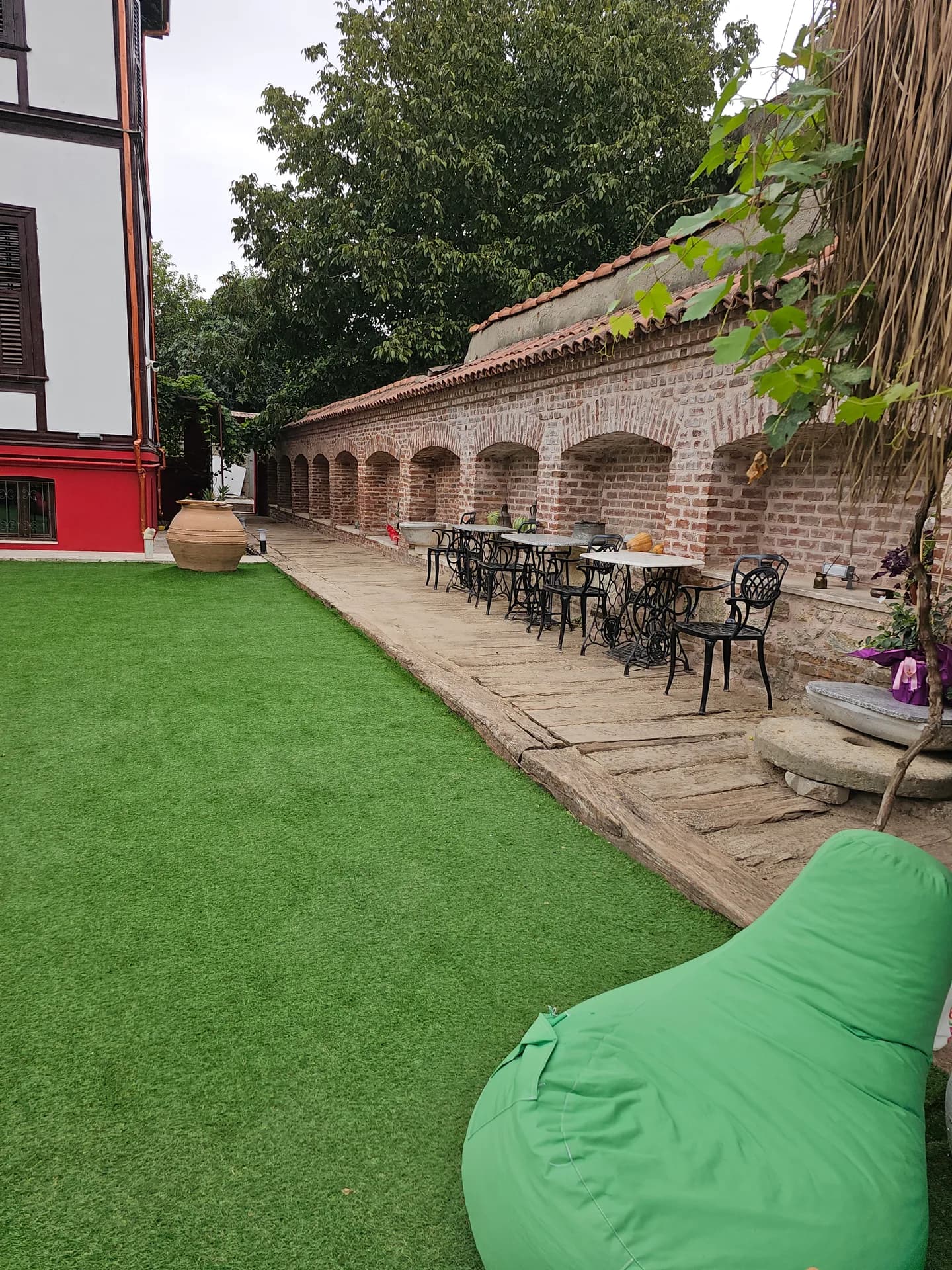
Café & Restaurant
Coffee, desserts and a relaxing break
Quick Overview
| Hammam | Built | Location | Current status |
|---|---|---|---|
| Saray Hammam | First half of the 15th century (very likely) | North-east of Selimiye | In service since March 2011 |
| Tahtakale Hammam | 1434–35, Murad II | Saraçlar Caddesi | According to sources, the women's section is still in use |
| Sokullu Hammam | 1568–69, Mimar Sinan | Opposite the Üç Şerefeli Mosque | Under restoration, target end of 2026 |
| Mezit Bey (Çukur) Hammam | Before 1442 | West of Selimiye | Restoration began in February 2024 |
| Gazi Mihal Bey Hammam | Early 15th century | Tunca bank, next to the Gazi Mihal Bridge | Restoration work ongoing |
| Kum Kasrı Hammam | Palace period | Sarayiçi, Edirne Palace | Part of the palace revival |
As opening status and hours can change, we recommend confirming directly with the hammam before you go.
Edirne's Hammam Culture: Why So Many Hammams?
Edirne was the Ottoman capital from the second half of the 14th century until 1453, and in this period every large mosque or complex was planned together with a hammam that would provide it with income. Hammams were part of the waqf (charitable foundation) system: the fee taken from the public was passed on to cover the expenses of the madrasa, soup kitchen or mosque to which the hammam was attached. The endowment of the Tahtakale Hammam to Murad II's Darülhadis Complex and of the Saray Hammam to Selimiye are examples of this arrangement.
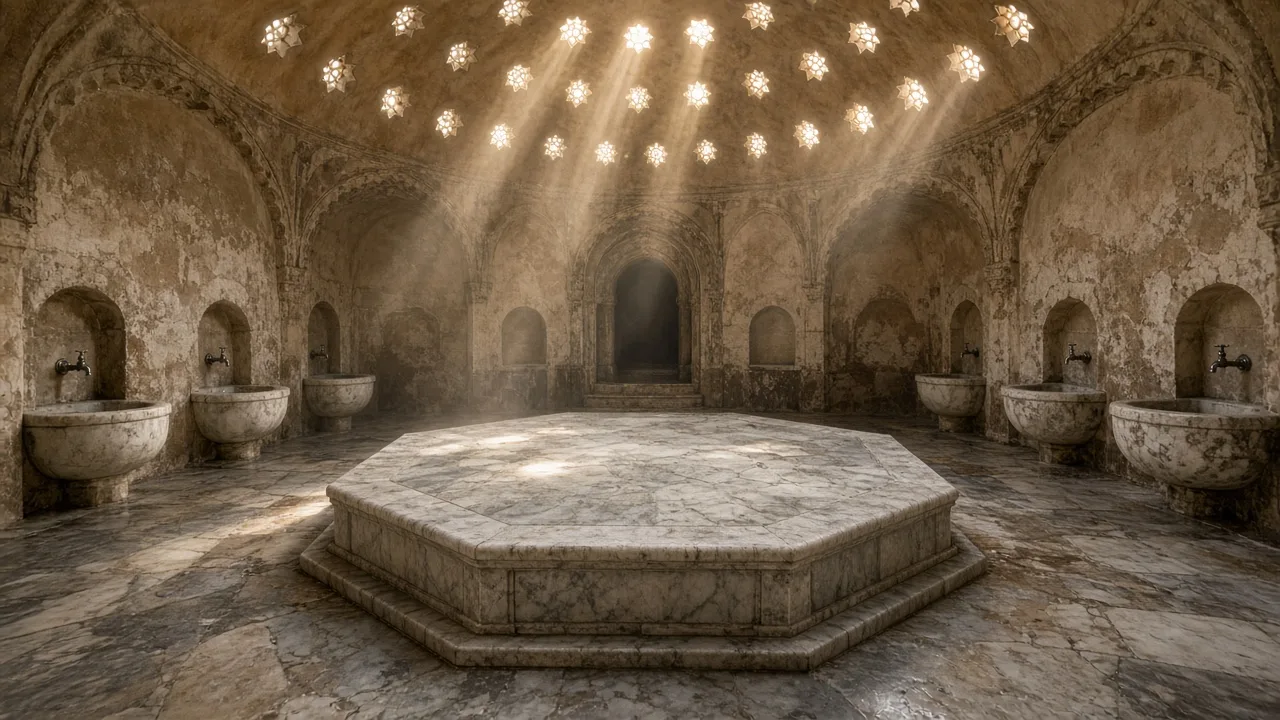
Most of Edirne's hammams follow a double hammam plan: the women's and men's sections are built side by side, with entrances opening in different directions. Each section consists of three main spaces:
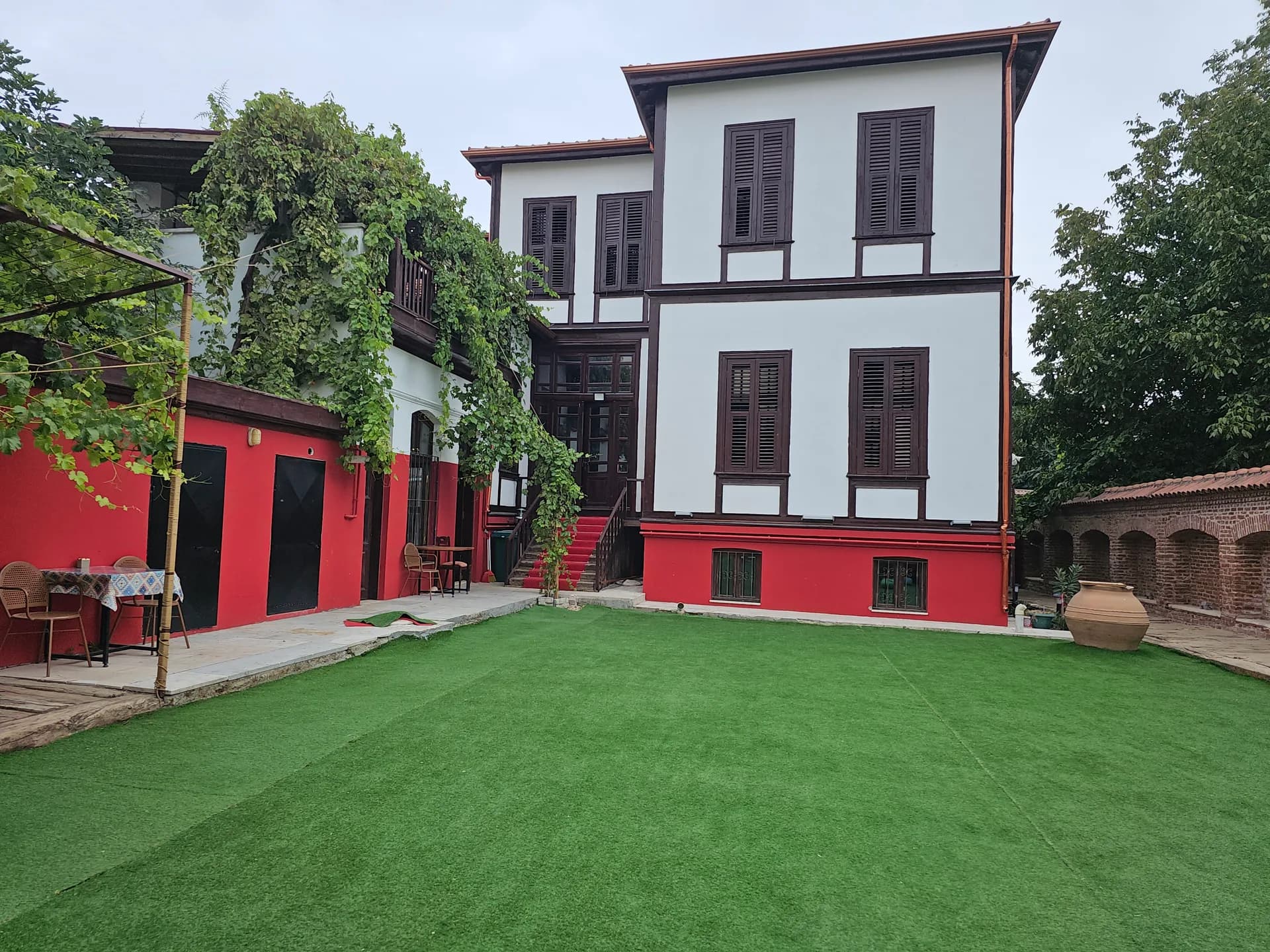
Stay
Stay in Edirne Kaleiçi with breakfast included
- Soyunmalık (changing hall): The large domed entrance hall, with wooden platforms and a resting area.
- Ilıklık (warm room): The intermediate section where the body gets used to the heat.
- Sıcaklık (hot room): The hot space with the göbek taşı (central heated marble platform), basins and private alcoves.
Heating is provided by hot air from the furnace circulating through cavities beneath the floor. This is a method inherited from Roman baths and developed further by the Ottomans.
The Saray Hammam: The Historic Hammam Where You Can Bathe Today
The Saray Hammam is north-east of the Selimiye Mosque, opposite the mosque courtyard. It takes its name from the first Edirne Palace (Saray-ı Atik), which stood on this hill before Selimiye. As foundation records show it was leased out in 1482, it was very likely built in the first half of the 15th century; some sources, however, link the building to the reign of Murad I or Yıldırım Bayezid. When the palace was demolished and Selimiye built in its place, the hammam was opened to the public and endowed to Selimiye.
Left in ruins for many years after the Balkan Wars, the building was saved by a restoration of about three years begun by the Regional Directorate of Foundations in 2007. During the work, the domes were repaired and clad in lead, underfloor heating was laid, the shops on the street façade were uncovered by excavation and rebuilt, and the missing basins were completed in keeping with their original forms.
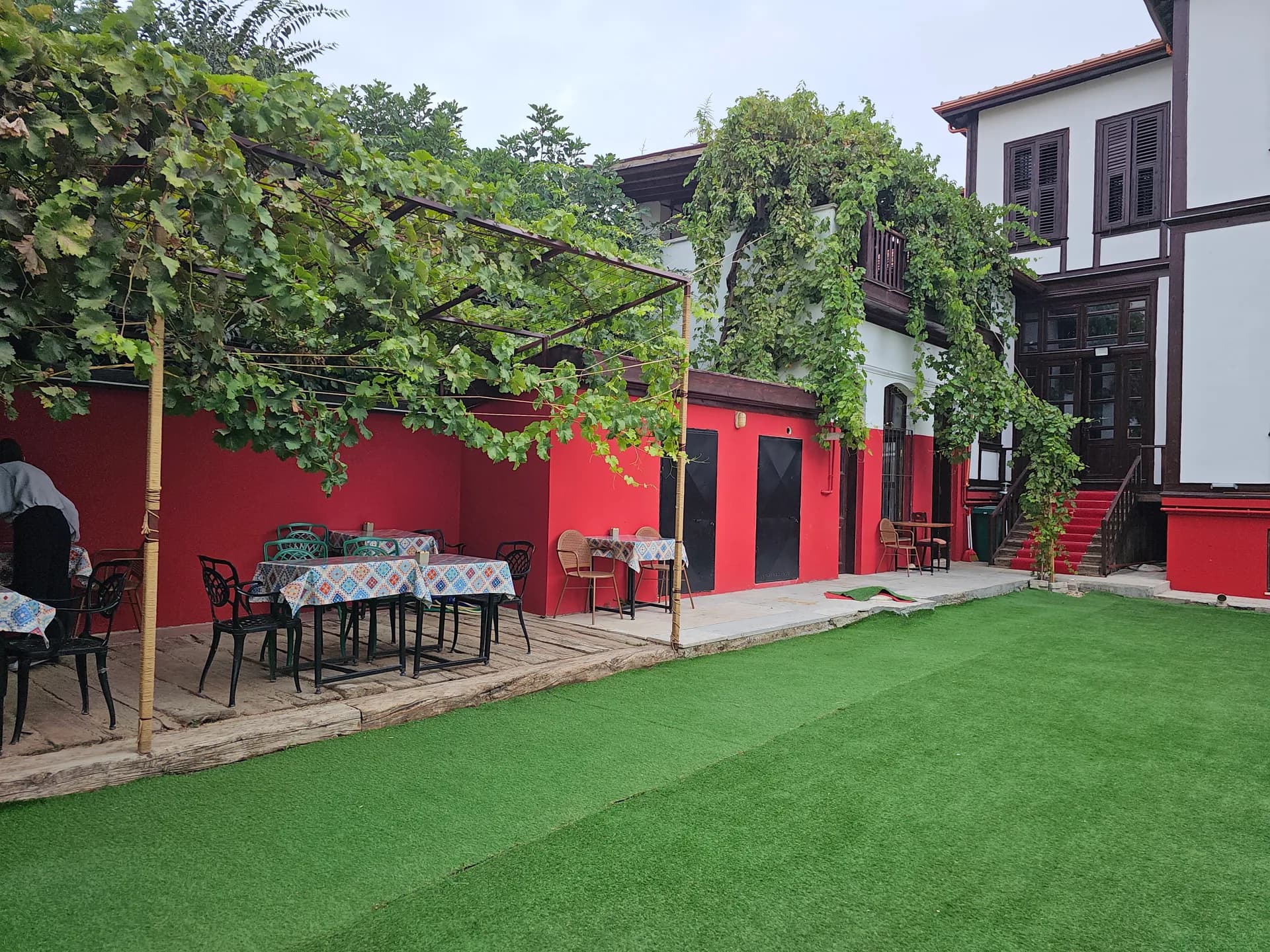
Events
Engagements, small weddings and private celebrations
The hammam today is arranged as follows:
| Section | Changing rooms | Basins |
|---|---|---|
| Men's | 21 | 17 (12 in the hot room, 3 in the private alcove, 2 others) |
| Women's | 18 | 9 (6 in the private alcoves, 3 others) |
The hammam is run under a lease and has been in service since March 2011. It is easy to fit into the same half-day as a visit to Selimiye; our Selimiye Mosque visiting hours post explains how to plan around prayer times.
The Tahtakale Hammam: Edirne's Largest Hammam
According to the TDV Encyclopaedia of Islam, the Tahtakale Hammam was built by Murad II in 1434–35 to provide income for the Darülhadis Complex. It is known as Edirne's largest hammam. Because the street level has risen over time, it now sits in a hollow; because of the surrounding buildings, only the dome of the men's changing hall can be seen from outside.
Breakfast
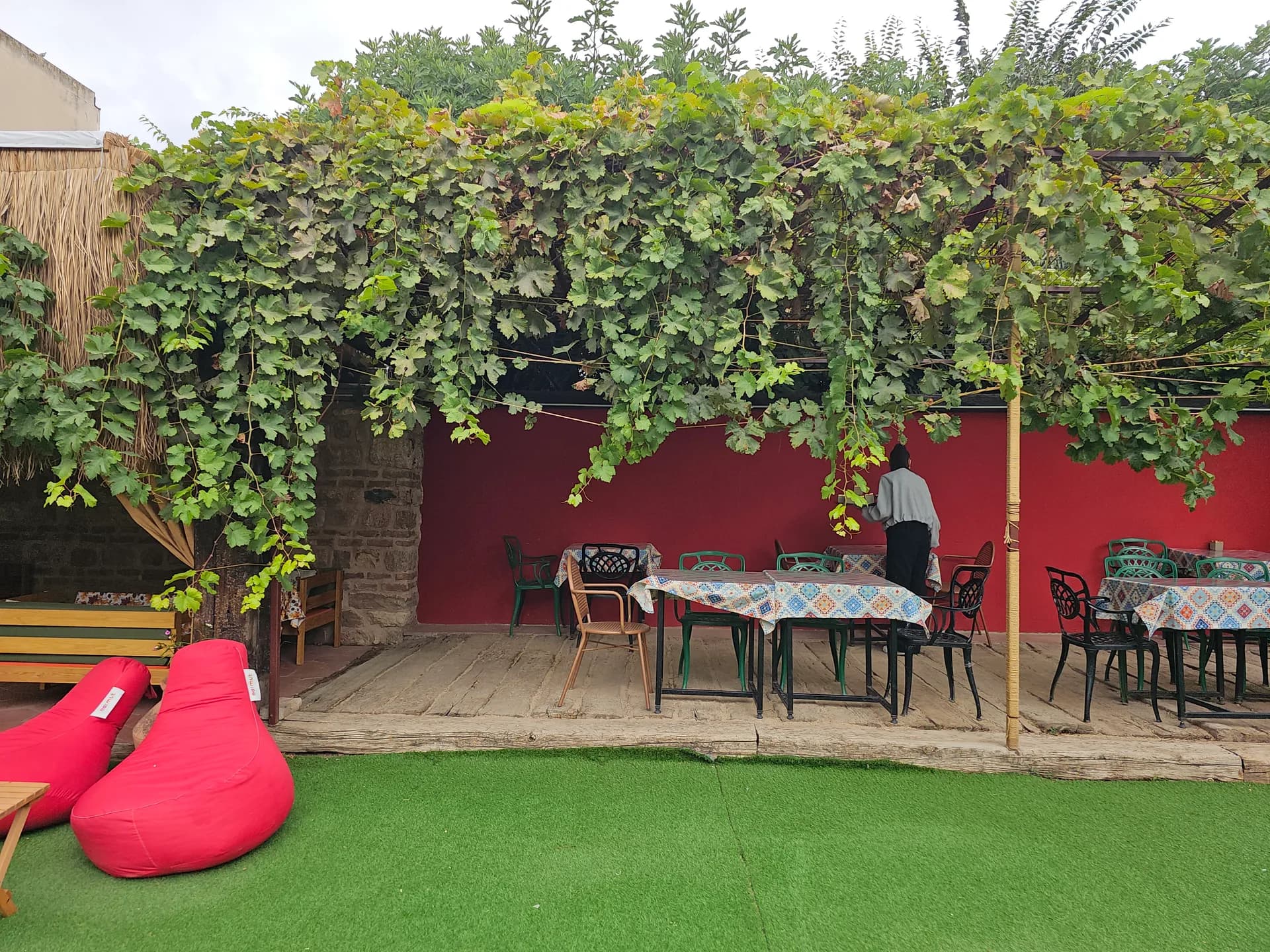
A generous Turkish breakfast spread in the garden
This dome has an octagonal base and is 16 metres in diameter. Muqarnas pendentives are used in the transition to the dome, and an octagonal lantern is set in its centre. The hammam's marble basins, with muqarnas decoration and hourglass-shaped corners, are fine examples of Edirne's early Ottoman stonework. According to sources, the women's section still functions today.
The hammam's entrance is on the side of Saraçlar Caddesi, the city's busiest pedestrian street. If you want to combine it with a bazaar tour, have a look at our what to buy in Edirne and the historic bazaars post.
The Sokullu Hammam: Mimar Sinan's Only Hammam in Edirne
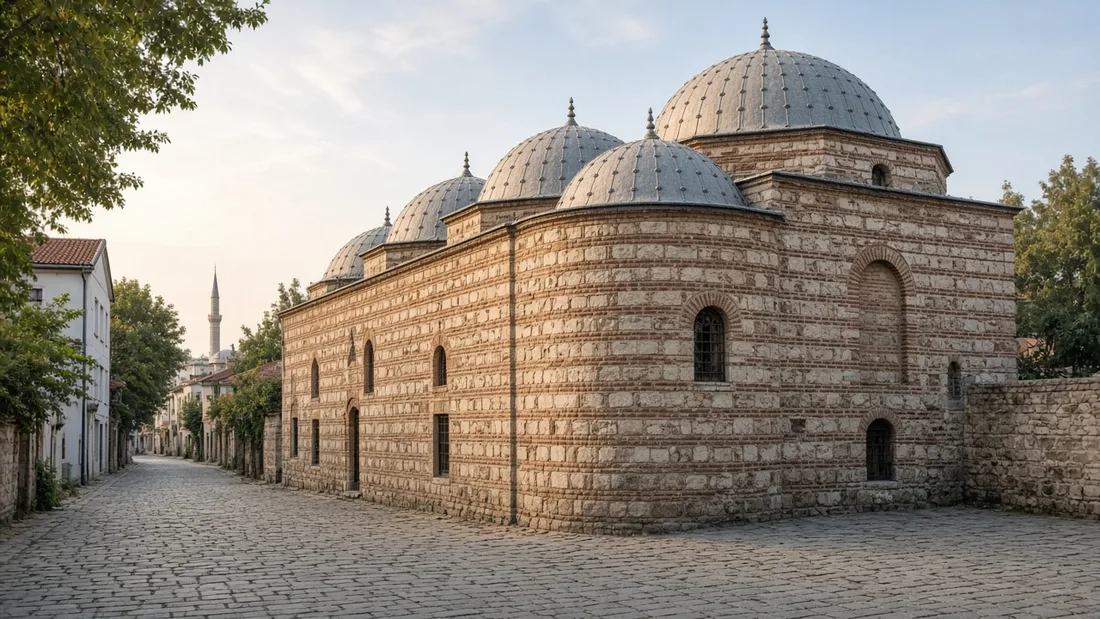
The Sokullu Hammam is also called the "Üç Şerefeli Hammam" or the "Double Hammam" because it stands opposite the Üç Şerefeli Mosque. Commissioned by Grand Vizier Sokullu Mehmed Paşa from Mimar Sinan, the building was completed, according to sources, in 1568–69. It is the only hammam by Sinan in Edirne to have survived to the present day.
The hammam is one of the distinguished examples of classical Ottoman architecture of the second half of the 16th century. The walls show "almaşık" masonry, in which two courses of brick alternate with one course of cut stone. The men's section was given a monumental entrance, while the women's section was kept plainer. Unfortunately, some of the rooms with chimneys on the front façade were demolished when Hükümet Caddesi was widened; the interior, however, has kept its original richness.
The latest restoration revealed a striking detail: there were heating channels under the seating platforms too. This technique, known to have been used by Sinan in his own hammams, kept both the space and the place where bathers sat warm. The building last underwent a comprehensive repair in the 1960s. The work, followed by the Edirne Governorship, is targeted for completion at the end of 2026, when the hammam is to reopen for public use.
Other Historic Hammams Under Restoration
The Mezit Bey (Çukur) Hammam
It is in the Meydan neighbourhood, west of Selimiye and east of the Old Mosque. Although some sources date the building to 1442, it must have been built earlier, since its founder Mezit Bey is known to have died that year on the Wallachian campaign. Because it lies below street level, it is also known as the "Çukur Hamam" (Sunken Hammam). Its restoration began in February 2024, together with the nearby Havlucular Han (Towel-makers' Inn).
The Gazi Mihal Bey Hammam
It was built at the beginning of the 15th century on the bank of the Tunca as part of a complex with the Gazi Mihal Mosque and the Gazi Mihal Bridge. It is a double hammam spread over an almost square area of 23 x 22.5 metres; the men's section is noticeably larger than the women's. According to sources, it was not used after 1829 and was neglected for a long time. Restoration work is under way at the initiative of the Edirne Governorship; converting the building into a space that tells the story of hammam culture is on the agenda.
The Kum Kasrı Hammam
It is one of 11 structures to have survived from the Edirne Palace and is being dealt with as part of the palace revival work. For details, see our Edirne Sarayiçi and Kırkpınar guide.
What to Know Before Going to a Hammam in Edirne
Bathing in a historic hammam is more of a ritual than an everyday experience. A few practical notes for first-timers:
- The sections are separate. In double hammams, the women's and men's sections have separate entrances; families use different sections at the same time.
- A peştamal and towel are provided. Most hammams provide a peştamal (traditional cotton wrap), a towel and slippers; if you would like to bring your own kese (exfoliating mitt), you can.
- Do not rush in the hot room. Sweating on the central platform for 15–20 minutes prepares the body before the scrub and foam.
- Drink water. Staying long in the hot room makes you thirsty; on the way out, a cold drink or a hot tea does you good.
- Anyone who is pregnant or has blood pressure or heart problems should consult their doctor before entering a hammam.
- Confirm prices and hours. The scrub-and-foam service, the opening days of the women's section and fees can change.
After the hammam, a light meal or a long tea break is the most pleasant moment of the day. For those who want to sit and rest in a courtyard after the hammam, our suggestions for a quiet café break in Edirne are ready.
A Route Combining the Hammams and a Kaleiçi Walk
The Saray, Mezit Bey, Sokullu and Tahtakale hammams form a line within walking distance of one another. A walk that starts at Selimiye in the morning, takes in the Saray Hammam, then the Old Mosque and the Mezit Bey Hammam, the Üç Şerefeli Mosque and the Sokullu Hammam, and then goes down to Tahtakale on Saraçlar Caddesi takes about an hour and a half. As the Gazi Mihal Hammam is on the Tunca bank, it can be added to a river walk; a suggested route is in our Meriç and Tunca river walking route post.
For those who want to spread this route over a relaxed weekend, a stay in Kaleiçi, Edirne's old quarter, is a good starting point; all the hammams are within walking distance. You can plan your route via our location in Kaleiçi, Edirne (Google Maps).
Frequently Asked Questions
Are there historic hammams in Edirne?+
Yes. The Saray Hammam, north-east of Selimiye, has served with women's and men's sections since March 2011, after its restoration between 2007 and 2009. According to sources, the women's section of the Tahtakale Hammam is also still in use. Plan a bath around those, and check the others, which may be shut for work.
Which is the largest hammam in Edirne?+
The Tahtakale Hammam, built by Murad II in 1434–35, is known as Edirne's largest hammam. The dome of its men's changing hall is 16 metres in diameter. Tahtakale, from Murad II's reign, with a very wide dome over the men's changing hall. You mostly see that dome from the street, because the bath sits low.
Is the Sokullu Hammam open?+
The Sokullu Hammam, built by Mimar Sinan in 1568–69, is under restoration. The work is targeted for completion at the end of 2026; confirm the opening date before you go. It is still in restoration, with completion aimed at the end of that year.
Did Mimar Sinan build a hammam in Edirne?+
Yes. The Sokullu Hammam, opposite the Üç Şerefeli Mosque, is Mimar Sinan's only surviving hammam in Edirne. Do not look for a second.
Why is the Saray Hammam called by this name?+
The hammam was one of the buildings of the first Edirne Palace (Saray-ı Atik), which stood on the same hill before Selimiye. When the palace was removed and Selimiye built, it was opened to the public. It belonged to the old palace on this hill. When that palace was cleared for Selimiye, the bath was opened to the public and kept the palace's name.
How many historic hammams were there in Edirne?+
Sources report that there were 30–35 hammams in Edirne in the Ottoman period. Today some of them are still standing, above all the Saray, Tahtakale, Sokullu, Mezit Bey and Gazi Mihal hammams.
Are the women's and men's sections separate in Edirne's hammams?+
Most of Edirne's historic hammams follow the double hammam plan; the women's and men's sections are side by side, with separate entrances. Ask which entrance is which before you commit.
What should I bring when going to a hammam?+
Most hammams provide a peştamal, towel and slippers. It is enough to bring your own kese, shampoo and spare underwear; ask about fees and services in advance. A wrap, a towel and slippers are usually there.
When did the Saray Hammam start serving bathers again?+
After a restoration by the Directorate of Foundations between 2007 and 2009, it has had women's and men's sections in service since March 2011. It stands north-east of Selimiye and is the best-known historic hammam open for bathing. It most likely dates from the first half of the 15th century.
When was the Tahtakale Hammam built?+
In 1434–35, under Murad II, on Saraçlar Caddesi, and it is called the city's largest hammam. The Sokullu Hammam, Mimar Sinan's only surviving hammam in Edirne, is under restoration with completion aimed at the end of 2026. Sources say the Ottoman city had 30 to 35 hammams.
You may also like: Accommodation, Breakfast, Events.