Edirne's Üç Şerefeli Mosque (1438–1447) with its 67.62 m minaret, and the Old Mosque (1403–1414) with 9 domes and 50+ calligraphic inscriptions. Measures and tips.
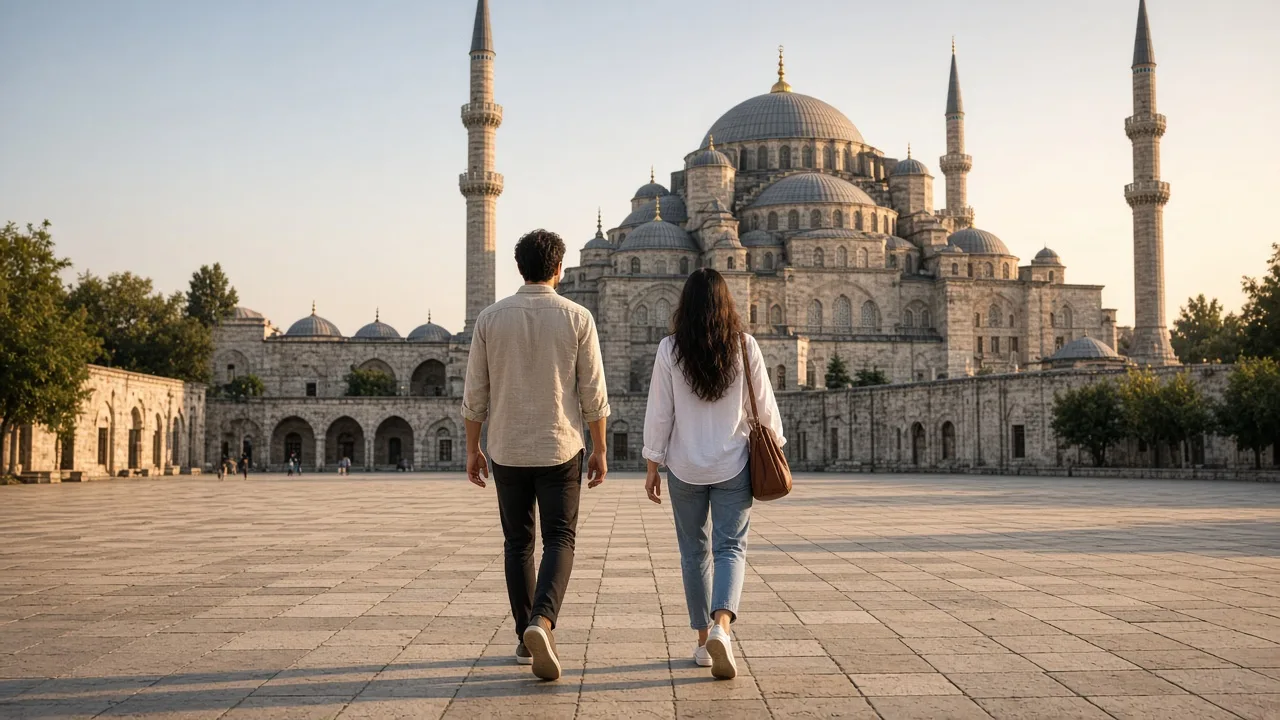
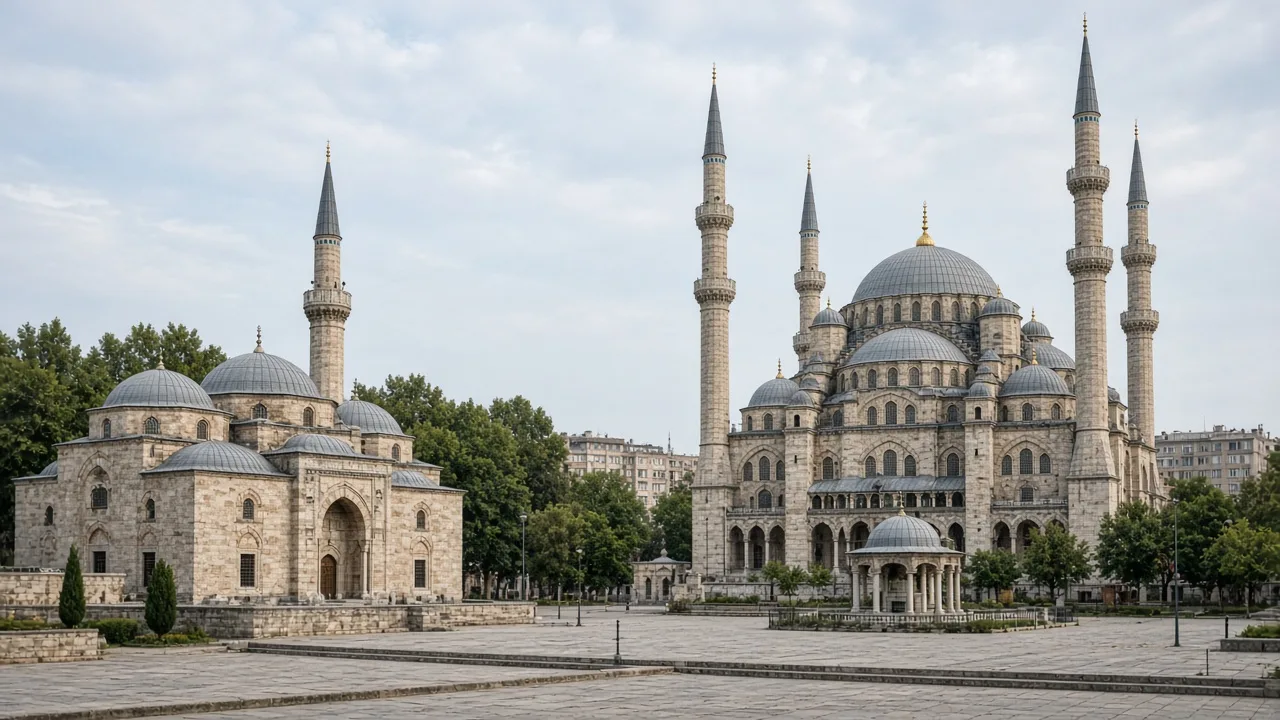
In Edirne, the Üç Şerefeli Mosque was built by Murad II between 1438 and 1447, and the Old Mosque (Eski Cami) between 1403 and 1414; both are in the centre and within walking distance of each other. Üç Şerefeli stands out for its 67.62-metre minaret and the first large arcaded courtyard in Ottoman architecture; the Old Mosque for its nine domes resting on four massive piers and more than 50 calligraphic inscriptions.
Café & Restaurant
Coffee, desserts and a relaxing break
A local rhyme in Edirne sums up the highlights: "The Old Mosque for its script, Üç Şerefeli for its gate, the Selimiye for its structure." The first two buildings of the rhyme are the subject of the sections below.
Quick Overview
| Topic | Üç Şerefeli Mosque | Old Mosque |
|---|---|---|
| Built | 1438–1447 | 1403–1414 |
| Commissioned by | Murad II | Emir Süleyman / Çelebi Mehmed |
| Dome | Central dome ~24 m in diameter | 9 domes on 4 massive piers |
| Minaret | 4 minarets, the tallest 67.62 m | 2 minarets |
| Highlights | Monumental portal, arcaded courtyard | Celî sülüs calligraphic inscriptions |
| Entry | Free | Free |
The Üç Şerefeli Mosque
Construction began in 1438 and the mosque was completed in 1447; it was commissioned by Sultan Murad II. Sources state that its architect was Muslihiddin (Muhlisiddin), but this is not certain.
The minaret that gave it its name
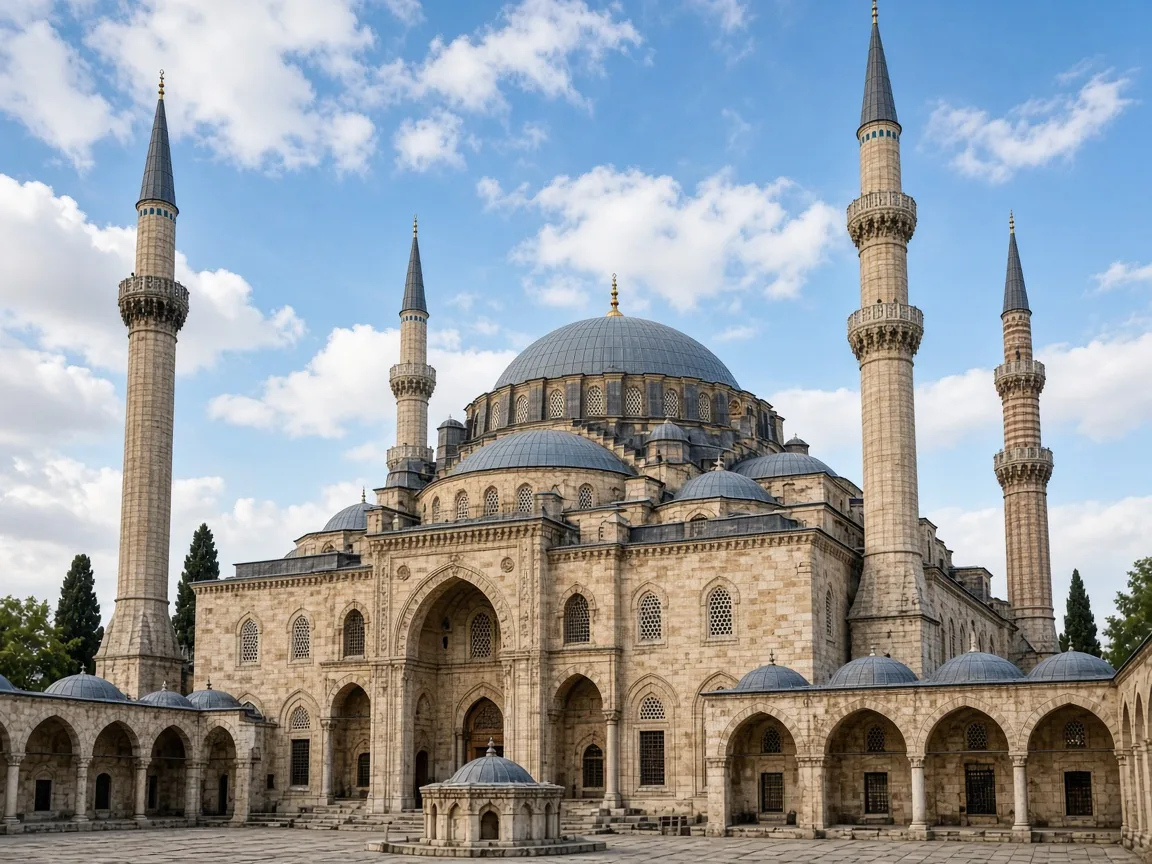
The mosque takes its name from its minaret, whose three balconies (şerefe) are reached by three separate staircases that do not see each other. This minaret is 67.62 metres high with 203 steps. Until the Selimiye was built, it was the tallest Ottoman minaret.
Stay
Stay in Edirne Kaleiçi with breakfast included
The idea of three separate staircases was a first in Ottoman architecture and later influenced the Selimiye; the same solution was applied to the Selimiye's north-east and north-west minarets. The minaret's shaft is enlivened by red stone zigzags and white squares, and its base has blind niches with Bursa arches.
The mosque has four minarets, and all of them are different: one has three balconies, one has two, and the other two have one each. Their patterns also differ — spiral (burmalı), fluted and lozenge-patterned. According to sources, Mehmed the Conqueror had the Lozenge Minaret built, Sultan Mustafa II the Spiral Minaret, and Sultan Ahmed I the single-balcony minaret in the north-west.
A crossroads in architecture
Üç Şerefeli is one of the first attempts in Ottoman architecture at moving from the multi-domed layout to a single large dome. The central dome is about 24 metres in diameter and was the largest Ottoman dome of its time. The building also has the first large arcaded courtyard in Ottoman architecture, a forerunner of the classical-period mosque plan.
Events
Engagements, small weddings and private celebrations
The "gate" in the rhyme
The mosque is remembered for its "gate" in the rhyme because of its decorated monumental portal, with a semi-dome set within two arches. The portal has muqarnas, and in the upper parts of the side niches there are inscriptions set among curling branch and rumi (stylised arabesque) motifs.
Look for these details as you take in the courtyard:
- Tile panels: The lunettes of two of the courtyard windows have navy-blue and white tile decoration, in which the name of Sultan Murad II appears. These tiles are thought to have been produced by the same group of craftsmen who decorated the Green Mosque (Yeşil Cami) in Bursa (1419–21).
- Painted decoration: The original painted decoration (kalem işi) in the domes of the arcades counts among the oldest examples in Ottoman mosques.
- Materials: Marble and white and brick-coloured stone are used together in the portal, side doors, minarets, column capitals and windows.
The building was damaged in the 1752 earthquake and repaired in 1763; the upper shafts and balconies of the minarets were renewed in a plainer form than the original muqarnas workmanship. A comprehensive restoration was carried out in 1930, and work on the painted decoration in 1999.
Breakfast
A generous Turkish breakfast spread in the garden
The Old Mosque
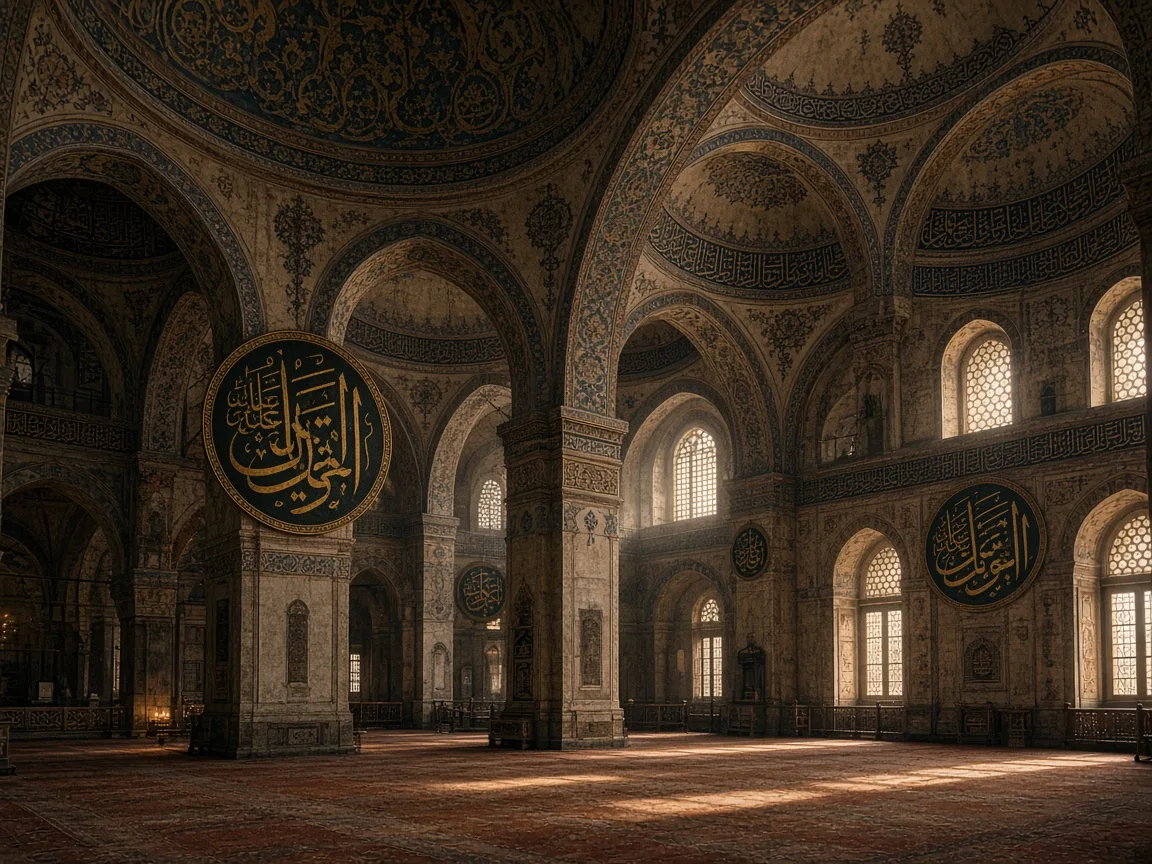
The city's oldest large mosque. Construction was begun in 1403 by Emir Süleyman Çelebi, continued under Musa Çelebi and was completed in 1414, in the reign of Çelebi Sultan Mehmed. According to the inscription on the side door, its architect was Hacı Alâeddin of Konya, and its master builder Ömer ibn İbrahim.
Nine domes, four massive piers
The mosque has a square plan and is built of cut stone; it is covered by nine domes resting on four massive piers (fil ayağı). The domes are about 13.50 metres in diameter, and each side of the piers measures 2.80 metres. The interior covers 2,116 square metres.
These measurements are significant in architectural history: Bayezid I's Grand Mosque (Ulu Cami) in Bursa is covered by 20 domes about 10.60 metres in diameter on 12 piers. In the Old Mosque, the number of piers has dropped to four and the dome diameter has risen to 13.50 metres. In other words, the building represents a step forward in enlarging the interior without dividing it; for this reason it is considered "the last stage of the grand mosque type" and a forerunner of the classical Ottoman plan.
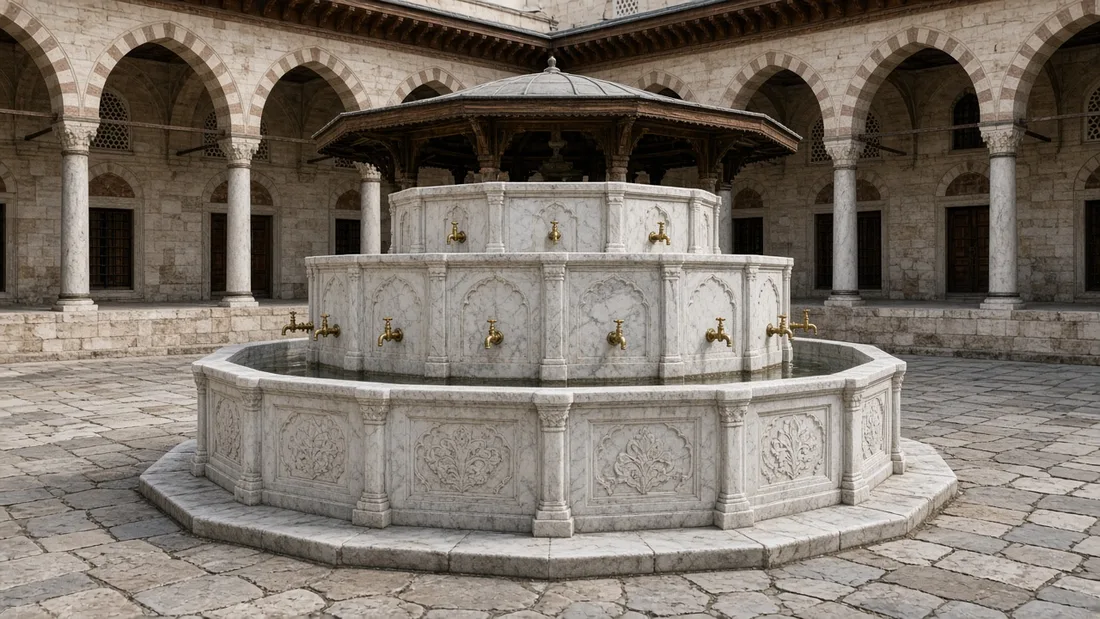
The mosque has two minarets. The tower-style minaret on the east is detached from the mosque and was built together with it — this detachment is a feature of the grand mosque tradition. The other minaret was added later; it is taller, with two balconies and two staircases, and there is also a fountain at its base.
The mosque has no courtyard; it has three doors and a five-bay late-comers' portico. As it is surrounded by a bedesten, a madrasa, a timekeeper's house (muvakkithane) and a sebil (public fountain), it has the character of a small complex.
The "script" in the rhyme
The Old Mosque's most famous feature is its calligraphy. On the interior walls, the piers and the exterior walls there are more than 50 inscriptions written in the celî sülüs (monumental thuluth) style, the work of five calligraphers. Some inscriptions reach 6 metres in length.
Inscriptions to look for:
- The names of Allah and the Prophet Muhammad: In large letters on the two wings of the late-comers' portico.
- The heart-shaped double "vav": With "Maşallahu Teâlâ" written in the middle. The mosque's most photographed detail.
- Hadiths: Such as "This world is the field of the hereafter" and "Scholars are the heirs of the prophets".
- The Esmaü'l-Hüsna (the Beautiful Names of God) and the names of the caliphs.
Other things to see
- Hacı Bayram-ı Veli's pulpit: The preaching chair from which Hacı Bayram-ı Veli, who came to Edirne at Murad II's invitation, gave sermons is preserved in the mosque. Out of respect for his memory, this chair has never been used again.
- Rükn-ü Yemani: In the window to the right of the mihrab there is a stone said to have come from the Kaaba; it is visited especially on holy days.
- Wooden gallery: Made by Ramazan Ağa of Filibe (Plovdiv) in 1611, with edirnekâri decoration.
- Marble minbar: Its side faces are decorated with rumi and geometric ornament.
- Sword-bearing sermon tradition: One of the traditions kept alive at the mosque.
Describing the mosque, Evliya Çelebi writes that on the qibla side there were sweet-voiced birds and flowers such as tulips, hyacinths and Judas tree blossoms; he relates that, depending on the season, these flowers were placed in small pots between the rows of worshippers.
Visiting Tips
- Entry: Entry to both mosques is free.
- Dress: Appropriate clothing is required; headscarves for women visitors are usually available at the entrance. Shoes are removed.
- Time: Visitor numbers rise at prayer times. Early morning or mid-afternoon is quieter.
- Photography: Indoors works best for the Old Mosque's calligraphy, and outdoor light for Üç Şerefeli's portal and courtyard. For photo spots, see our Edirne photo spots article.
- Duration: 45 minutes is enough for Üç Şerefeli and 30 minutes for the Old Mosque.
- Order: If you are also visiting the Selimiye the same day, the order Selimiye → Üç Şerefeli → Old Mosque is the most efficient in terms of distance. For a programme, see our Edirne in one day itinerary.
For details of the Selimiye, our Selimiye Mosque visitor guide shows the way; if you want to see all the city's sights, see our places to visit in Edirne article.
Location and Getting There
Both mosques are right in the city centre and a short walk from each other. The historic bazaars lie around the Old Mosque; for details, see our Edirne's historic bazaars and what to buy article.
You can measure the distance to the mosques from our location in Kaleiçi, Edirne (Google Maps); both mosques are a 5–10 minute walk from Kaleiçi. Central Edirne accommodation turns this closeness into an advantage; for options, see our stays in central Edirne page. If you are coming from outside the city, our how to get from Istanbul to Edirne article will help.
Frequently Asked Questions
When was the Üç Şerefeli Mosque built?+
Construction began in 1438 and was completed in 1447. It was commissioned by Sultan Murad II. In the mid fifteenth century, for Murad II, over those building years. Standing here between the Old Mosque and Selimiye is how you see the step from one to the next.
How tall is the Üç Şerefeli Mosque's minaret?+
67.62 metres. Its three balconies are reached by 203 steps on three separate staircases that do not see each other. Until the Selimiye was built, it was the tallest Ottoman minaret. The stairs are why this one shaft is famous; they are not a casual climb.
How many minarets does the Üç Şerefeli Mosque have?+
Four. One has three balconies, one has two and the other two have one each; they are distinguished from each other by spiral, fluted and lozenge patterns. Four, and they are not copies: one has three balconies, one has two, two have one, and the patterns on the shafts differ. Spotting that is the short lesson in the courtyard.
When was the Old Mosque built?+
Construction was begun in 1403 by Emir Süleyman Çelebi and completed in 1414 in the reign of Çelebi Sultan Mehmed. Its architect was Hacı Alâeddin of Konya. It is the older of the two by a generation.
How many domes does the Old Mosque have?+
Nine domes resting on four massive piers. The domes are about 13.50 metres in diameter, and the interior covers 2,116 square metres. Nine, on four great piers, over a wide hall. Count them from the courtyard and the plan becomes clear.
How many calligraphic inscriptions are there in the Old Mosque?+
There are more than 50 inscriptions written in the celî sülüs style, the work of five calligraphers. Some inscriptions reach 6 metres in length. Dozens, in a large script, by five calligraphers, and some of them are very long. Look up; the writing is the decoration.
Where is the heart-shaped double "vav"?+
It is inside the Old Mosque, among the large calligraphic works on the piers and walls; "Maşallahu Teâlâ" is written in its centre. It is easy to walk past, so ask if you cannot see it.
Is there an entry fee for the mosques?+
No, entry to both mosques is free. Appropriate clothing is required and shoes are removed. Both are free. Dress as you would for prayer, and take your shoes off.
Can I visit both mosques in one go?+
Yes. Both are in the centre and within walking distance; allowing 1.5 hours in total is enough. They are a short walk apart in the centre, and an hour and a half is enough if you are not reading every line of script.
Which mosque should you visit first?+
If you are also including the Selimiye in your programme, the order Selimiye → Üç Şerefeli → Old Mosque is the most efficient in terms of distance. That is the short route, and reversing it means walking the same street twice.
You may also like: Accommodation, Breakfast, Events.