Enez, Edirne travel guide: ancient Ainos 171 km away, Enez Castle, the Hagia Sophia reopened in 2021, Has Yunus Bey Tomb and Gala Lake's 217 birds. Plan your trip.
Enez, a district of Edirne, is a historic coastal town about 171 km from the city centre, founded where the Meriç River flows into the Aegean Sea; its ancient name was Ainos. The three main stops of a visit are Enez Castle on the hill, the Hagia Sophia (Fatih) Mosque inside the castle and Gala Lake National Park, 10 km from the town. If you set aside a full day, the castle, the lagoon lakes and birdwatching fit comfortably into the same plan.
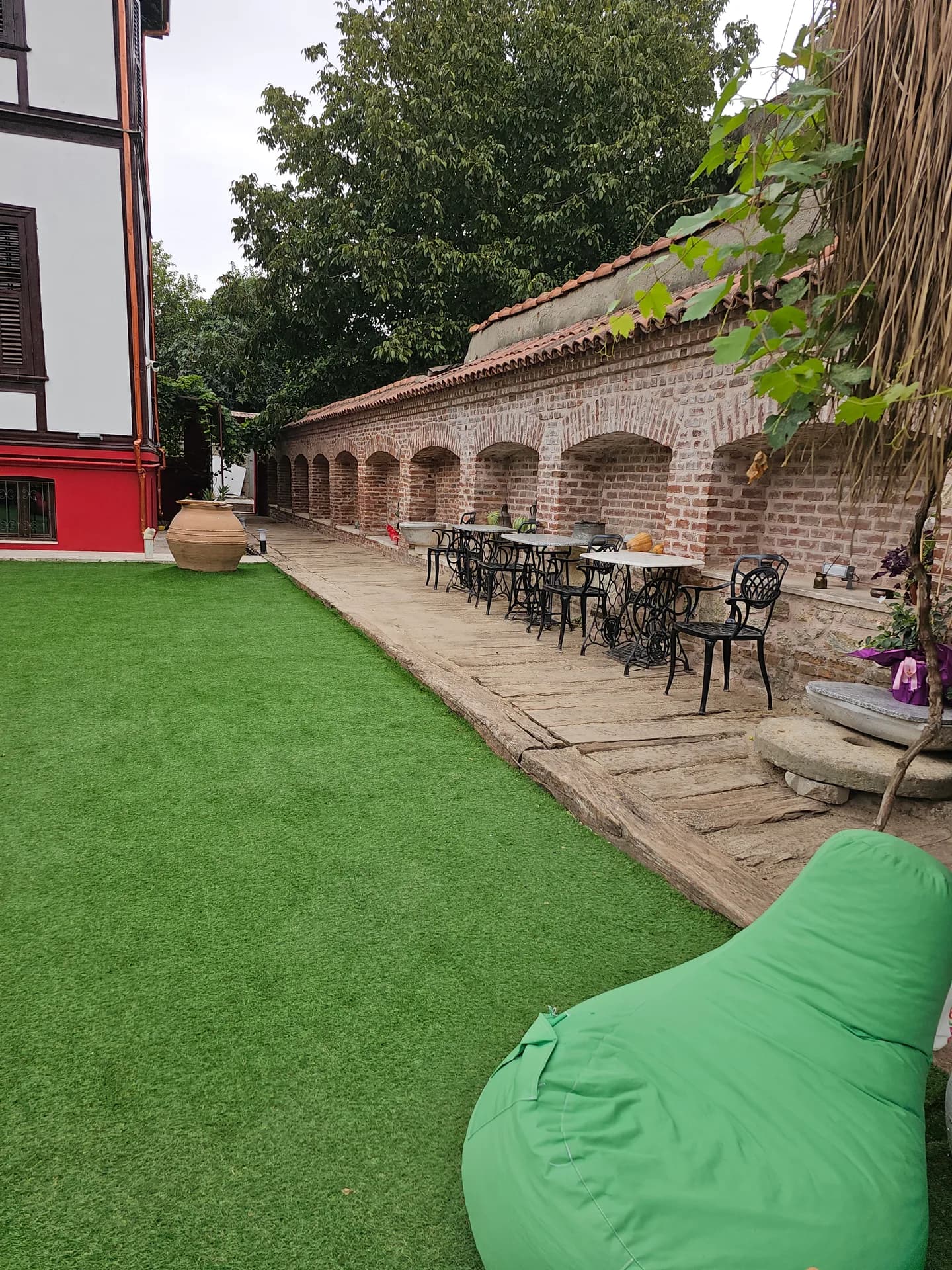
Café & Restaurant
Coffee, desserts and a relaxing break
Enez is a small town, but few places in Thrace weave stone, water and birds together so closely. From the castle walls you see the reed-covered Meriç Delta on one side and the light blue of the Gulf of Saros on the other.
Quick Overview
| Topic | Information |
|---|---|
| Location | Southwestern tip of Edirne province, where the Meriç meets the sea |
| Distance from Edirne centre | About 171 km, via Keşan |
| Ancient name | Ainos |
| District status | 1953 |
| Main sites | Enez Castle, Hagia Sophia (Fatih) Mosque, Has Yunus Bey Tomb, Taşaltı Necropolis |
| Nature | Gala Lake National Park (6,087 ha, 2005), Dalyan, Taşaltı and Bücürmene lakes |
| Recorded bird species | 217 (General Directorate of Nature Conservation and National Parks) |
| Best time | April–June and September–October; autumn and winter for birdwatching |
| Recommended time | A full day; one night if possible |
From Ainos to Enez: A Short History
According to the Enez District Governorship, the town is built on a steep limestone peninsula about 25 metres above the sea. Excavations inside the castle have found pottery fragments dating to the 4th and 3rd millennia BC, showing that settlement here goes back to the Chalcolithic Age.
In antiquity the city was called Ainos. Mentioned in Homer's Iliad (Book IV, line 520), the city was, according to Herodotus, a colony founded by Aeolian settlers; finds recovered in the 1988 excavation season also supported this. The ancient name of the Meriç was the Hebros, and the river was a natural trade route linking Ainos to inner Thrace. Over time the city saw Persian, Macedonian, Roman and Byzantine rule; in the late Byzantine period it passed to the Genoese.
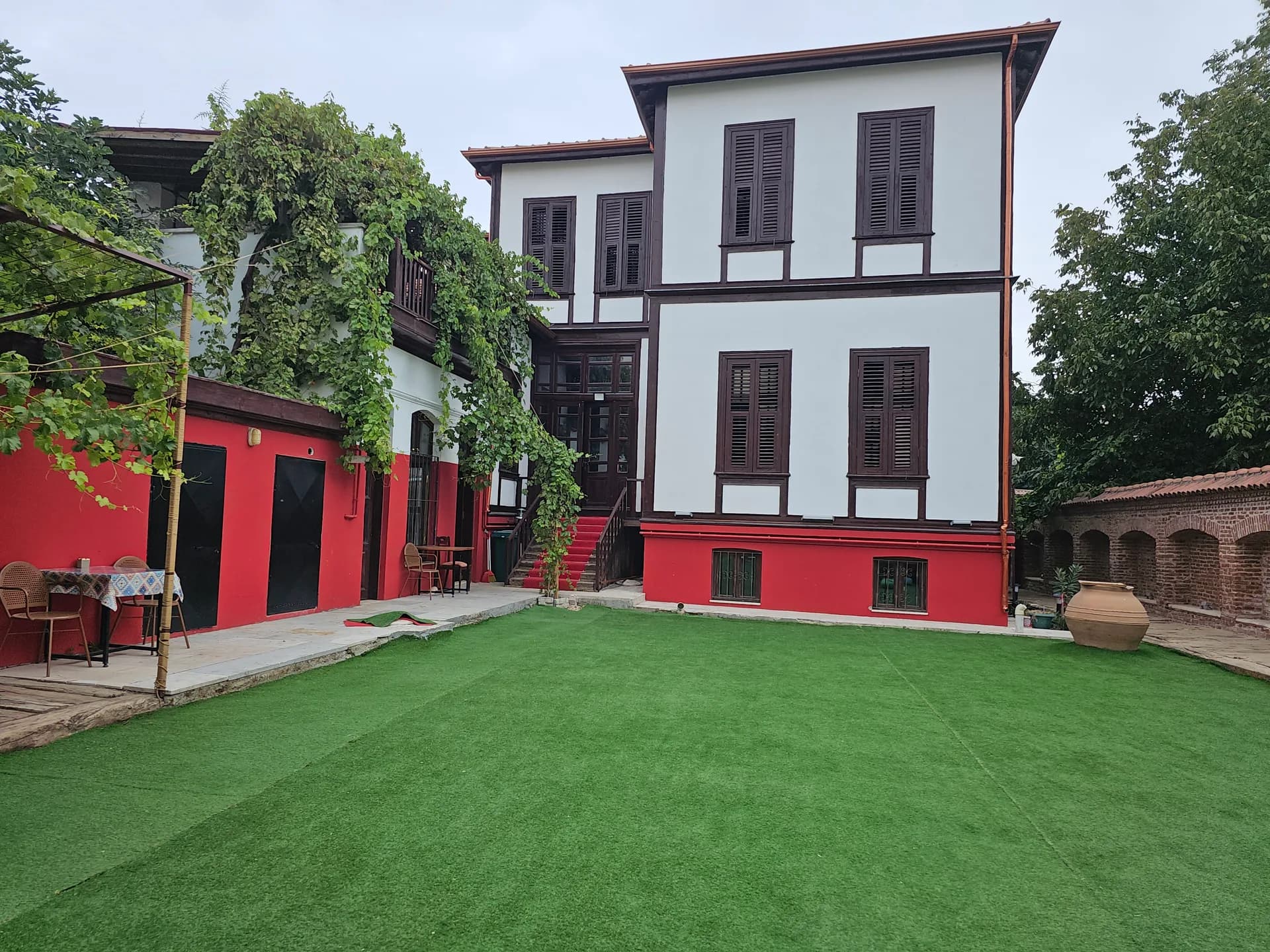
Stay
Stay in Edirne Kaleiçi with breakfast included
The Ottoman period began in 1456. According to accounts, when Has Yunus Bey, one of Sultan Mehmed the Conqueror's commanders, anchored his fleet in the port of Enez, the keys of the city were handed over without a fight. In the Republican period Enez first became a sub-district of Keşan and gained district status in 1953.
Scientific excavations began in 1971 on behalf of Istanbul University under Prof. Dr. Afif Erzen and have continued at intervals to this day. Besides the castle, basilica remains, a large necropolis (ancient cemetery) and a Roman-era sewer system beneath one of the town's streets have been uncovered.
Enez Castle and the Buildings Inside It
Enez Castle rises on the hill that was the acropolis of the ancient city. According to the Kültür Portalı (Türkiye's culture portal), its construction date is not known for certain; the reused material in the walls points to the pre-Byzantine period, and sources report that Emperor Justinian ordered the castle to be repaired in the 6th century AD. The castle was repaired again in the 12th century; cut stone, brick and ancient architectural pieces were used together in its construction.
Events
Engagements, small weddings and private celebrations
According to the Enez District Governorship's introduction, the castle's main features are:
- The castle is entered through two gates, from the north and the east; the main entrance is on the east.
- The wall is supported by 15 towers of different shapes and plans; in places the walls are nearly 3 metres thick.
- Two walls running from the castle towards the sea protected the old harbour. The western wall was positioned to watch for attacks that might come from the direction of the Meriç.
- On the wall next to the monumental entrance gate there is a white marble relief of a Thracian horseman.
A cave inside the castle was used as a chapel in the Byzantine period. The relief of Pan and dancing nymphs from the cave wall is now in the Edirne Museum. The castle's address is Kale Caddesi, Gaziömerbey Mahallesi.
Hagia Sophia (Fatih) Mosque
The most striking building inside the castle is the Fatih Mosque, also known as the "Hagia Sophia of Enez". According to the General Directorate of Foundations, although its original construction date is not known exactly, the building is thought to have been built as a church in the 12th century, in the Byzantine period. After 1456 a mihrab, a minbar and a cut-stone minaret were added and the building was converted into a mosque.
Breakfast
A generous Turkish breakfast spread in the garden
Repaired several times in the Ottoman period, part of the building collapsed in the 1965 earthquake and it could not be used for many years. The General Directorate of Foundations took the first step in 2015, and after the project and tender process, restoration began in 2016. During the work, which included strengthening the foundations and rebuilding the main walls, the soil that had built up around the mosque over the years was also cleared. The mosque reopened for worship on 24 December 2021, after 56 years. When visiting, it is enough to mind prayer times and follow the dress etiquette.
Has Yunus Bey Tomb and Taşaltı Necropolis
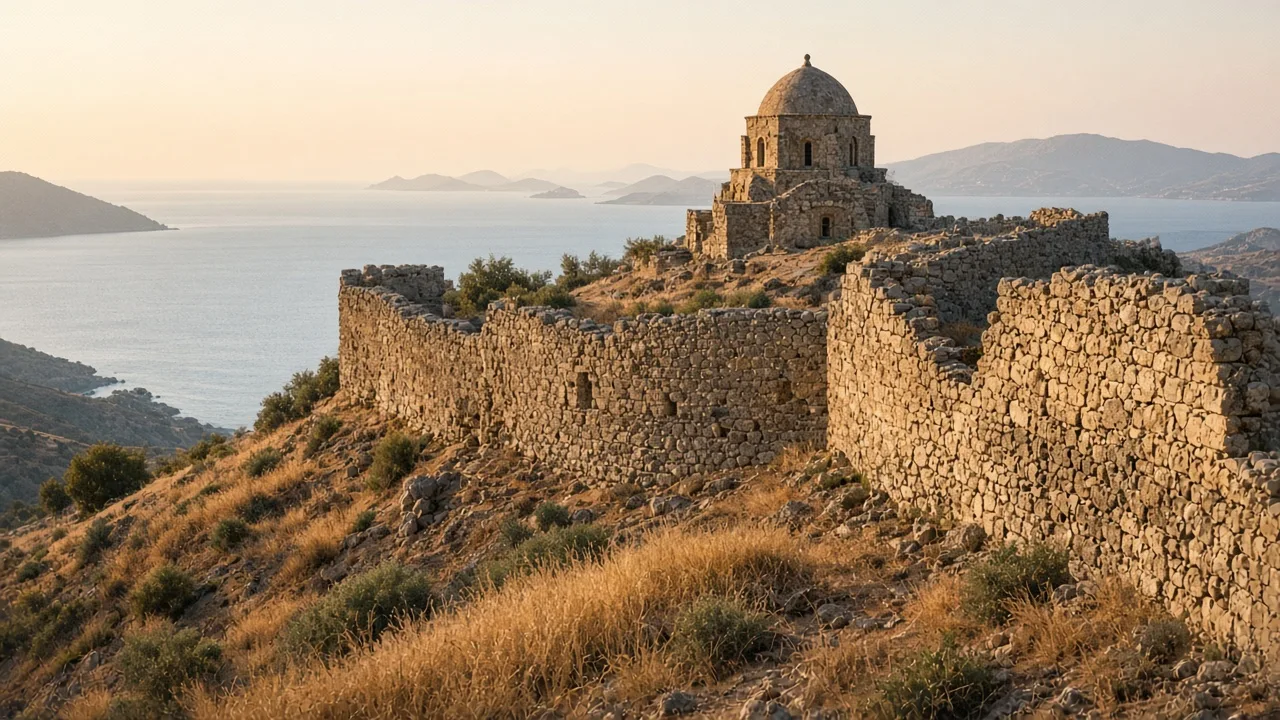
In the south of the town, at the mouth of one of the lagoon lakes, stands a small domed building. Known locally as the Has Yunus Bey Tomb, it is in fact the Chapel of Hagios Evplos, dating from before the conquest. According to the TDV Encyclopaedia of Islam and Kültür Envanteri (cultural inventory) records, the building has a cross plan; its inner dimensions are about 5.80 × 5.10 metres. The central dome rests on a drum 1.65 metres high, and the drum has four narrow windows measuring 15 × 60 cm. When it was converted into a tomb, the original entrance on the west was walled up and a new door was opened in the north arm.
This is the place marked "Yunusluk" at the edge of the port of Enez on the small map in Piri Reis's Kitâb-ı Bahriyye. The Ottoman cemetery of about 18 dönüm (roughly 1.8 hectares) around the tomb was used from the conquest until the end of the 18th century; the oldest inscribed gravestones date from the 16th century. The white marble tombs decorated with cypress and flower motifs carry fine examples of calligraphy.
At the entrance to the town, about 250 metres from the main road, the Taşaltı Necropolis is the largest cemetery of ancient Ainos; sarcophagi lined up on bases and family tombs carved into the rock can be seen here. At the Kral Kızı site on the western slope of Taşaltı Lake are the remains of a basilica uncovered by excavations.
Gala Lake National Park and the Lagoon Lakes of Enez
The second face of Enez is water. Gala Lake National Park in the Meriç Delta lies between Enez and İpsala, about 10 km from Enez and 22 km from İpsala. The area's protection history goes back to 1991: that year a 2,369-hectare area covering the Pamuklu and Küçük Gala lakes was declared a Nature Conservation Area. With a Council of Ministers decision published in the Official Gazette of 5 March 2005, the boundaries were extended and the area became a 6,087-hectare national park. The Enez District Governorship records Gala as Türkiye's 36th national park.
The park consists of the wetland formed by the Büyük Gala, Küçük Gala and Pamuklu lakes, together with Hisarlı Dağı (Hisarlı Hill) and the woodland on its slopes. According to District Governorship data, it is home to a total of 1,028 species: 511 plant and 517 animal species. According to the General Directorate of Nature Conservation and National Parks, 217 bird species are recorded in the park: 65 resident, 55 winter visitors, 59 summer visitors and 38 passage migrants. In the 2018 midwinter waterbird count, 31,584 birds were counted.
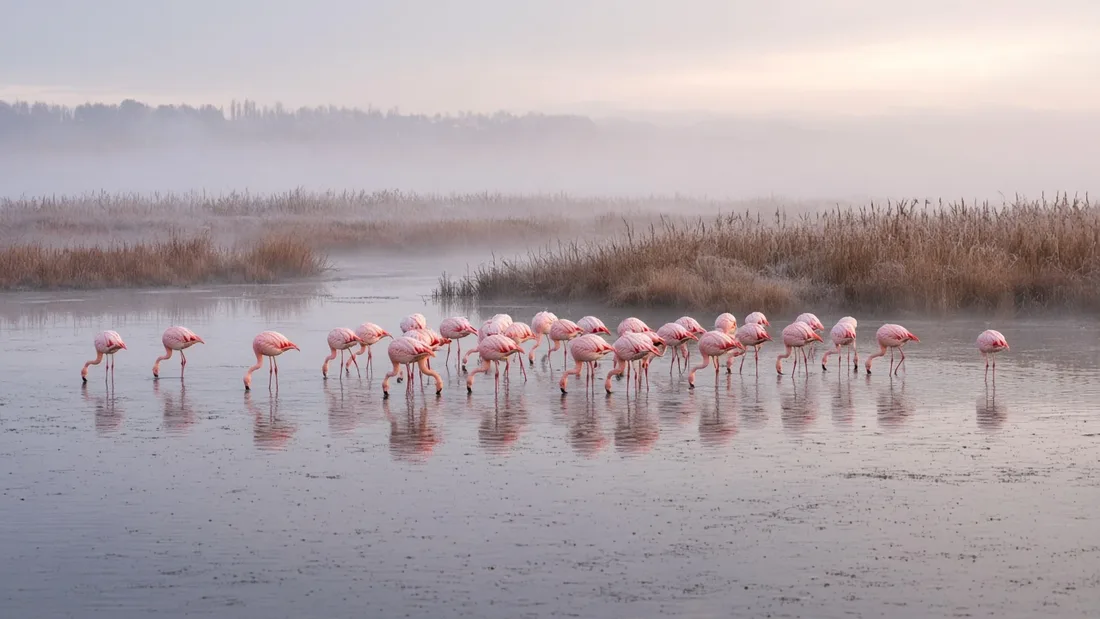
In the winter months, flamingos, Bewick's swans, whooper swans and coots fill the lake. The endangered Dalmatian pelican and pygmy cormorant are also among the park's important species.
Dalyan, Taşaltı and Bücürmene Lakes
The harbours of ancient Ainos were gradually cut off from the sea by the alluvium carried by the Meriç and turned into lagoon lakes. According to sources, the largest of these is Dalyan Lake, about 3.4 km², with an average depth of around 1 metre. It is followed by Bücürmene (Işık) Lake, about 76 hectares, and Taşaltı Lake, 70 hectares. Traditional fish-weir (dalyan) fishing is carried out on Dalyan Lake; the main catch is mullet and eel. The silhouettes of flamingos over the shallow water at sunset are among the most beautiful views in Enez.
In summer Enez also gets busy with the Altınkum, Sultaniçe and Vakıf beaches on the Gulf of Saros; it is more relaxed to set aside a separate half day for the sea.
How to Get from Edirne to Enez: Distance and Best Season
The road from Edirne centre to Enez heads down to Keşan and turns west after Keşan. Approximate distances:
| Route | Approximate distance | Note |
|---|---|---|
| Edirne centre – Keşan | 112 km | Via Havsa or Uzunköprü |
| Keşan – Enez | 61 km | West from Keşan, towards the coast |
| Edirne centre – Enez | 171 km | About 2–2.5 hours by car |
| Enez – Gala Lake National Park | 10 km | Towards İpsala |
According to the Kültür Portalı, Enez is reached by public transport with minibuses via Keşan. There are regular bus services from Edirne bus station to Keşan. As timetables change with the season, confirm the current schedule, including the return service, before you go. Because public transport to Gala Lake and the lagoons is limited, a private car is much more practical for a full programme.
The Enez District Governorship describes the district's climate as hot and dry in summer and cool and rainy in winter; the wind mostly blows from the north. A short guide by season:
- April–June: The delta is green and the weather mild; the most comfortable time for walks at the castle and along the lakeshore.
- July–August: Beach season, the town is busy. There is little shade at the castle and necropolis, so visit the historic sites in the morning.
- September–October: Calm, mild days; bird migration speeds up in October.
- November–February: Flamingo and swan season. Be prepared for wind and muddy dirt roads; it gets dark early.
For month-by-month temperature and rainfall data, see our best time to visit Edirne article.
A 1-Day Itinerary for Enez
A sample programme for those leaving Edirne centre and returning the same day:
1. 07.30 – Departure: Leave from Kaleiçi, with a short break in Keşan. 2. 10.00 – Enez Castle: The walls, the Thracian horseman relief and the Hagia Sophia (Fatih) Mosque; 1–1.5 hours. 3. 11.30 – Has Yunus Bey Tomb and Taşaltı: The tomb, the Ottoman cemetery, the shore of Taşaltı Lake and the necropolis. 4. 13.00 – Lunch: A seafood-focused meal in the town. 5. 14.30 – Gala Lake National Park: Birdwatching by the lake and a short walk; 1.5–2 hours. 6. 17.00 – Dalyan Lake: In summer, a short stop close to sunset. In winter, start heading back around 16.30. 7. 18.00 – Return: You will be in Edirne centre around 20.30 in the evening.
If you plan your return via Uzunköprü, you can also make a short stop at the historic stone bridge built between 1427 and 1443; details are in our Edirne Uzunköprü travel guide. If you want to compare district routes, take a look at our day trips around Edirne article as well.
Making Enez part of an Edirne weekend and spending the night in the centre lets you set aside the next morning for Selimiye and the bazaars. For a night in Kaleiçi, see our places to stay in Edirne page, and for a morning that starts in the courtyard, our breakfast in Edirne's Kaleiçi page. On your way back from Enez you can plan your route using our location in Kaleiçi, Edirne (Google Maps); because the konak is on the outer side of Kaleiçi, parking is not a problem when arriving by car.
Frequently Asked Questions
How many km is Enez from Edirne centre?+
It is about 171 km by road. The route goes via Keşan and takes 2–2.5 hours by car. Do not treat Enez as a neighbourhood you can nip to after the mosques.
What are the places to visit in Enez?+
The main stops are Enez Castle, the Hagia Sophia (Fatih) Mosque inside the castle, the Has Yunus Bey Tomb and the Ottoman cemetery, the Taşaltı Necropolis, Gala Lake National Park, and Dalyan and Taşaltı lakes. Arriving late in the day will not do them justice.
When did the Hagia Sophia Mosque in Enez reopen for worship?+
Damaged in the 1965 earthquake, the building reopened for worship on 24 December 2021, after 56 years, following the restoration started by the General Directorate of Foundations in 2016. It is a working mosque again after the long closure and the restoration. Dress and behave as you would in any mosque, not as if it were only a ruin.
What was the old name of Enez?+
Its ancient name is Ainos. The city's name appears in Homer's Iliad; according to Herodotus, it was a colony founded by Aeolian settlers. If a sign says Ainos, it is this town.
When was Gala Lake National Park declared?+
The area, which became a Nature Conservation Area in 1991, was turned into a 6,087-hectare national park on 5 March 2005. The park is about 10 km from Enez. The national-park date is the one that matters for a visit, and the park sits a short way out of the town. Add that hop to the drive from Edirne.
Which birds can be seen at Gala Lake?+
217 bird species are recorded in the park. In winter you can see flocks of flamingos, Bewick's swans, whooper swans and coots, as well as endangered species such as the Dalmatian pelican and the pygmy cormorant. Summer is landscape; winter is birds.
Can you get from Edirne to Enez by public transport?+
Yes. You reach Keşan by bus from Edirne bus station and Enez by minibus from Keşan. As timetables change with the season, confirm them before you go. Bus as far as Keşan, then a minibus, and check the season's times before you leave. The mistake is missing the last connection back.
Can Enez be visited in a day?+
With an early morning start, the castle, the tomb, the necropolis and Gala Lake can be visited in a day. If you also want to add the sea, staying one night is more relaxed.
How old is the settlement under Enez Castle?+
The district governorship describes Enez as a steep limestone peninsula about 25 metres above the sea. Excavations inside the castle have found pottery from the 4th and 3rd millennia BC, which places settlement in the Chalcolithic Age. Ainos is mentioned in Homer's Iliad, Book IV, line 520, and Herodotus calls it a colony founded by Aeolian settlers.
When did Enez become a district, and how large is Gala Lake National Park?+
Enez gained district status in 1953. Gala Lake National Park covers 6,087 hectares, was declared in 2005 and lies about 10 km from the town. The Dalyan, Taşaltı and Bücürmene lakes sit in the same wetland landscape, and the best months for a visit are April to June and September to October.
You may also like: Accommodation, Breakfast, Events.