Edirne Hadrianopolis guide: Hadrian's Roman city, the Via Militaris, civic coins and the wall remains you can see today. Discover Roman Edirne and plan your route.
Hadrianopolis is the Roman-era name of Edirne: according to sources, Emperor Hadrian (r. 117–138) refounded the Thracian settlement on the banks of the Tunca during his eastern journey between 123 and 125, surrounded it with walls and gave it his own name. The city soon became a fortress town on the Via Militaris, the busiest military road in Thrace, as well as a coin mint and, in the late Roman period, a provincial capital.
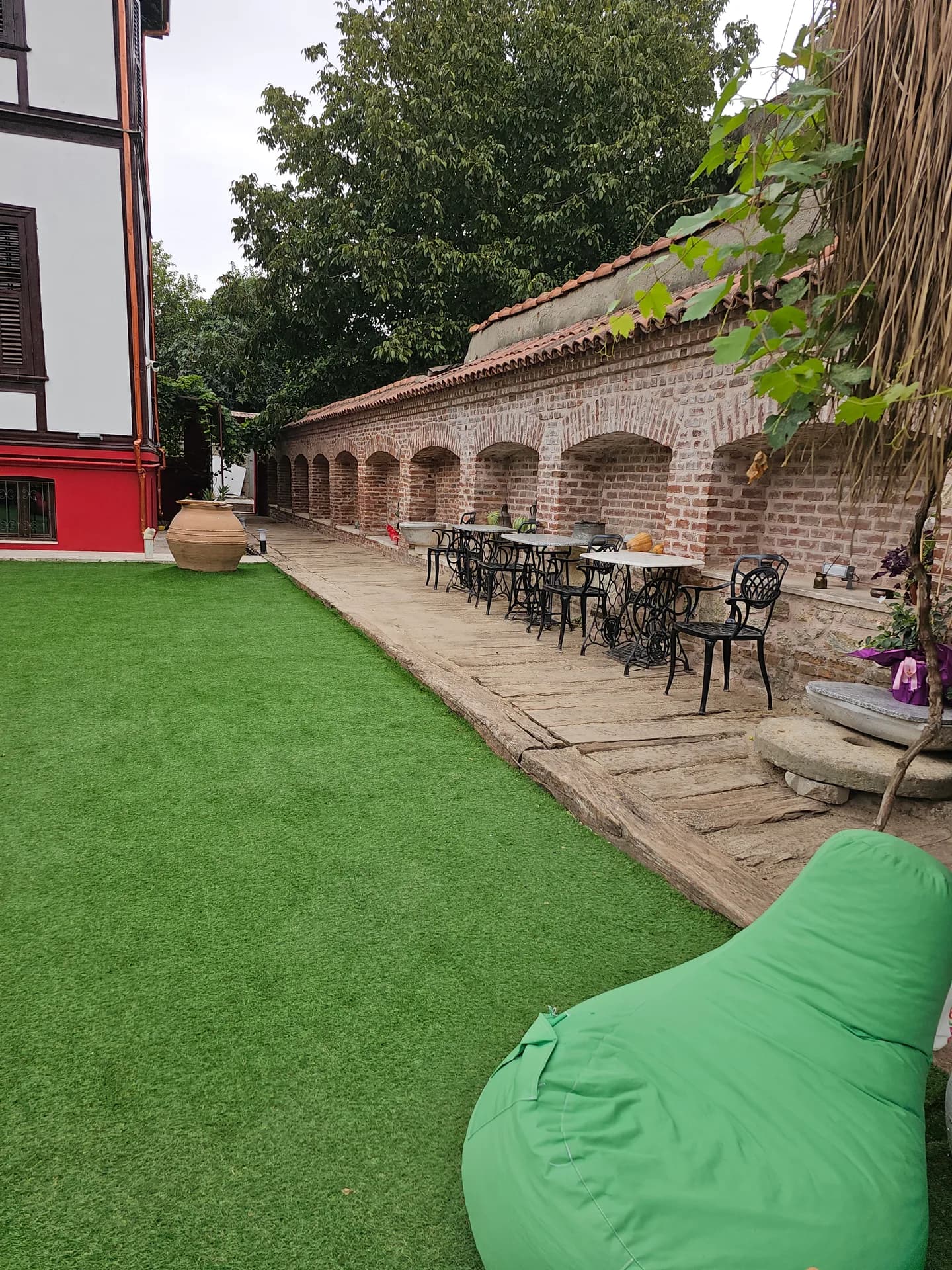
Café & Restaurant
Coffee, desserts and a relaxing break
Today the streets of Kaleiçi run over this Roman core. To understand Hadrianopolis, you need to look together at the stone of its walls, the bronze coins carried in people's pockets and the road that ran through the city.
Quick Overview
| Topic | Information |
|---|---|
| Founder | Roman Emperor Hadrian (r. 117–138) |
| Refoundation | According to sources, between 123 and 125, during his eastern journey |
| Plan | Roman military camp (castrum), streets crossing at right angles |
| Main road | Via Militaris (Singidunum–Constantinople, about 924 km) |
| Local coinage | Bronze issues from Hadrian to Gordian III (238–244) |
| Late Roman status | Capital of the province of Haemimontus (after Diocletian, 284–305) |
| State workshop | Shield and arms workshop (Notitia Dignitatum) |
| Traces to see today | Macedonian Tower and archaeopark, Edirne Museum of Archaeology and Ethnography |
Who Was Emperor Hadrian, and Why Did He Found a City?
Publius Aelius Hadrianus was an emperor from a family originating in Italica in Hispania who came to the throne after Trajan in 117. Instead of his predecessor's policy of conquest, he chose to consolidate the frontiers; the famous wall in Britain, begun in 122, is a product of this approach. What really set Hadrian apart from other emperors, however, was his travels: he spent a large part of his reign touring the provinces one by one.
On these journeys the emperor granted buildings and new status to the cities he visited, and many cities began to bear his name. Hadrianopolis in Thrace is the most lasting example of this policy. The Corpus Nummorum project, run by the Berlin Academy of Sciences, states that the city was most probably refounded in connection with the emperor's eastern journey. Turkish sources generally give the years 123/124. There is no exact founding date; "between 123 and 125" is the safest statement.
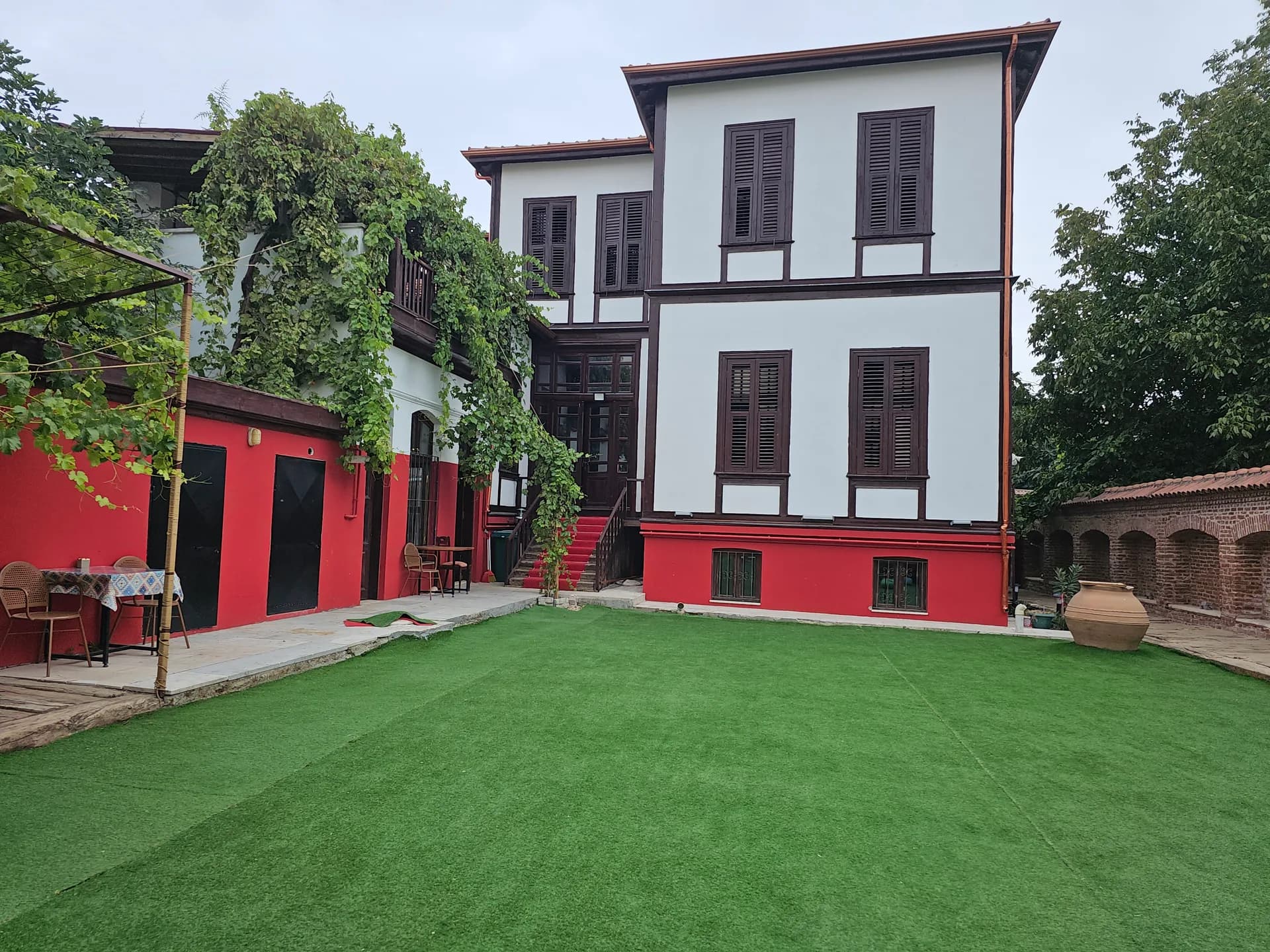
Stay
Stay in Edirne Kaleiçi with breakfast included
Before Hadrian there was a settlement here known as Odrysa and Orestia. We explain in detail how the name changed from Hadrianopolis to Edrene and then to Edirne in our article on the origin of the name Edirne and its journey from Hadrianopolis to today.
Not to Be Confused: The Other Hadrianopolis
The emperor's name was given to more than one city. Besides Edirne, there is another Hadrianoupolis in Türkiye: the ancient city in the Eskipazar district of Karabük, first called Kaisareia and known as the "Zeugma of the Black Sea" for its mosaics. Some of the news stories you find online when searching for "Hadrianopolis excavation" belong to that site; the excavations in Edirne are carried out around the Macedonian Tower.
What Kind of Roman City Was Hadrianopolis?
The TDV Encyclopaedia of Islam defines Edirne as "a Roman castrum founded at the most strategic point of Thrace". A castrum is a Roman army fortress settlement with a square or rectangular plan: it is surrounded by walls on all four sides, divided inside by two main streets crossing at right angles, and its streets run parallel to these axes. The walls of Hadrianopolis rose on ground sloping down towards the banks of the Tunca; the river was both a natural moat and a source of water.
Events
Engagements, small weddings and private celebrations
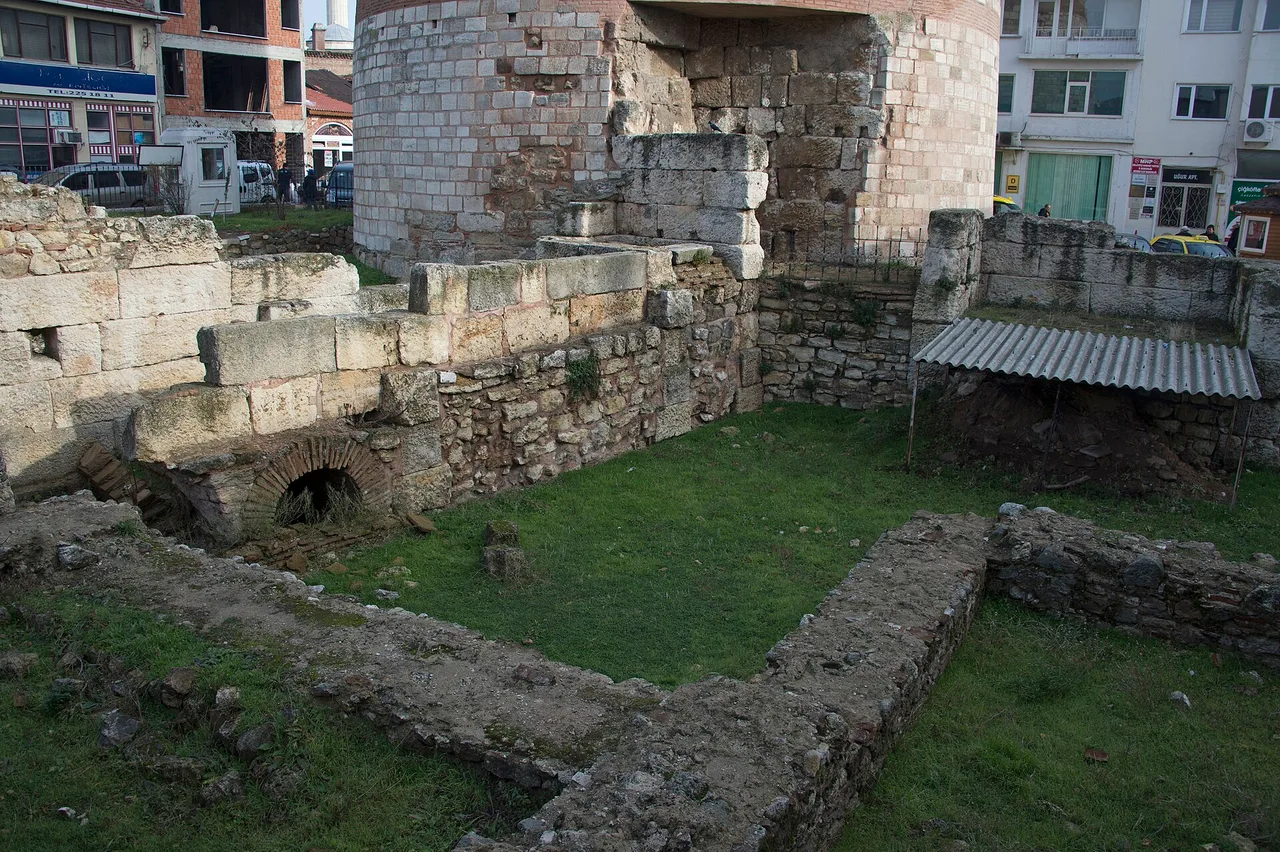
Excavations show that the city was not just a garrison. A pottery kiln was found during rescue excavations carried out by the Edirne Museum around the Macedonian Tower in 2002–2003. A master's thesis prepared at Dokuz Eylül University in 2008, studying the pottery dated by the coins and oil lamps found there, concludes that there was local pottery production in Hadrianopolis in the late Roman period. In other words, inside the walls there were also craftsmen, workshops and everyday trade.
The city's Roman gates and towers and their Byzantine repairs are a separate subject; you can follow the story of the tower on its Roman foundations step by step in our guide to the Macedonian Tower and city walls of Edirne.
Hadrianopolis in the Late Roman Period: Provincial Capital and Arms Workshop
When Emperor Diocletian (284–305) made the provinces smaller and more numerous, the administrative region of Thrace was divided into six provinces: Europa, Thracia, Haemimontus, Rhodopa, Moesia Secunda and Scythia. Hadrianopolis became the capital of the province of Haemimontus, and the city grew beyond a fortress into a regional administrative centre.
Breakfast
A generous Turkish breakfast spread in the garden
The document that best shows the city's military weight is the Notitia Dignitatum, a list of Roman state offices dated to the early 5th century. It lists the state arms workshops (fabricae) of the eastern half of the empire, and only two names appear for Thrace: "Scutaria et armorum, Hadrianopolis Haemimonti" and Marcianopolis. So Hadrianopolis was home to one of the two Thracian workshops producing shields and weapons for the army. The TDV also records that there were arms workshops in the city in the 4th century.
This military position carried the city's name into ancient history books through battles. According to the TDV, on 3 July 324 Constantine defeated his rival Licinius in this area. On 9 August 378, the army of Emperor Valens was defeated by the Goths near Hadrianopolis, and the emperor lost his life in the battle; this is the event known in historiography as the "Battle of Adrianople".
Via Militaris and Via Egnatia: Which Road Was Hadrianopolis On?
Which Roman road Edirne stood on is often confused. The short answer: the Via Militaris.
- Via Militaris (Via Diagonalis): Built in the 1st century, after Thrace became a Roman province in 45–46. Starting in Singidunum (Belgrade), it reached Constantinople via Naissus (Niš), Serdica (Sofia), Philippopolis (Filibe/Plovdiv), Hadrianopolis and Arcadiopolis (Lüleburgaz). Its total length is about 924 km. Along the way there were relay stations, inns, bridges and watchtowers.
- Via Egnatia: The road of about 1,120 km stretching from Dyrrhachium (Durrës) on the Adriatic coast to Istanbul. It entered present-day Türkiye at ancient Kypsela near today's İpsala and reached Istanbul following the Marmara coast. The centre of Edirne was not on this road; but the south of Edirne province touches the Via Egnatia thanks to Kypsela.
The two roads are like two separate arteries linking the Balkans to Istanbul: one runs from inner Thrace to the Danube, the other from the Aegean coast to the Adriatic. Hadrianopolis was the largest fortress on the inland road before Constantinople. In the Ottoman period the same route was used as a campaign road called the "Middle Branch" (Orta Kol).
There is also a clue to where the Roman road entered the city: the TDV writes that the core of the Gazi Mihal Bridge, on the Kapıkule side of Edirne, is generally accepted to date back to the Roman period; Byzantine marks on the bridge stones support this. You can find the bridge's later Ottoman phases in our article on the Byzantine origins and inscriptions of the Gazi Mihal Bridge in Edirne.
Coins of Hadrianopolis: The City's Name in People's Pockets
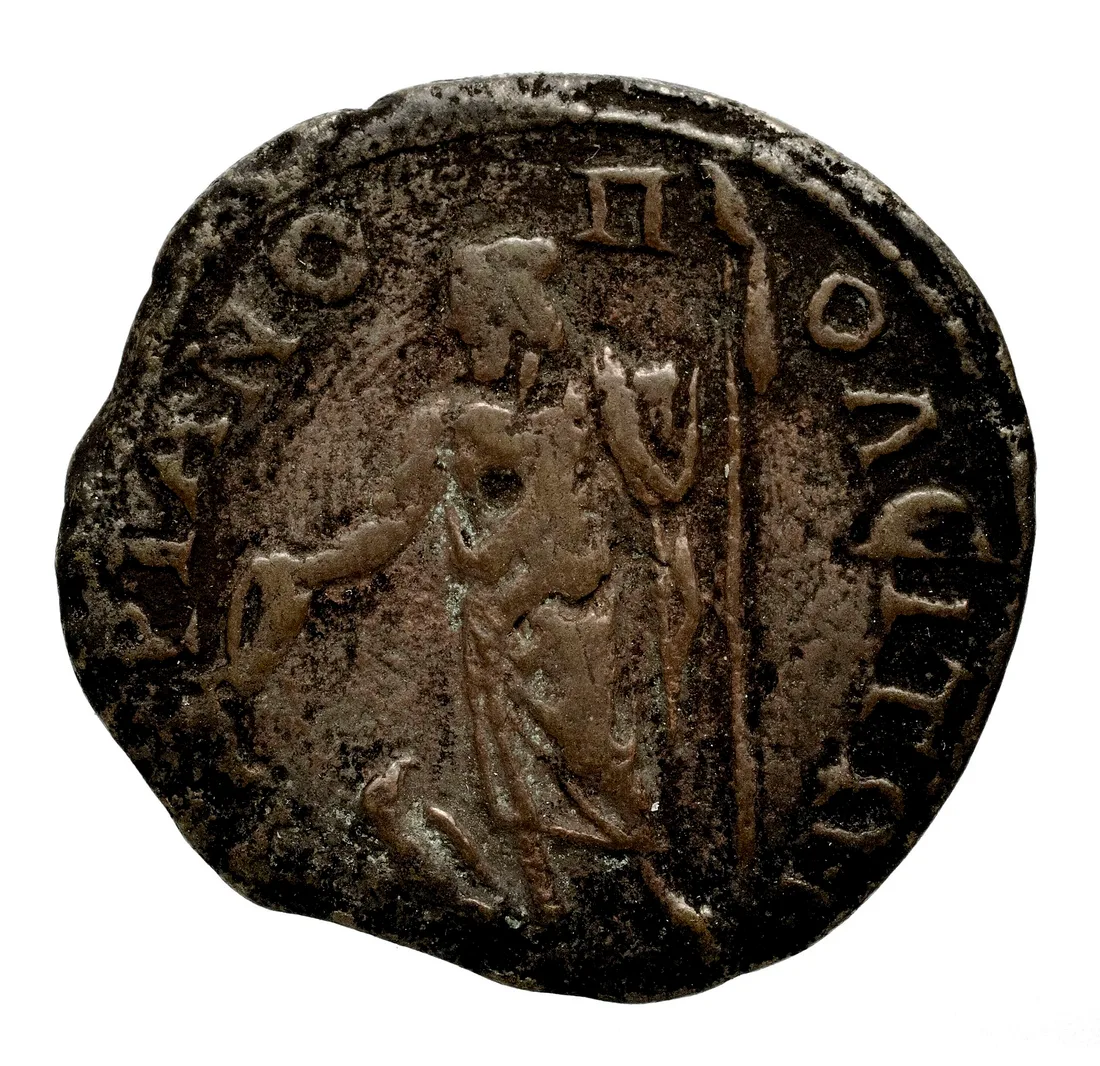
In the Roman Empire, silver and gold coins were minted centrally, while many cities could mint their own bronze small change. Hadrianopolis's local bronze coinage began in the reign of the emperor whose name it bore. According to Corpus Nummorum, the city was the second-largest mint in Thrace after Philippopolis.
Minting continued for about a century, with only a short break under Elagabalus, Severus Alexander and Maximinus Thrax. The peak came in the reign of Gordian III (238–244). In this period the city minted coins in five different denominations. The reverse of the coins reads "ΑΔΡΙΑΝΟΠΟΛΕΙΤΩΝ" in Greek, meaning "of the people of Hadrianopolis". The obverse bears the emperor's portrait, and the reverse shows gods such as Zeus, Apollo, Serapis, Tyche and Asclepius, or a city gate flanked by two towers. The Roman Provincial Coinage (RPC) catalogue in Oxford records 129 examples of this city-gate type; their average diameter is 26 mm and weight about 9.8 grams.
The city-gate image is an interesting detail: researchers infer from these coins that the walls were repaired in the reign of Gordian III. After Gordian's death, the city never minted its own coins again. Today these coins are in the collections of many museums from Sofia to Paris; the Kültür Portalı (Türkiye's culture portal) also counts the valuable coin collection of the Edirne Museum of Archaeology and Ethnography among its highlights.
Where Are the Traces of Hadrianopolis in Edirne Today?
The remains of the Roman city are scattered but can be seen in half a day.
The Macedonian Tower Museum and archaeopark
The tower at the north-eastern corner of Kaleiçi is a Byzantine structure raised in the 10th century on a Roman bastion, and it opened as a museum on 8 July 2026. In the archaeopark in its garden, Roman-era pottery kilns and wall foundations are preserved in place. Confirm visiting hours before you go.
Edirne Museum of Archaeology and Ethnography
The museum behind Selimiye Mosque opened on 13 June 1971, according to the Kültür Portalı. According to the Edirne Governorship, Roman sarcophagi and a 1st-century AD marble altar with Eros figures are displayed in the garden, and inside are funerary stelae of the region's Thracian people depicting the deified "Thracian Horseman". According to an academic thesis studying the museum's Hellenistic and Roman sculpture, 15 works found within the boundaries of Hadrianopolis are kept here: three statues or statue fragments and 12 votive stelae and fragments. For an overview of the museum, take a look at our Edirne Museum guide.
The streets of Kaleiçi
The right-angled street layout of the Roman castrum lived on in Kaleiçi for centuries. After the great fire of 1905, the zoning plan commissioned from French experts in 1908 under Mayor Dilaver Bey redrew the streets while keeping the old chequerboard layout. Today's streets are not the Roman roads themselves, but the logic of the grid comes from Hadrian's fortress. You can find the neighbourhood street by street in our Edirne Kaleiçi guide: history, streets and places to visit.
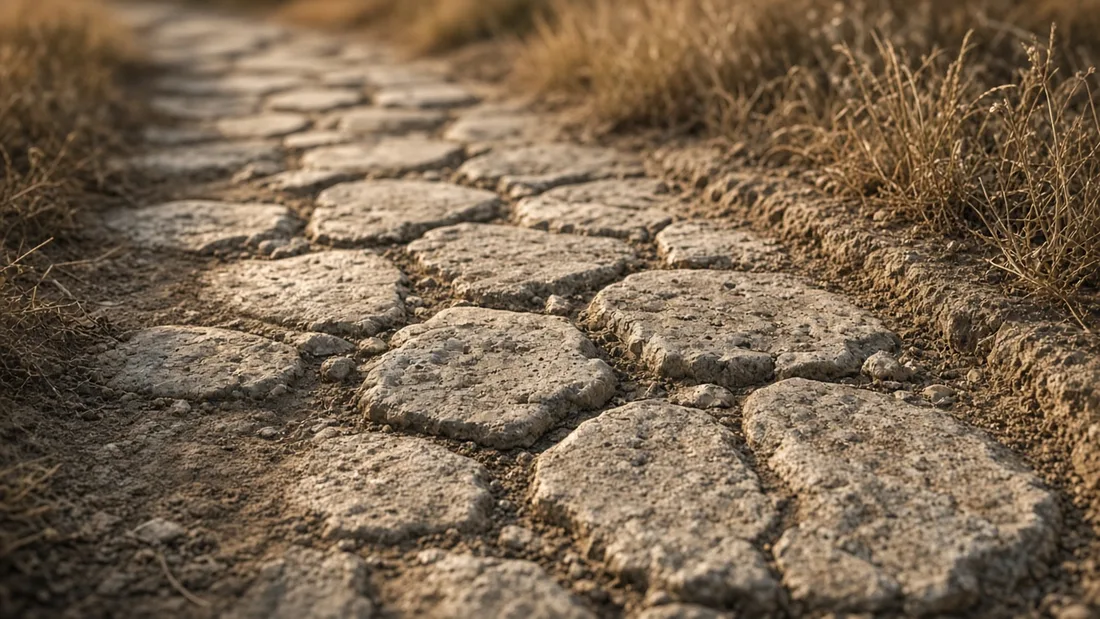
A Day in the Roman Core
Kaleiçi is the most natural starting point for reading Hadrianopolis on foot. The Macedonian Tower is at the north-eastern end of the neighbourhood; from there it is easy to move on to the Museum of Archaeology and Ethnography behind Selimiye. For the Gazi Mihal Bridge, you need a slightly longer walk towards the Tunca or a short drive.
Komşu Konak is in Kaleiçi, about a 5-minute walk from the Ali Paşa Bazaar and 12–15 minutes from Selimiye. If you want to spend the night in this neighbourhood once ringed by Roman walls, see our stay in a historic konak in Kaleiçi, Edirne page; if you want to start your museum day in the courtyard, see our serpme kahvaltı (spread breakfast) in Kaleiçi page; breakfast is served between 09:00 and 13:00. We have no private car park; parking on the outer edge of Kaleiçi is easy. You can plan your route with our location in Kaleiçi, Edirne (Google Maps).
Frequently Asked Questions
Where is Hadrianopolis?+
Hadrianopolis is the Roman-era name of today's Edirne. The city's Roman core is the Kaleiçi neighbourhood on the banks of the Tunca. When a sign says Hadrianopolis, you are already there.
Who founded Hadrianopolis?+
Roman Emperor Hadrian (r. 117–138) refounded the Thracian settlement, surrounded it with walls and gave it his own name. Sources link this to his eastern journey between 123 and 125. The eastern journey is the trip the sources tie to that decision, which is enough context for a walk in the old quarter.
What does Hadrianopolis mean?+
It means "the city of Hadrian". The Greek "polis" means city; the name Adrianople used in Western languages also comes from it. City of Hadrian, with the Greek word for city in the second half, and Adrianople is the Western form of the same name. All three labels are this place.
Was Edirne on the Via Egnatia?+
No. Edirne was on the Via Militaris, which ran from Belgrade to Istanbul. The Via Egnatia passed through ancient Kypsela, near İpsala in the south of Edirne province. That other road passed well to the south, near İpsala, so do not look for it in Kaleiçi.
Are there Roman remains in Edirne?+
Yes. You can see the Roman foundations of the Macedonian Tower, the wall sections and pottery kilns in the archaeopark, and the Roman sarcophagi and stelae in the Edirne Museum of Archaeology and Ethnography. They are scattered, so pair the museum with a walk rather than expecting one fenced forum.
When was the Battle of Adrianople?+
It took place on 9 August 378. The army of Emperor Valens was defeated by the Goths near the city, and Valens lost his life in the battle. The date and the defeat are the historical note attached to the city's old name. You will not find a signed battlefield in the centre; the name on the battle is the old name of Edirne.
Were coins minted in Hadrianopolis?+
Yes. The city minted its own bronze coins from the reign of Hadrian to Gordian III (238–244) and was considered the second-largest mint in Thrace. A coin in the museum with this city's name is local, not an import.
Is Hadrianoupolis in Karabük the same place as Edirne?+
No. Hadrianoupolis in the Eskipazar district of Karabük is a separate ancient city known for its mosaics. Both take their name from Emperor Hadrian. The mosaics people mention belong to a different ancient city that happens to share the emperor's name. Do not hunt for them in Kaleiçi.
Who was Emperor Hadrian, and why did he found a city in Thrace?+
Publius Aelius Hadrianus was an emperor from a family originating in Italica in Hispania who came to the throne after Trajan in 117. Instead of his predecessor's policy of conquest he chose to consolidate the empire, and on his journeys he granted buildings and new status to the cities he visited. Hadrianopolis in Thrace is the most lasting example.
What was Hadrianopolis in the late Roman Empire?+
After Diocletian, who ruled from 284 to 305, it was the capital of the province of Haemimontus. The Notitia Dignitatum records a state workshop there for shields and arms. Bronze coins were issued locally from Hadrian through Gordian III, who ruled from 238 to 244.
Image Credits
- Walls remaining from the Roman fortifications and the Macedonian Tower in Edirne: Dosseman, CC BY-SA 4.0 (
https://creativecommons.org/licenses/by-sa/4.0), source:https://commons.wikimedia.org/wiki/File:Edirne_Roman_Walls_and_Macedonian_Tower_0210.jpg, cropped and converted to WebP. - Bronze coin from the reign of Gordian III minted in Hadrianopolis: Bibliothèque nationale de France (Gallica), Public domain (
https://creativecommons.org/publicdomain/mark/1.0/), source:https://commons.wikimedia.org/wiki/File:Monnaie_-_Bronze,_Hadrianopolis,_Thrace,_Gordien_III_-_btv1b85867817_(2_of_2).jpg, cropped and converted to WebP.
You may also like: Accommodation, Breakfast, Events.