When do Edirne's sunflower fields bloom, and which district has the most? Bloom calendar, Türkiye output share, photo hours and field etiquette: plan your route.
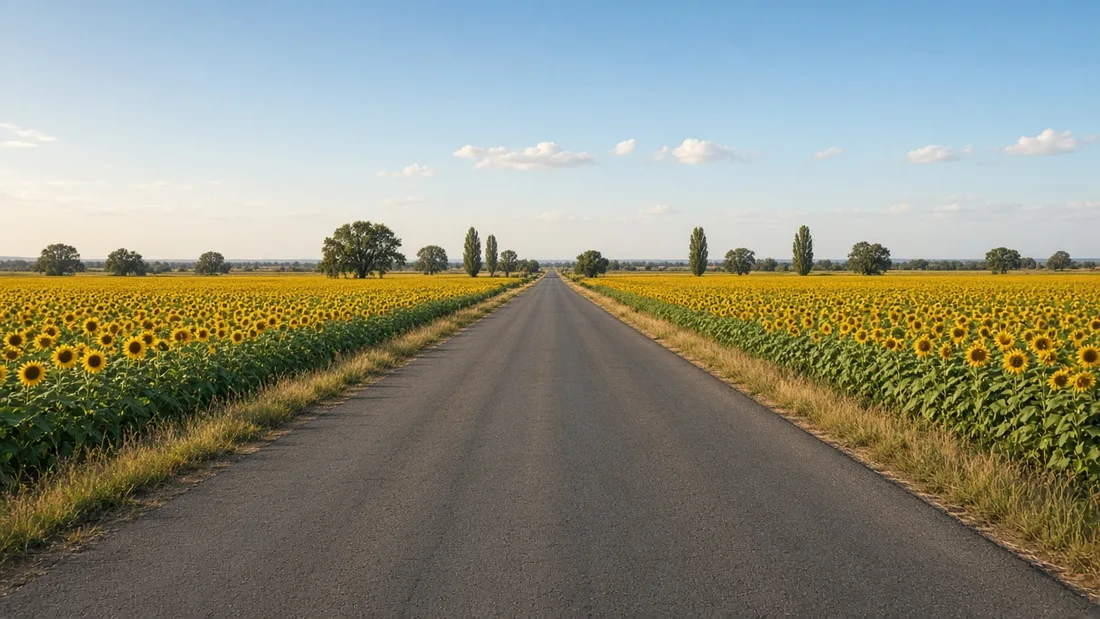
Edirne's sunflower fields are usually in full bloom from the last week of June to the end of July; the widest yellow plains stretch around Uzunköprü, the central district, Keşan and Havsa. According to figures released by the Edirne Governorship, the province sowed sunflowers on 1 million 238 thousand decares in 2025, harvested 173 thousand tonnes and supplied about 11 percent of Türkiye's production. The fields are private property; for photos, shoot from the roadside or ask the field owner for permission.
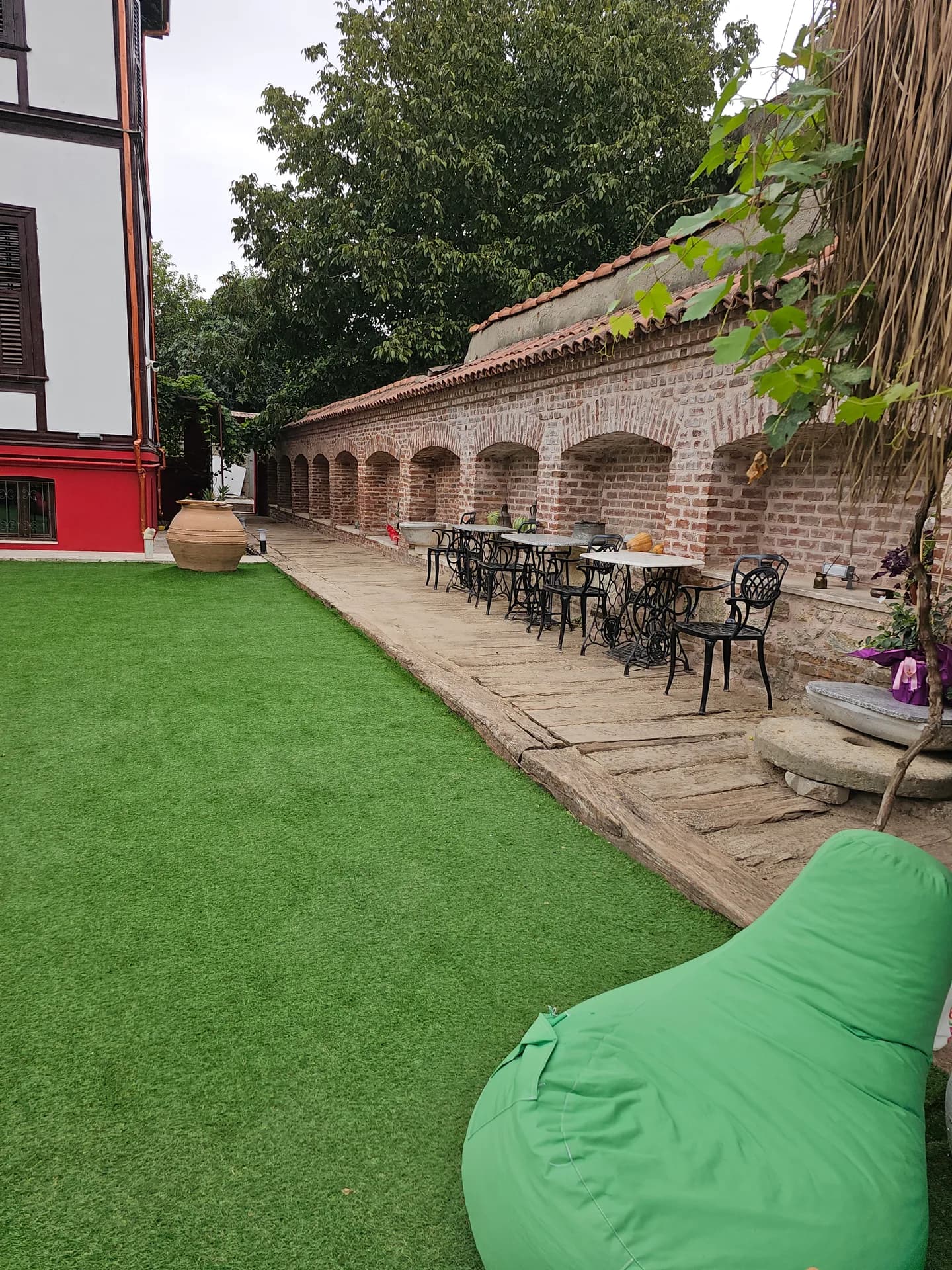
Café & Restaurant
Coffee, desserts and a relaxing break
Farmers in Thrace call this plant "sarı gelin" (the yellow bride), and in summer it briefly paints every road leading out of the city the same colour.
Quick Overview
| Topic | Information |
|---|---|
| Full bloom | Late June – July; ends early in hot years |
| Harvest | Late August – September (in dry 2025 it began at the end of July) |
| Edirne production (2025) | 1,238,368 decares sown, 173,258 tonnes |
| Share of Türkiye (2025) | About 11%, 3rd among provinces |
| Largest sown area (2024 estimate) | Uzunköprü 301 thousand, Central 220 thousand, Keşan 211 thousand decares |
| Local names | Sarı gelin, gündöndü, günebakan |
| Photo hours | First hour after sunrise and before sunset |
| Golden rule | Do not enter fields without permission; do not pick plants |
Production figures are compiled from statements by the Edirne Governorship and the Edirne Provincial Directorate of Agriculture and Forestry, and district estimates from the Directorate's 2024 season briefing. Since the blooming week changes every year, confirm the current situation with local sources before setting off.
When Do Sunflowers Bloom in Edirne?
Sunflowers are sown in Thrace in spring. According to the cultivation notes of the Trakya Agricultural Research Institute, sowing in Türkiye usually takes place between late March and mid-May; germination needs a soil temperature of at least 8–10 °C. The plant needs an average growing period of 120–130 days. For one variety in the Institute's registration records, the time to flowering is given as 56–61 days. By that count, a field sown in April turns yellow at the end of June.
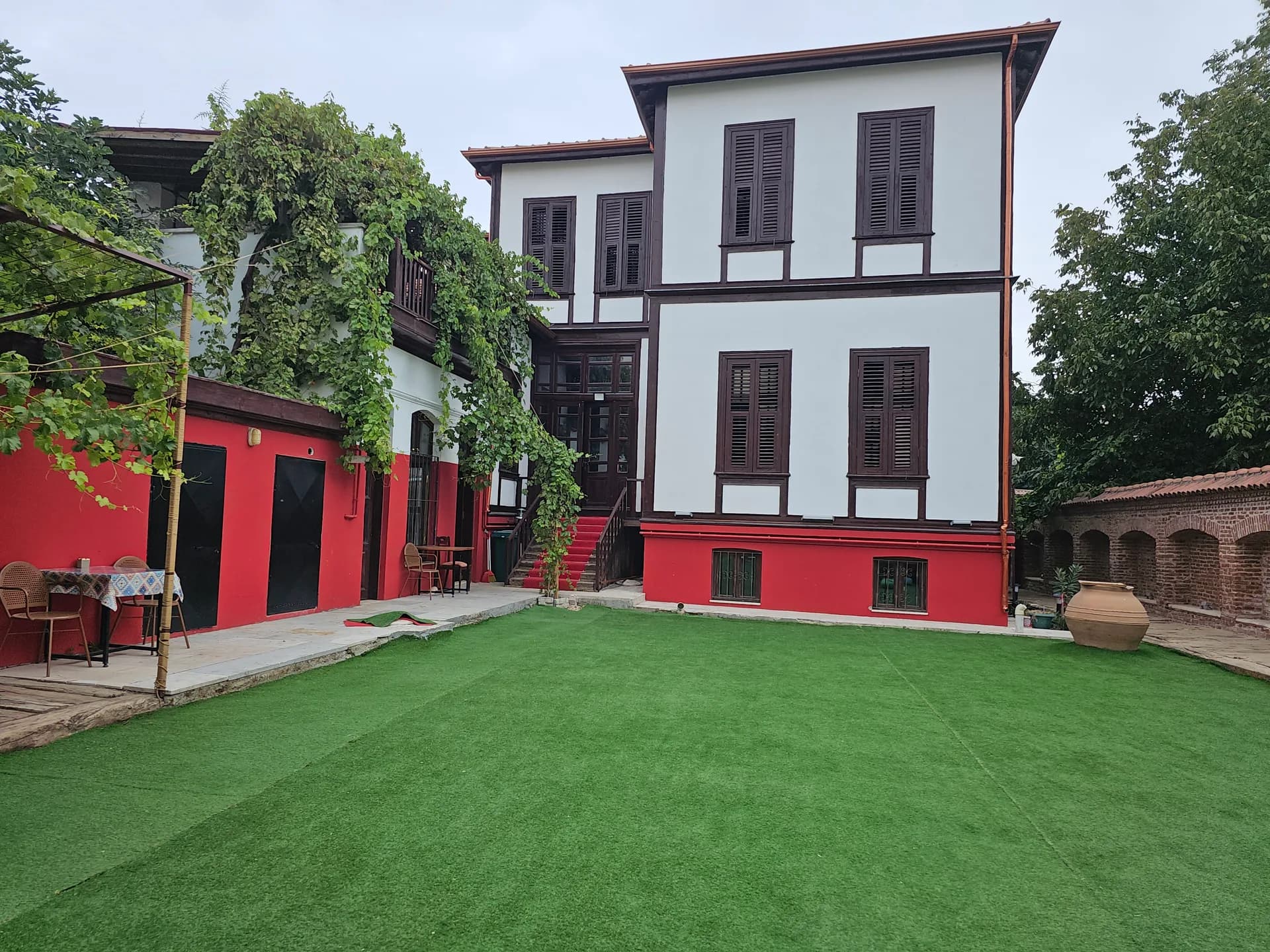
Stay
Stay in Edirne Kaleiçi with breakfast included
In practice, three periods can be distinguished in Edirne:
- Last week of June: The first heads open in early-sown fields; the plain is still a mix of green and yellow.
- First half of July: Most fields are in full bloom. This is the safest window for photos.
- End of July: The petals fall, the heads grow heavy and droop forward; the field turns brown.
Temperature shapes the calendar more than anything. In the summer of 2025, extreme heat and drought made the harvest in Edirne start 10–15 days earlier than normal; according to a report by Anadolu Agency, some fields in the region were cut on 20 July. In a hot year the bloom period shortens, and a trip left to the second half of July may meet fields that have begun to dry.
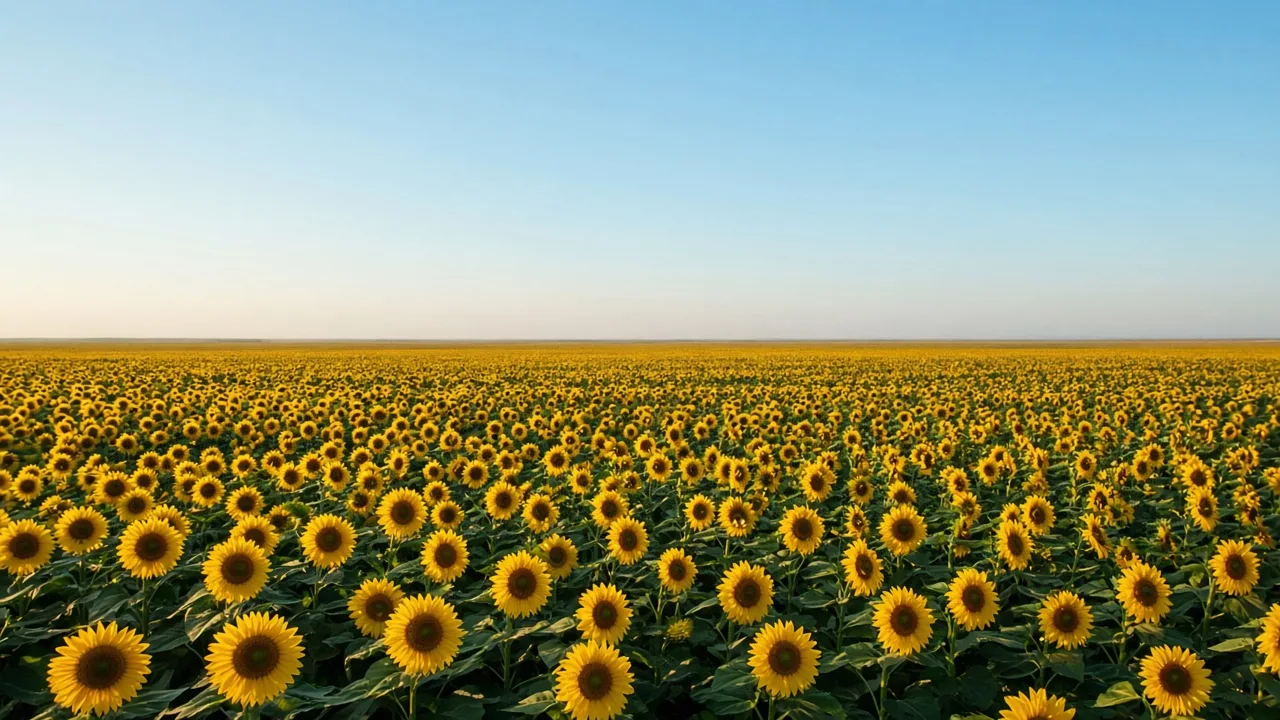
Edirne Sunflower Production: Its Place in Türkiye in Numbers
Edirne is among the top three provinces on Türkiye's oilseed sunflower map. According to the 2025 situation report of the Institute of Agricultural Economics and Policy Development (TEPGE) under the Ministry of Agriculture and Forestry, based on TÜİK (Turkish Statistical Institute) data, Edirne ranked first in Türkiye in oilseed sunflower production in 2023 with a 13.1 percent share. In the same year, 15 percent of the country's oilseed sunflower area was in Edirne. Together with Tekirdağ and Kırklareli, Thrace is Türkiye's sunflower granary.
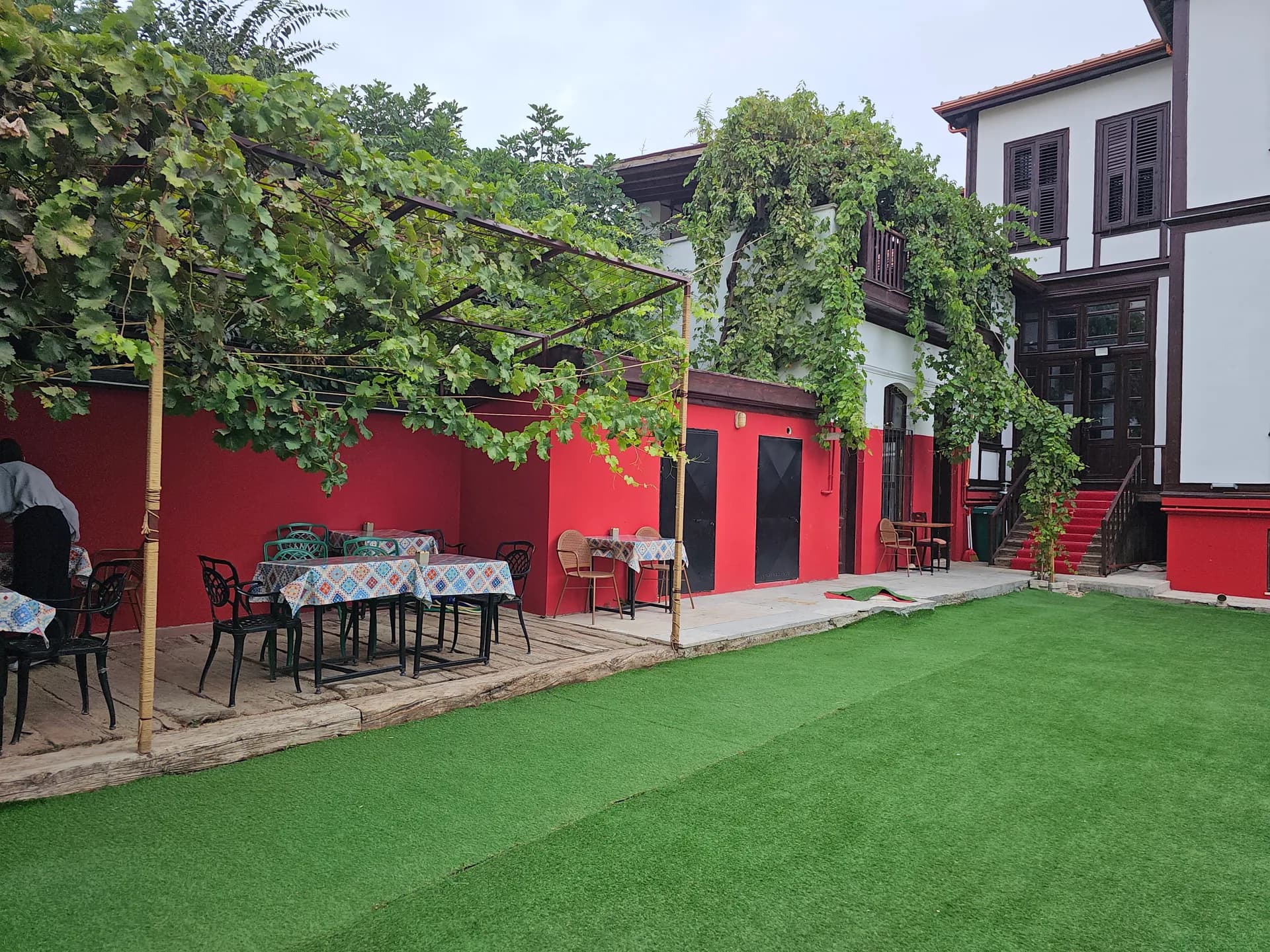
Events
Engagements, small weddings and private celebrations
Production depends as much on rain as on sown area. The provincial data in the TEPGE report shows this clearly:
| Year | Sown area (decares) | Production (tonnes) | Yield (kg/decare) |
|---|---|---|---|
| 2022 | 1,260,318 | 325,812 | 259 |
| 2023 | 1,294,200 | 257,651 | 199 |
| 2024 | 1,266,060 | 173,878 | 137 |
| 2025 | 1,238,368 | 173,258 | – |
The sown area barely changed in four years, while the crop fell by nearly half. The reason is a run of dry summers. In 2025, Edirne's Deputy Governor announced that the province ranked third in Türkiye with an 11 percent share. The same statement said that for 2026, about 252 thousand tonnes were expected from 1 million 261 thousand decares. To find a solution to drought, the Provincial Directorate of Agriculture and Forestry is also running trial sowings with three different methods in February, March and April in the village of Sarayakpınar, part of the central district. The report of the three-year project will come out after the 2027 harvest.
This table is only one part of Edirne's farming. Our farming guide to what grows in Edirne gives detailed figures on the province's crop pattern, including rice, wheat and canola.
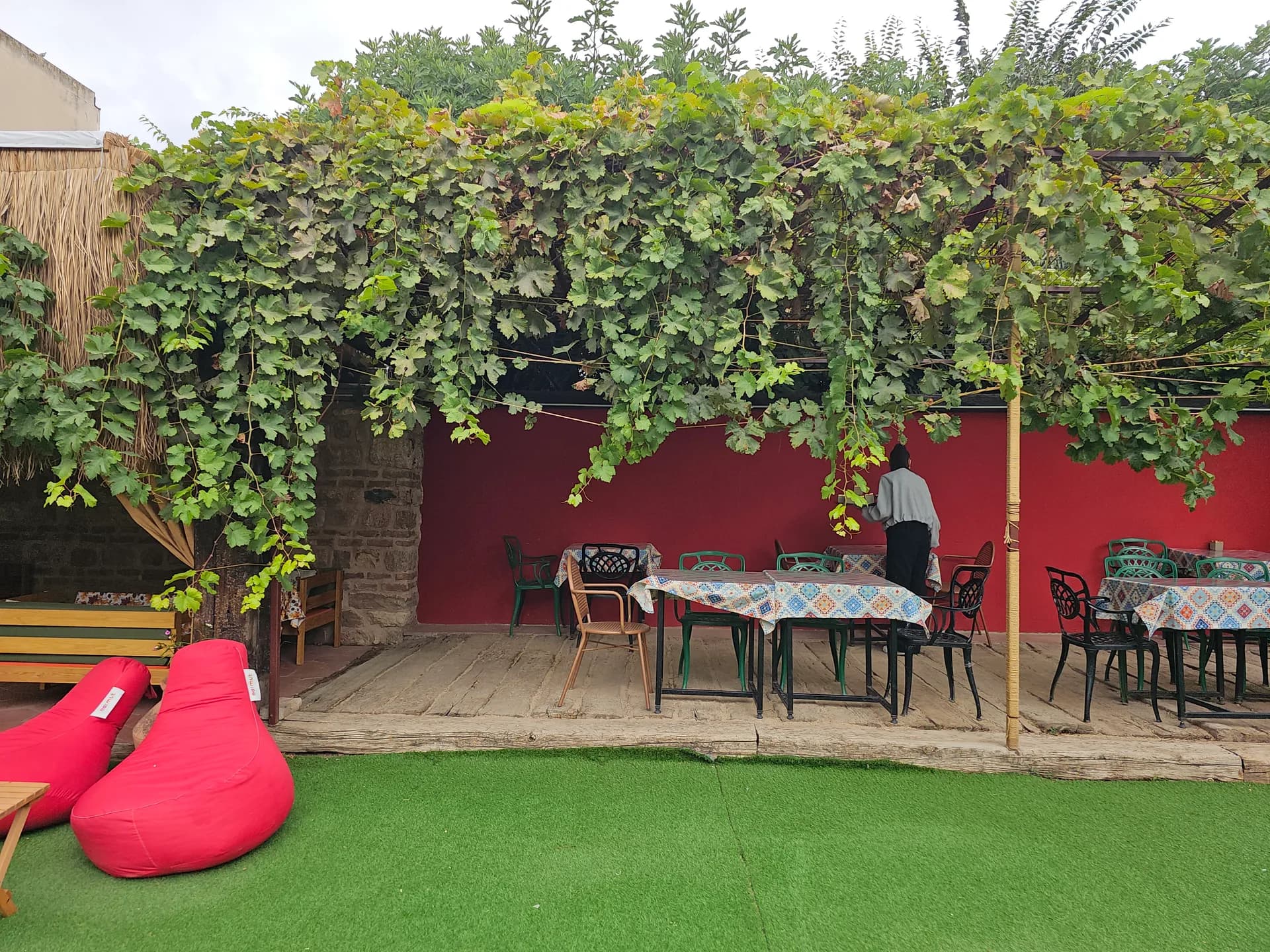
Breakfast
A generous Turkish breakfast spread in the garden
Where Are the Sunflower Fields in Edirne? Yellow Plains District by District
Sunflowers are sown in almost every district of Edirne, but density varies a great deal from district to district. The Provincial Directorate of Agriculture and Forestry's 2024 season estimates offer a good map for choosing where to go:
| District | Estimated sown area (2024) | Distance from the centre (KGM, General Directorate of Highways) |
|---|---|---|
| Uzunköprü | 301 thousand decares | 64 km |
| Central | 220 thousand decares | – |
| Keşan | 211 thousand decares | 112 km |
| Havsa | 151 thousand decares | 27 km |
| İpsala | 129 thousand decares | 122 km |
| Lalapaşa | 88 thousand decares | 24 km |
| Süloğlu | 69 thousand decares | 33 km |
| Meriç | 63 thousand decares | 87 km |
| Enez | 42 thousand decares | 171 km |
Based on this table, three routes stand out:
Havsa and Uzunköprü: the yellow sea of the Ergene plain
The province's largest sunflower area is in Uzunköprü, on the Ergene plain. In academic studies, the district's villages such as Hamitli, Kurtbey, Kadıköy, Çöpköy and Ömerbey appear as fields where sunflower samples were taken. In July, the road running from Edirne through Havsa, 27 km away, to Uzunköprü turns into a corridor that is yellow on both sides. To add the stone bridge and the bazaar to the same day, see our Uzunköprü travel guide.
Keşan: the yellow bride on the Saros road
The Keşan Chamber of Agriculture presents the sunflower as one of the district's most important crops. In early summer, the fields on both sides of the road down to the Erikli, Mecidiye and Yayla beaches are a view where travellers heading to the sea stop to take photos. To fit the sea and the fields into the same day, our Edirne Keşan travel guide is a practical starting point.
Central district and Lalapaşa: just outside the city
For those who do not want to drive far, the central district's 220 thousand decares of village fields and the Lalapaşa route 24 km to the north are enough.
Oilseed or Confectionery? Which Sunflowers Grow in Edirne's Fields?
The vast majority of the fields you see in Edirne are oilseed sunflowers. According to TEPGE's 2025 report, of the 953 thousand hectares of sunflower area in Türkiye in 2023, 865 thousand hectares were oilseed and only 88 thousand hectares were confectionery (snack) sunflowers. With an oil content of up to 40 percent, oilseed sunflowers meet 80–85 percent of Türkiye's vegetable oil consumption.
The two types are easy to tell apart in the field:
- Oilseed sunflower: The seeds are small and black, with a thin shell. The head is smaller and the plant is usually shorter. After harvest it goes to oil factories.
- Confectionery sunflower: The seeds are large, striped or whitish, with a thick shell. For a confectionery hybrid variety that the Trakya Agricultural Research Institute registered on 31 March 2015, plant height is given as 175–210 cm, head diameter 19–22 cm, seed length 19–22 mm and oil content 27–31 percent.
The Trakya Agricultural Research Institute in Edirne coordinates sunflower breeding work in Türkiye. According to Anadolu Agency, the Institute works on more than 20 thousand genetic materials every year; domestic varieties resistant to downy mildew (köse), a disease common in the region, and to broomrape (canavar otu) come out of this work. On 11 April 2017, the Institute registered three confectionery varieties at once.
Photographing Sunflower Fields: Light, Direction and Field Etiquette
A sunflower field is an easy subject to photograph, but it asks you to know the right time. A few tips:
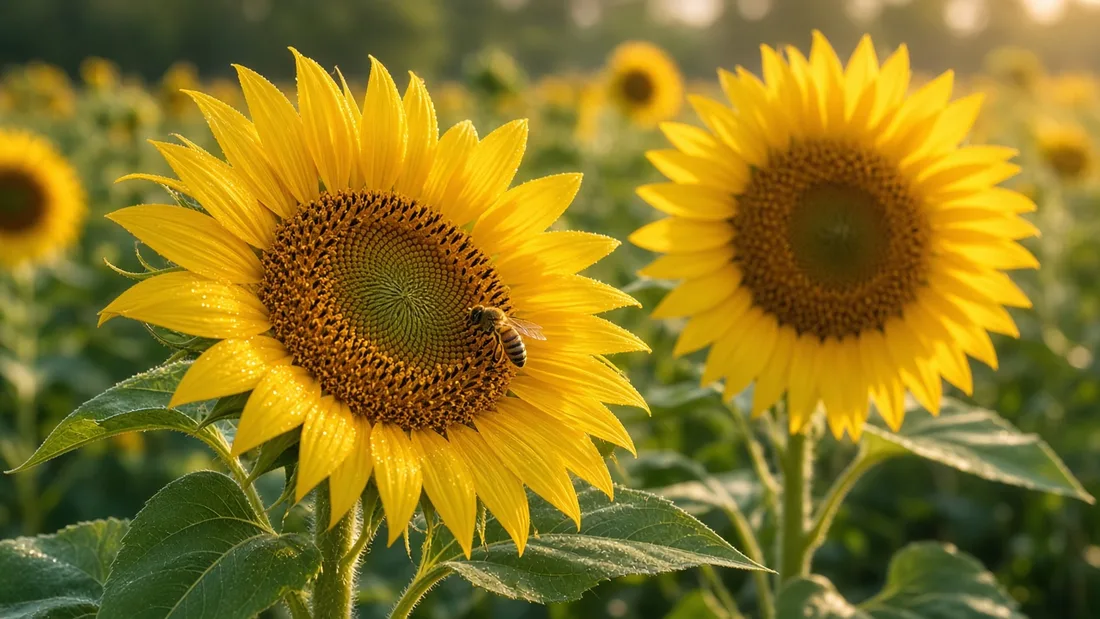
- Know the direction: Young sunflowers follow the sun throughout the day. According to a study published in the journal *Science* in 2016, plants stop this movement once they reach flowering maturity, and the heads stay fixed facing east. The result: in morning light the heads turn their faces to you; if you shoot from the west in the evening, you will usually see the backs of the heads.
- Pick your hour: The first hour after sunrise and the last hour before sunset give the softest light. Midday sun washes out the yellow.
- Mind the bees: During bloom, the fields are full of bees. Avoid sudden movements; people with allergies should carry their medication.
The owner's permission and not damaging the crop
In Edirne, the sunflower is a livelihood before it is a view. With a crop whose yield drops to 60–70 kilograms per decare in dry years, every trampled row is the farmer's loss:
1. Do not enter fields without permission. The fields are private property. Take your photo from the roadside or from the boundary at the edge of the field. If you want to go in, ask the owner or the village headman's office (muhtarlık). 2. Stay between the rows. If you have permission, use the gaps between rows; do not open new paths. 3. Do not pick heads. Even a single head picked as a souvenir is the farmer's crop. 4. Do not park at the field entrance. Do not block tractor tracks; use the verge on narrow village roads. 5. Leave no rubbish. Bottles and bags left in the field damage the harvesting machine.
A Sunflower Route from Central Edirne: A One-Day Plan
A sunflower tour is easiest to plan as a day trip using central Edirne as a base. Heading out early in the morning to the Havsa–Uzunköprü route and returning to town before noon gives the best light without getting caught in the July heat. Those heading down to Saros see the Keşan plain on the way.
To make the most of your time in the city, the full list of things to see in Edirne is a good companion. For a complete map of the plains, rivers and coast, take a look at our guide to Edirne's nature and geography.
For those who want to be in the field at sunrise, staying in the city the night before makes things easier. For travellers setting off early, our places to stay in central Edirne are ready. Those who want to shoot inside the city too will find frames from Kaleiçi on our Edirne photo locations page. Parking is easy on the outer edge of Kaleiçi. You can plan your starting point for the plains from our location in Kaleiçi, Edirne (Google Maps).
Frequently Asked Questions
When do sunflowers bloom in Edirne?+
They are usually in bloom from the last week of June to the end of July. The safest period is the first half of July; in hot years the bloom period is shorter. If you are timing a trip around the flowers, aim for that first half of July and treat the end of June as the opening, not a guarantee. A hot spell can finish the display sooner than the calendar suggests.
Where are most of the sunflower fields in Edirne?+
According to the Provincial Directorate of Agriculture and Forestry's 2024 estimate, the largest sown area is in Uzunköprü (301 thousand decares). It is followed by the central district (220 thousand) and Keşan (211 thousand). For a drive, Uzunköprü is the district with the widest sown area; the centre and Keşan are the other large stretches. You are looking for farmland roads, not a single park with a gate.
What share of Türkiye's sunflower production comes from Edirne?+
According to the Edirne Governorship, in 2025 the province supplied about 11 percent with 173,258 tonnes and ranked third. According to TEPGE data, it ranked first in oilseed sunflowers in 2023 with a 13.1 percent share. The two rankings answer different questions, so keep the year beside the figure if you repeat them. Either way, the fields are a working crop, not a backdrop planted for photographs.
Are you allowed to walk into a sunflower field to take photos?+
No. The fields are private property. You can shoot from the roadside, or stay between the rows after getting permission from the field owner. Do not pick plants or heads. Park clear of the carriageway, stay on the verge unless you have asked, and leave every head on the plant. A picture from the roadside is the version that does not damage a crop.
Are Edirne's sunflowers oilseed or confectionery?+
The vast majority are oilseed. Across Türkiye in 2023, 865 thousand hectares of oilseed and 88 thousand hectares of confectionery sunflowers were sown. Expect the fields you pass to be the oilseed kind, grown for the harvest rather than for large eating seeds. That is why the heads are a crop, not a garden you are invited to pick.
What is the best time of day for sunflower photos?+
The first hour after sunrise is best. Because mature heads face east, the flowers look towards you in the morning light. Go early and keep the light behind you, so you see the faces of the flowers rather than their backs. By the heat of the day, that advantage in Edirne has gone.
When is the sunflower harvest in Edirne?+
It usually takes place between late August and September. In the dry summer of 2025, the harvest started 10–15 days early, at the end of July. If you arrive late in the summer hoping for full bloom, you may already be looking at a harvest. Check the season you are travelling in, rather than assuming the flowers will still be waiting.
Why is the sunflower called "sarı gelin" in Thrace?+
Farmers use this name ("the yellow bride") for the plant that wraps the fields in yellow in early summer. In Keşan, the sunflower is also called "gündöndü" and "günebakan" (both meaning roughly "sun-turner"). You may hear any of these names around the fields; they are local words for the same crop. The yellow bride is the phrase visitors remember, and the other two describe the way the heads turn.
How long does it take a sunflower to flower in Thrace?+
According to the Trakya Agricultural Research Institute, sowing in Türkiye usually falls between late March and mid-May, and germination needs a soil temperature of at least 8–10 °C. The plant needs an average growing period of 120–130 days. For one variety in the Institute's records, the time to flowering is 56–61 days, so a field sown in April turns yellow at the end of June.
How did Edirne's sunflower harvest change from 2022 to 2025?+
TEPGE figures based on TÜİK data show the sown area staying near 1.2 million decares while the crop fell from 325,812 tonnes in 2022 to 257,651 in 2023, 173,878 in 2024 and 173,258 in 2025. Yield dropped from 259 kg per decare in 2022 to 137 kg in 2024. The report links that fall to a run of dry summers.
You may also like: Accommodation, Breakfast, Events.