The Edirne tulip: the tulips Busbecq saw in 1554, Selimiye's tiles and upside-down tulip, new bulb growing in Karaağaç and when tulips bloom. Plan your spring.
The Edirne tulip is not the name of a separate botanical variety today but of the city's tulip memory, which goes back more than four hundred years: the tulip fields a European ambassador saw on the Edirne–Istanbul road in the 16th century, the tulip motifs in the Iznik tiles of the Selimiye Mosque and the famous upside-down tulip on the muezzin's gallery are all part of this memory. Since 2024, tulip bulb growing has been trialled in Karaağaç under the leadership of the Edirne Governorship; in spring, the tulips in the city usually bloom in early April.
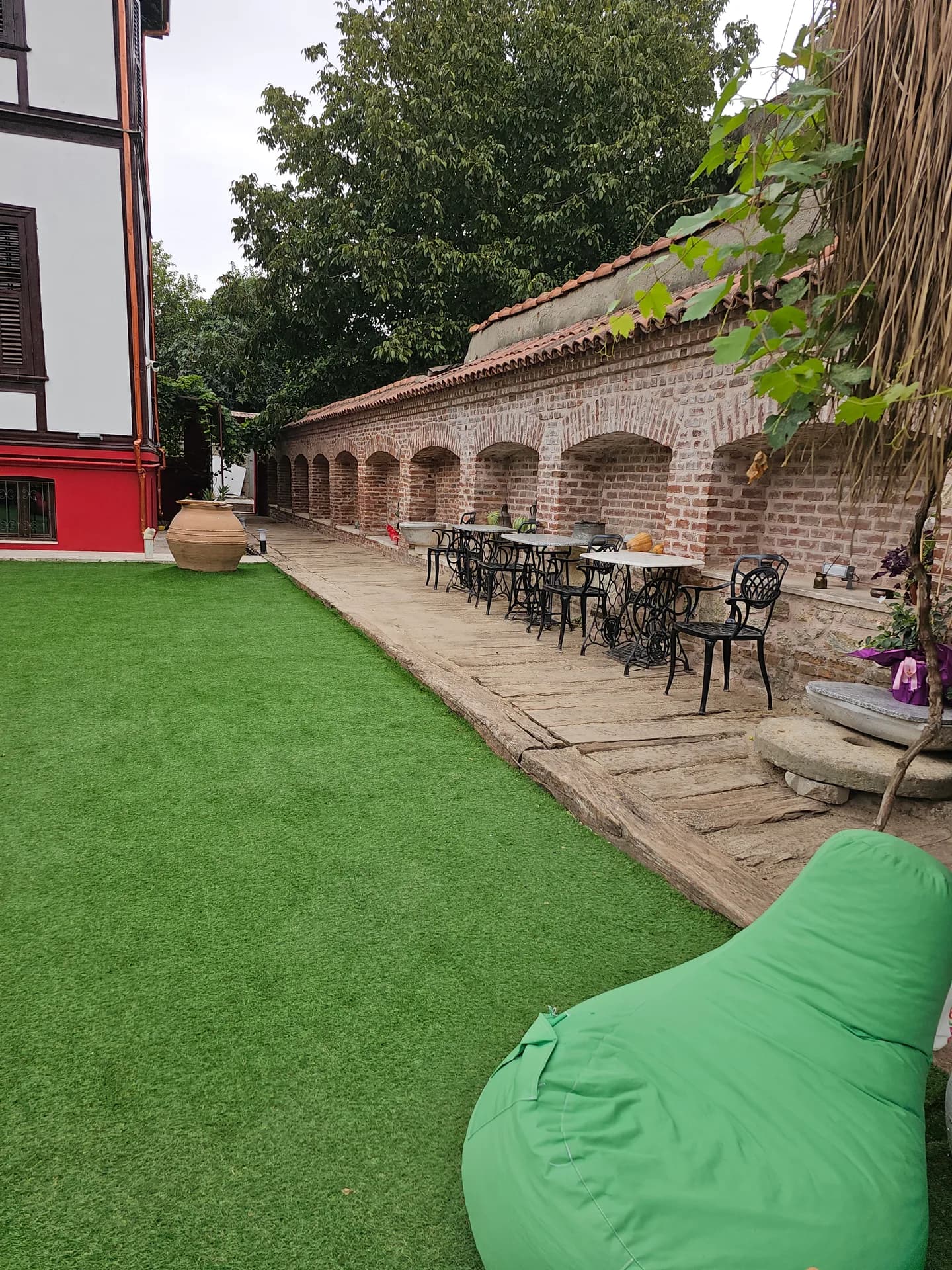
Café & Restaurant
Coffee, desserts and a relaxing break
Quick Overview
| Topic | Information |
|---|---|
| First record | Ambassador Ogier Ghiselin de Busbecq describes the tulips on the Edirne–Istanbul road in a letter recounting his 1554 journey |
| Tulip Era | 1718–1730; the name was given later by Yahya Kemal Beyatlı |
| Tulips in the Selimiye | In the tiles ordered from Iznik by a 1572 decree and in the upside-down tulip motif on the marble leg of the muezzin's gallery |
| Today's production | Began in January 2024 in the trial garden of the Trakya Agricultural Research Institute in Karaağaç |
| Geographical indication | None; tulips are not among Edirne's registered products |
| Flowering | In Edirne usually late March–mid-April (varies with the weather) |
| To see them | The municipality's plantings in the city centre and around the bazaar, the Selimiye's tiles |
What Is the Ottoman Tulip? An Almond-Shaped, Dagger-Tipped Flower
The large, cup-shaped tulips we see in parks today do not look much like the tulip the Ottomans loved. According to the TDV Encyclopaedia of Islam, the flower of the Ottoman tulip, known as the "Istanbul tulip", is almond-shaped; its petals are thin and long like a dagger, with tips as sharp as a needle. This form differs clearly from the "coarse tulip" varieties that developed later in Europe.
The story of the Ottoman tulip begins with selection and breeding from wild species. Sources report that the person who obtained the first tulip variety bred in Istanbul was Şeyhülislam Ebussuud Efendi, and that this variety was named "nûr-ı adn" (light of paradise). According to manuscript treatises written in the 16th and 17th centuries, the number of tulip varieties grown had reached about 2,000. In a price-control (narh) list published by Münir Aktepe, 239 tulip names appear on their own.
The Lale Mecmuası (Tulip Album), thought to have been prepared around 1725, contains colour pictures of about fifty Istanbul tulips; the variety names are mostly Arabic and Persian, though there are Turkish names too, such as "Nar Çiçeği" (Pomegranate Blossom). These tulips gradually disappeared after the 1730s.
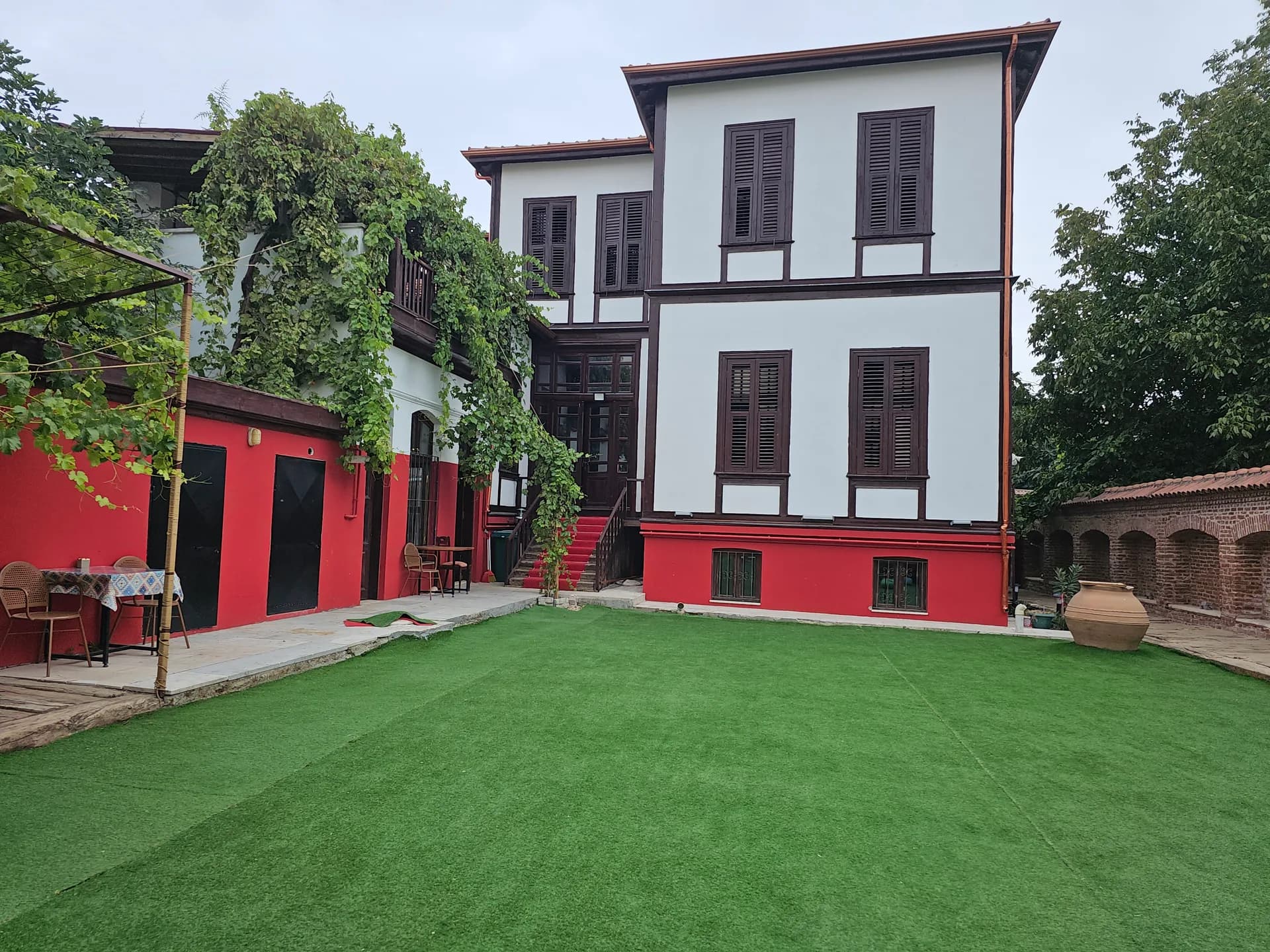
Stay
Stay in Edirne Kaleiçi with breakfast included
So are the "Ottoman tulip" and the "Edirne tulip" the same thing? There is no separate registered variety bearing Edirne's name. The link between Edirne and the tulip is a cultural bond born of the city's location, the decoration of the Selimiye and the production restarted today; local institutions often refer to the tulip as "the symbol of Edirne".
Edirne's Tulip History: From Busbecq to the Tulip Era
Busbecq and the name "tulipan"
The Edirne road holds an important place in how the tulip became known in the West. Ogier Ghiselin de Busbecq, ambassador of Holy Roman Emperor Ferdinand I to Sultan Süleyman the Magnificent, writes that while travelling from Edirne to Istanbul in 1554 he saw narcissus, hyacinths and the tulips the Turks called "tulipan" along the way. He writes that the tulips had very little scent but left one in admiration with their colours.
The root of the word "tulip" in Western languages goes back to this letter; according to researchers, the name arose from a misunderstanding related to the word "tülbent" (muslin, turban cloth). Some researchers, however, think the tulip observation may belong to Busbecq's second journey in the spring of 1558.
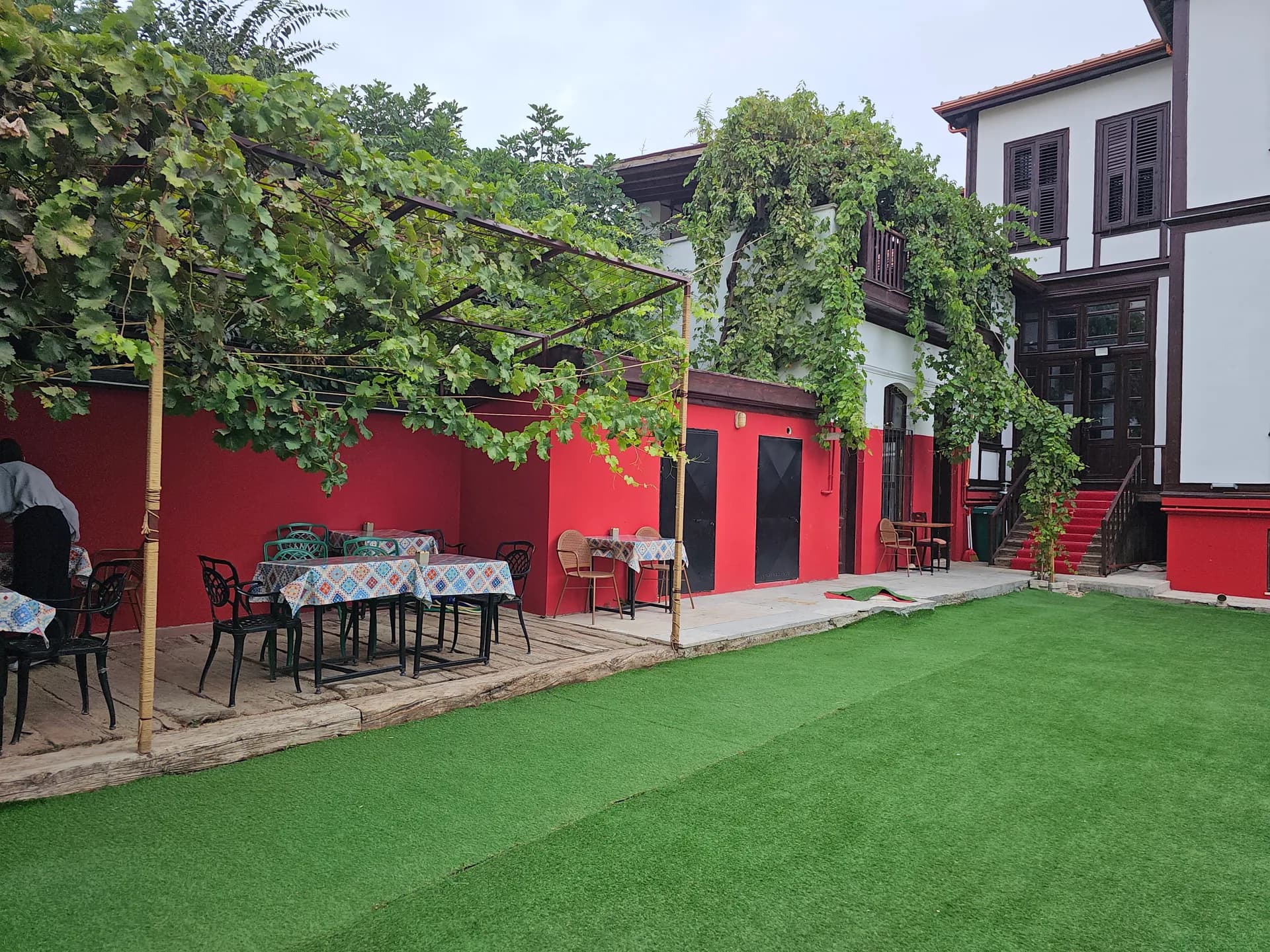
Events
Engagements, small weddings and private celebrations
Antoine Galland, a French embassy official who passed along the same road, also recorded in his note dated 15 May 1673 that he saw wide fields of tulips and peonies as far as Burgaz (Lüleburgaz).
The palace, Edirne and the Tulip Era
Edirne was the Ottoman capital until 1453 and afterwards remained a centre where sultans stayed for long periods. The Edirne Palace (Saray-ı Cedid-i Âmire), begun by Murad II, saw its most brilliant days in the reign of Mehmed IV (1648–1687), who spent most of his reign here.
The name connecting the Tulip Era with Edirne is Ahmed III. Ahmed III, who came to the throne in Edirne in 1703, soon returned to Istanbul. The period of peace in his reign stretching from the 1718 Treaty of Passarowitz to 1730 later came to be called the Tulip Era because of the passionate tulip growing on the Golden Horn and the Bosphorus. According to TDV, the first person to use this name was Yahya Kemal Beyatlı; no such period name appears in 18th-century chronicles.
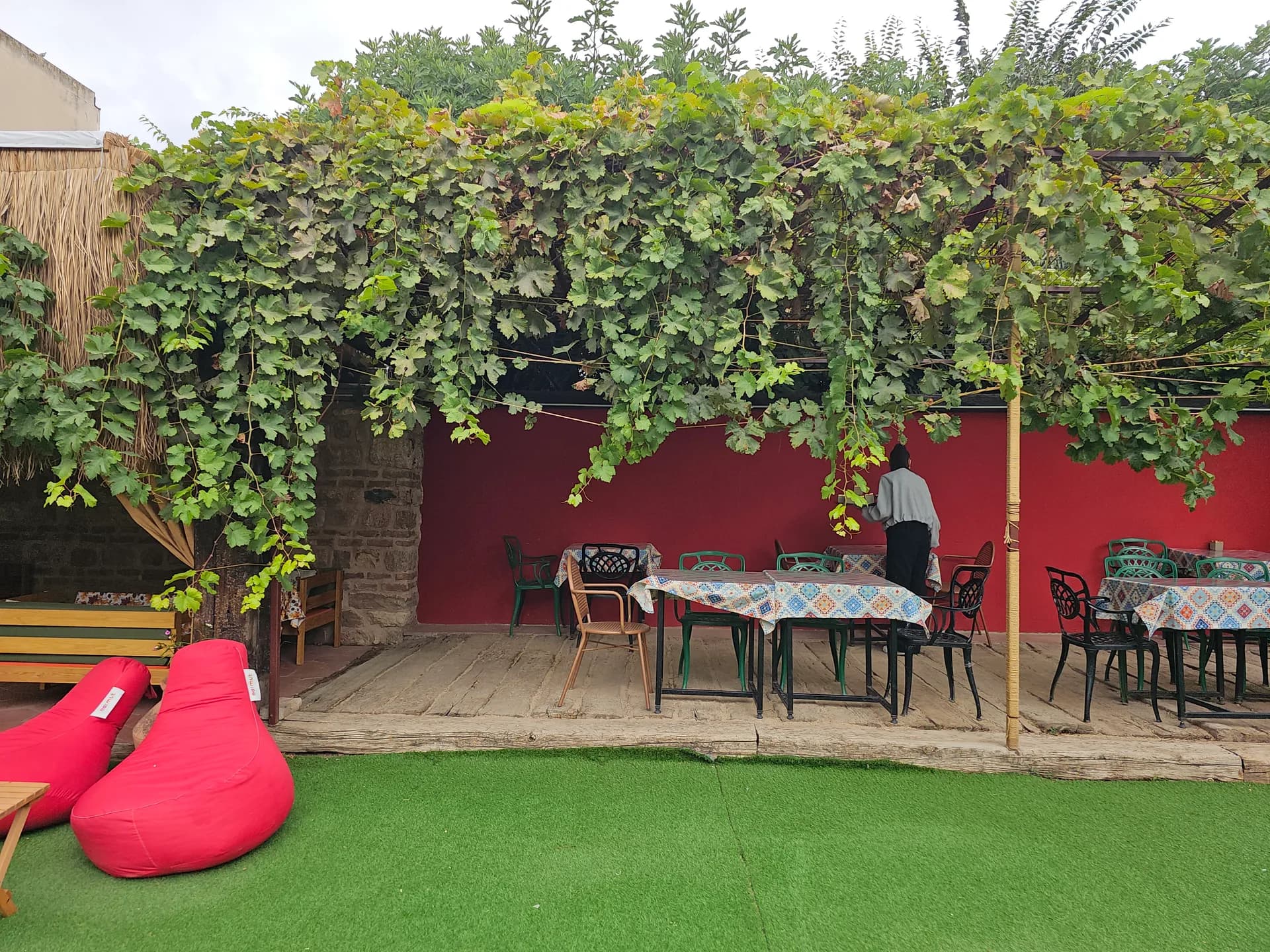
Breakfast
A generous Turkish breakfast spread in the garden

Tulips in the Selimiye: Iznik Tiles and the Upside-Down Tulip
Tiles of the sultan's gallery and the minbar pavilion
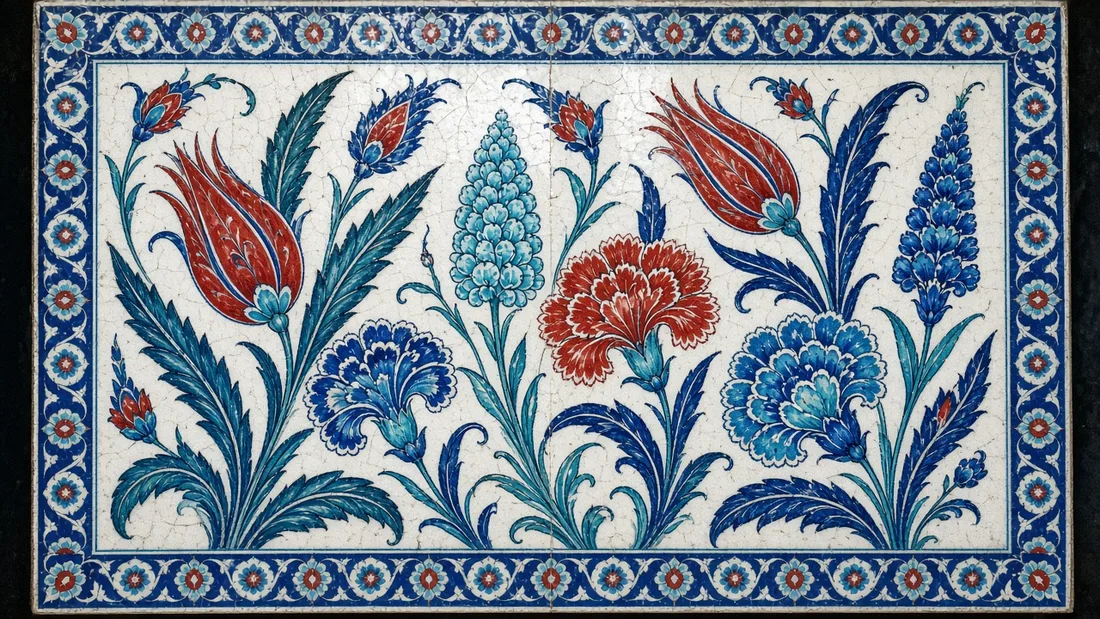
The place in Edirne where you can see the tulip in its most lasting form is the Selimiye Mosque, built by Mimar Sinan for Selim II between 1568 and 1574. The mosque's underglaze tiles were ordered from Iznik by a decree dated 1572; they are on the mihrab wall, the minbar pavilion, the window lunettes and the Hünkâr mahfili (sultan's gallery).
The densest tile decoration is in the L-plan sultan's gallery in the southeast corner of the mosque. According to a study published in the Journal of Art History (Sanat Tarihi Dergisi), the compositions here feature tulips, carnations, roses, hyacinths, narcissus and violets, along with trees in spring blossom. The promotional page of the Meriç District Governorship also notes that the panel in the minbar pavilion is decorated with a tree in spring blossom, hyacinths and tulips on a navy-blue ground.
The upside-down tulip: one motif, many legends
The detail visitors look for most in the Selimiye is a small, upside-down tulip motif carved into one of the marble legs of the muezzin's gallery, which rests on 12 marble columns. Several legends are told about why the motif is upside down:
- The tulip garden legend: An old woman had a tulip garden where the mosque stands; she gave the land on condition that a trace of her remain in the mosque, and Sinan had the tulip carved upside down to symbolise her stubbornness.
- The Fatma legend: An apprentice who saw the longing Sinan felt for his granddaughter Fatma, whom he had lost in Edirne, carved the drooping tulip into the Selimiye.
- The evil-eye legend: It was added as a deliberate "flaw" so that the flawless building would not attract the evil eye.
These are based on folk narrative rather than documents; even so, the upside-down tulip is considered the strongest reason the tulip became the city's symbol. For visiting etiquette, see our Selimiye Mosque visiting guide, and for Sinan's other buildings, our works of Mimar Sinan in Edirne article.
The tulip motif lives on in wood too: according to the TDV Encyclopaedia of Islam, in edirnekâri decoration, which first appeared in Edirne, tulip, hyacinth, carnation and flower bouquet motifs were preferred. Details are in our what is edirnekâri article.
The Edirne Tulip Today: Growing Again in Karaağaç
The Governorship-backed tulip bulb project
The effort to bring the Edirne tulip back to the soil is fairly new. In January 2024, under the auspices of the Edirne Governorship and in cooperation between the Provincial Directorate of Agriculture and Forestry and the Trakya Agricultural Research Institute, tulip bulbs were planted in the institute's trial garden in Karaağaç. The project aims to offer farmers in the Karaağaç neighbourhood, where about 250 tonnes of hot peppers are harvested each year on an area of about 200 decares, an alternative crop they can make use of until pepper planting.
According to the institute director speaking to AA (Anadolu Agency), an average of 70,000 tulip bulbs are planted per decare and bulbs multiply at a rate of two for one each year; the bulbs are lifted in June and stored in cold storage. In March 2024, hyacinths and narcissus bloomed alongside the tulips; the goal is to spread production from Karaağaç to the whole city.
An upside-down tulip for the Selimiye
In April 2024, the same institute also made a trial planting to grow the Selimiye's symbol, the upside-down tulip (Fritillaria imperialis, crown imperial), in Edirne. For this species, which grows naturally in Eastern and Southeastern Anatolia, support was received from the Erzincan Horticultural Research Institute. The propagated bulbs are planned to be planted in the mosque garden in the coming years. Despite its name, the upside-down tulip does not belong to the true tulip genus (Tulipa) but to a separate genus in the same family.
Is there a geographical indication?
No. According to information announced at the Edirne Provincial General Assembly in November 2025, 14 products in the province had received geographical indications; badem ezmesi (almond paste), tava ciğeri (Edirne-style fried liver), white cheese and mis sabunu (scented soap) are some of them. The three products at the application stage are kaz oturtması (a goose dish), Mecidiye melon and Çeribaşı cherries. Tulips are on neither list.
The tulip also lives on as a motif in the city's current cultural products: the handmade tile medals prepared for the 11th International Edirne Marathon on 6 September 2026 featured the Edirne tulip alongside the Selimiye, the Meriç Bridge and the Adalet Kasrı (Justice Pavilion).
When Do Tulips Bloom in Edirne, and Where to Go?
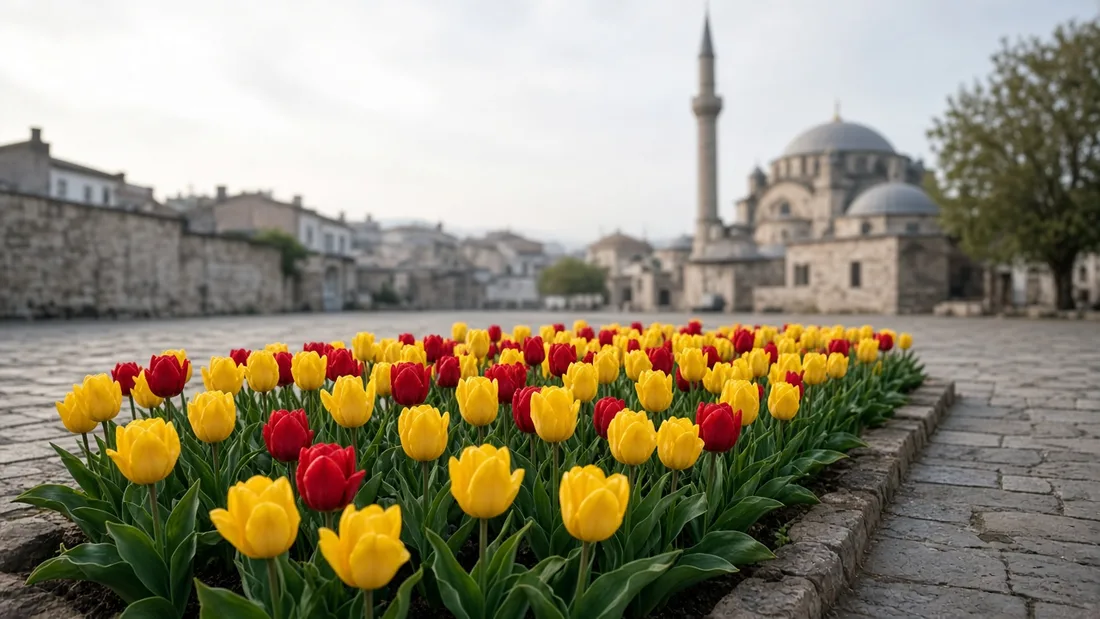
Tulips in Edirne usually bloom between late March and mid-April. The records confirm this: the red, yellow, purple and white tulips the municipality planted in the city made the news on 11 April 2018, and mainly yellow plantings on 3 April 2024. The upside-down tulips in Karaağaç also flowered in the first week of April. In years with a cold winter, flowering can shift by a few days; before planning a spring trip, it helps to read our Edirne climate and weather article.
The main options for seeing tulips:
- City centre and around the bazaar: Edirne Municipality plants tulips in squares, central reservations and the bazaar area every spring. Planting spots change from year to year.
- Selimiye Mosque: Regardless of the season, the tulips in the tiles of the sultan's gallery and the minbar pavilion, and the upside-down tulip on the muezzin's gallery.
- Karaağaç: The neighbourhood where the tulip bulbs are grown lies on the far bank of the Meriç. The trial garden is a research area; confirm whether it is open to visitors before you go.
From Kaleiçi on foot you reach the Selimiye in 12–15 minutes (about 950 metres), the Ali Paşa Çarşısı (Ali Paşa Bazaar), built by Mimar Sinan in 1568–69, in about 5 minutes, and the Meriç Bridge in 25–30 minutes. Tiles in the morning, the bazaar area at midday and Karaağaç in the late afternoon fit comfortably into a spring day; for the route, see our Karaağaç travel guide.
You can open a spring morning with a spread breakfast in Edirne, and halfway through your walk take a tea break in a courtyard in Kaleiçi. If you are stretching the weekend to two nights, look at the Kaleiçi accommodation options; you can plan your walk from our location in Kaleiçi, Edirne (Google Maps).
Frequently Asked Questions
Is there a separate tulip variety called the Edirne tulip?+
No, there is no separate, botanically defined or registered Edirne tulip variety. The name is used as a cultural concept describing the city's tulip history dating back to the Ottomans, the tulip motifs in the Selimiye and the production carried out in Karaağaç today.
What does the Ottoman tulip look like?+
According to the TDV Encyclopaedia of Islam, the flower of the Ottoman (Istanbul) tulip is almond-shaped, with petals thin and long like a dagger and pointed tips. The Tulip Album, thought to have been prepared around 1725, contains pictures of about fifty varieties. A round garden tulip in a municipal bed is not automatically that historic flower.
Does the Edirne tulip have a geographical indication?+
No. As of November 2025, tulips are not among Edirne's 14 products with geographical indications or the 3 products at the application stage. A seller calling a bulb 'protected Edirne tulip' is ahead of the register.
Where is the upside-down tulip in the Selimiye?+
It is found as a small tulip motif carved upside down on one of the marble legs of the muezzin's gallery beneath the dome, which rests on 12 marble columns. The legends about the motif's meaning are based on folk narrative. The stories about why are folk tales; the carving is what you can verify by looking.
When do tulips bloom in Edirne?+
Usually between late March and mid-April. News of the municipal plantings in bloom falls on 3 and 11 April; flowering can shift by a few days depending on that year's weather. Miss that fortnight and you have missed the flower.
What is the connection between the Tulip Era and Edirne?+
The Tulip Era (1718–1730) coincides with the reign of Ahmed III, who came to the throne in Edirne in 1703. The tulip centre of the period was Istanbul; however, the tulip also holds an important place in Edirne's palace and art history. Edirne's link is the reign's start and the palace and art history, not a claim to have been the capital of the craze.
Are tulip bulbs grown in Edirne?+
Yes. Since January 2024, tulip, hyacinth and narcissus bulbs have been grown under the auspices of the Edirne Governorship in the trial garden of the Trakya Agricultural Research Institute in Karaağaç; an average of 70,000 bulbs are planted per decare. It is a trial garden, not a pick-your-own field for visitors.
Where can you stay in Edirne to see the tulips?+
Kaleiçi, within walking distance of the Selimiye and the bazaar, is a practical base for a spring trip. You can walk to the Selimiye in 12–15 minutes and to the Ali Paşa Bazaar in about 5 minutes. Sleep there and you are not driving to a petal.
Who first described tulips on the road out of Edirne?+
Ambassador Ogier Ghiselin de Busbecq wrote about the tulips on the Edirne–Istanbul road in a letter recounting his 1554 journey. The city's tulip memory is given as more than four hundred years old. The Tulip Era is dated 1718–1730, a name given later by Yahya Kemal Beyatlı.
When did tulip trials begin in Karaağaç?+
They began in January 2024 in the trial garden of the Trakya Agricultural Research Institute in Karaağaç, led by the Edirne Governorship. In the city, tulips usually bloom in early April. The Selimiye tiles that carry tulip motifs were ordered from Iznik by a decree of 1572.
You may also like: Accommodation, Breakfast, Events.