What is Edirnekâri? The history of Edirne's lacquer art, its flower motifs, examples in Selimiye and the museums, courses and souvenir tips. Read the guide.
Edirnekâri, meaning "Edirne work", is a traditional Ottoman decorative art in which flower motifs are painted onto wood, cardboard or leather surfaces using paint, gold leaf and lacquer (varnish). It carries the city's name because it first took shape in the hands of Edirne's craftsmen. You find it on many objects, from dowry chests to cupboard doors and from Qur'an stands (rahle) to writing drawers. The TDV Encyclopaedia of Islam places the technique within Ottoman woodwork of the 14th–19th centuries.
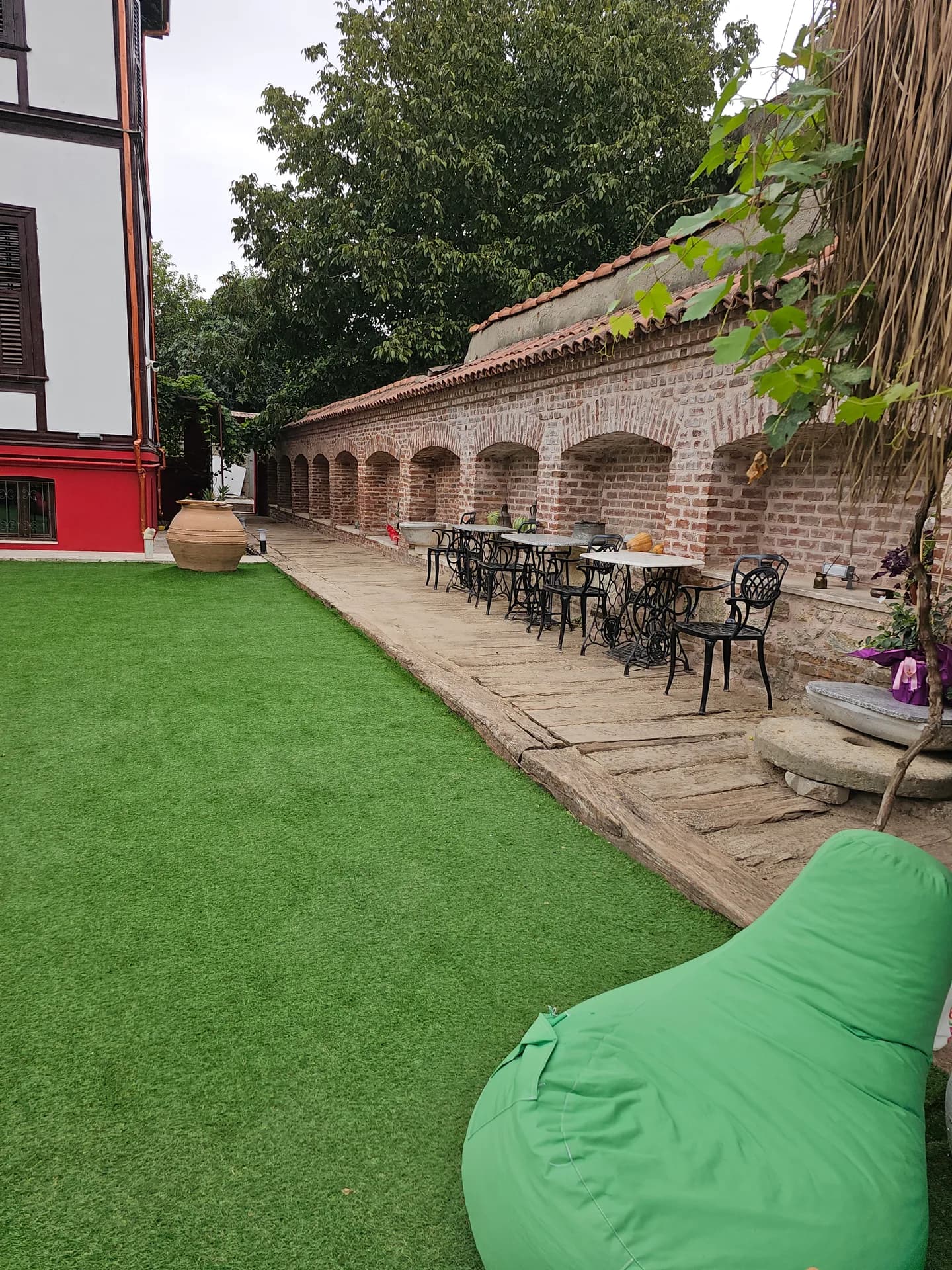
Café & Restaurant
Coffee, desserts and a relaxing break
The most impressive examples can be seen in the muezzin's gallery of the Selimiye Mosque and in the two museums right next to it. There are few masters left; the art is kept alive through courses.
Quick Overview
| Topic | Information |
|---|---|
| Meaning | "Edirne work"; a style of wood decoration born in Edirne |
| Period | 14th–19th century (TDV); second half of the 15th century according to the Provincial Directorate of Culture and Tourism |
| Materials | Wood, cardboard, leather; earth pigments, gold leaf, lacquer |
| Typical motifs | Tulip, hyacinth, carnation, rose; bouquets in a vase or tied with a ribbon |
| Three groups | Carved, inlaid and painted works |
| Where to see it | Selimiye muezzin's gallery, Museum of Turkish and Islamic Arts, Edirne Museum |
| Protection | SOKÜM Türkiye National Inventory (included in the 2015 list) |
| Geographical indication | Not registered; work by the Edirne Chamber of Commerce and Industry is ongoing |
What Is Edirnekâri?
According to the definition of the Edirne Provincial Directorate of Culture and Tourism, Edirnekâri is a decorative art used in the interior decoration of architectural works and on the surfaces of wooden, cardboard and leather objects. The Kültür Portalı (Türkiye's culture portal) describes it as "a form of decoration featuring motifs made with paint and varnish on wood, cardboard and leather".
What sets Edirnekâri apart from ordinary painting is its layered structure. The motif is drawn, outlined, filled with colour, enriched here and there with gold leaf, and finally coated with lacquer. The Kültür Portalı stresses that the most important feature of the art is the durability of its paints; this is why the colours on centuries-old chests still look vivid.
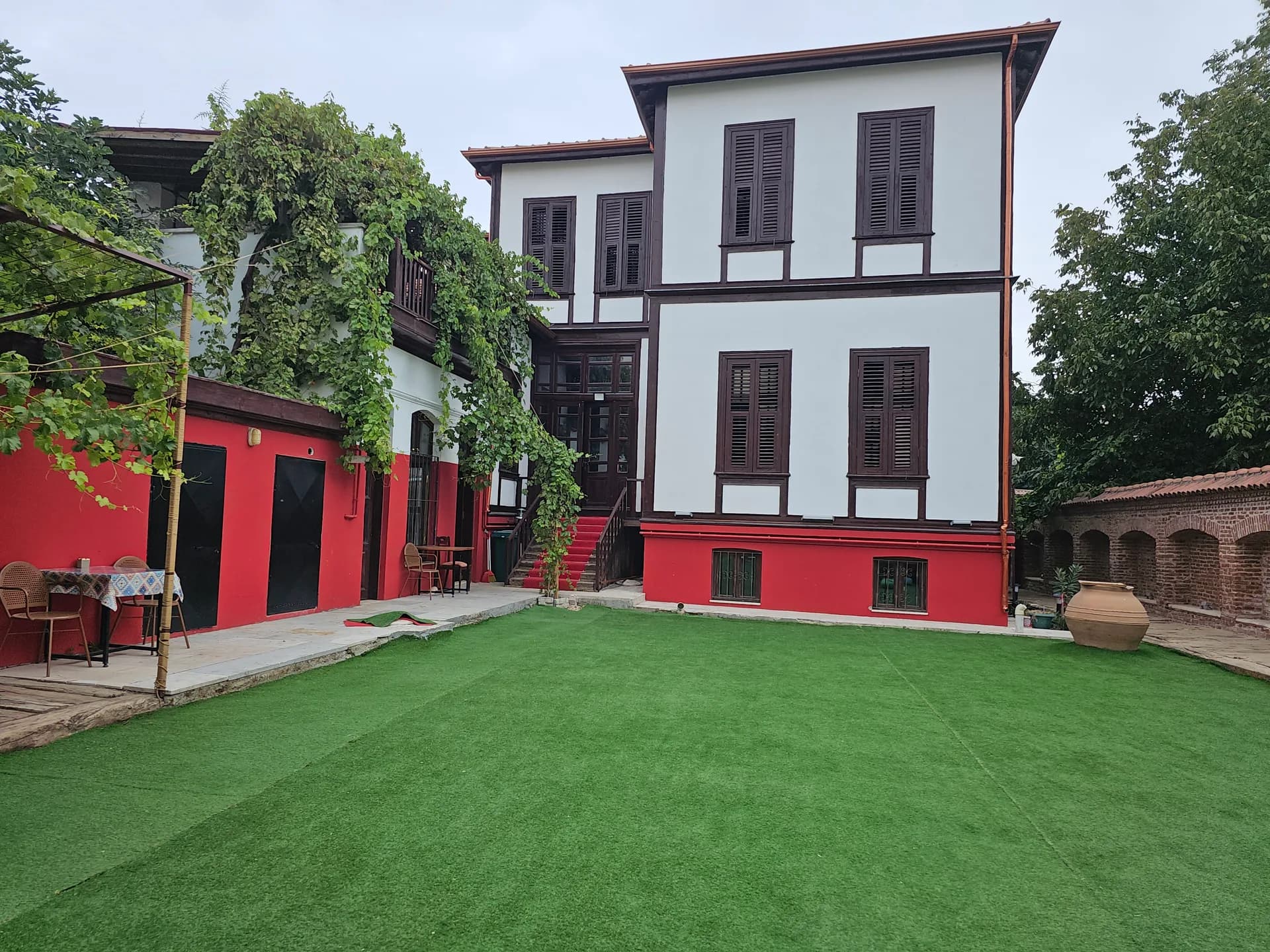
Stay
Stay in Edirne Kaleiçi with breakfast included
The art later spread to Istanbul, Bursa, Diyarbakır and Erzurum. Even so, according to TDV, the simplicity and maturity of the work made in Edirne is not seen to the same degree elsewhere.
The History of Edirnekâri: From Palace Painters to Folk Art
The TDV Encyclopaedia of Islam links the origin of Edirnekâri to Ottoman palace painting (nakkaşlık) and illumination (tezhip). Edirne was the Ottoman capital until the conquest of Istanbul; after that, Edirne Palace remained a centre frequently used by the sultans. This demand around the palace fed the development of painted woodwork.
The key points in the chronology are:
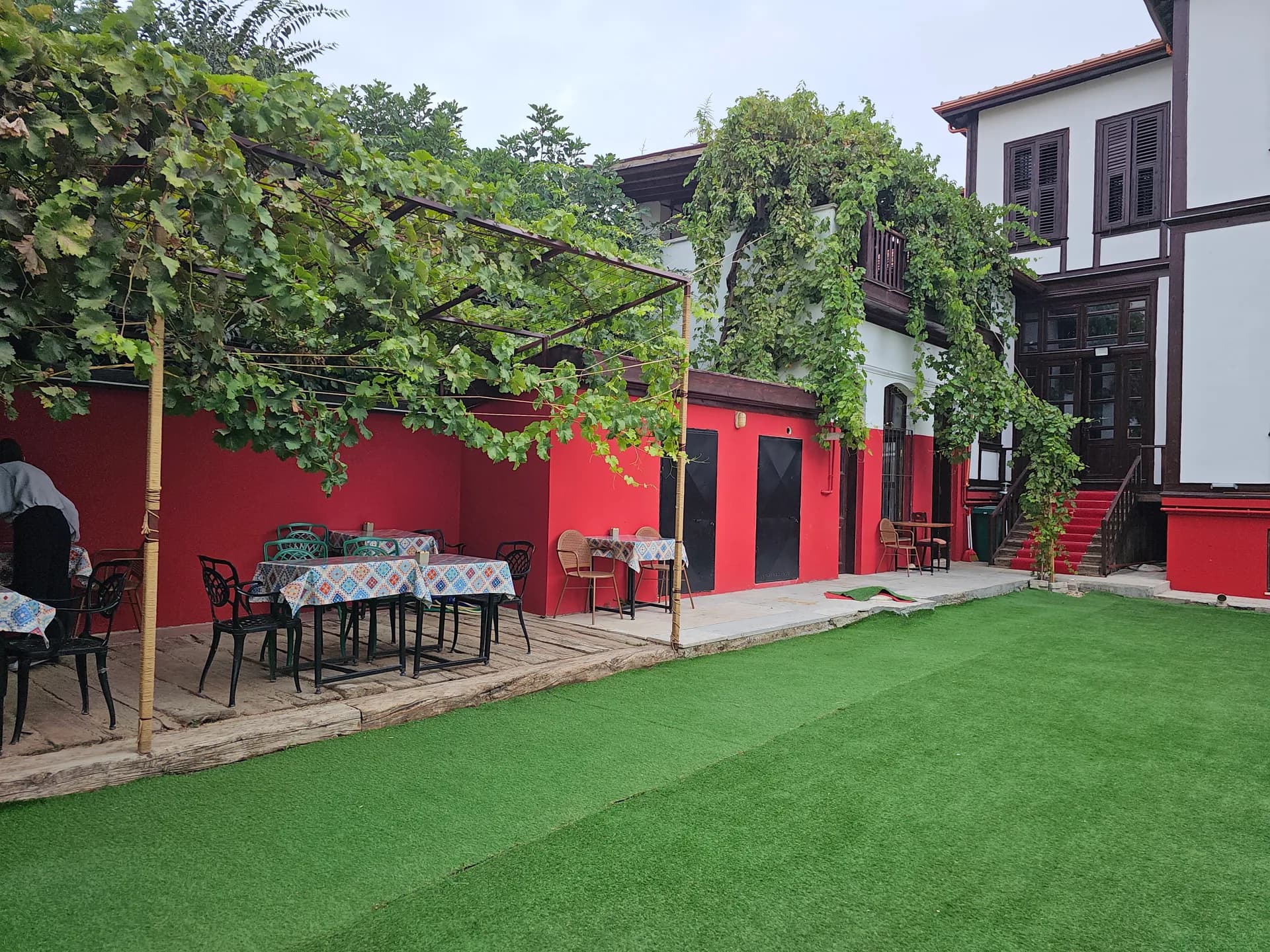
Events
Engagements, small weddings and private celebrations
- 14th–15th century: The technique emerges in Edirne. The Provincial Directorate of Culture and Tourism states that the art was developed by Edirne's craftsmen in the second half of the 15th century and has a history of about six centuries.
- 1574–1598: According to TDV, the oldest surviving Edirnekâri bookbinding examples date from the reign of Murad III.
- 1727–28: The lacquer cover of an album bearing the tughra of Ahmed III, registered under inventory number 2653 in the Ahmed III Library of the Topkapı Palace Museum, carries this date.
- 18th–19th century: Baroque and rococo patterns are added under European influence. Writing drawers became very famous in this period; TDV counts rococo drawers from the late 18th and early 19th centuries among the finest examples of the style.
Most Edirnekâri works are unsigned. The reason is the division of labour: a carpenter makes the chest, a painter applies the decoration, and other craftsmen take on the nailing and the varnish. TDV also writes that the workshops worked collectively. If you want to read the city's past in a wider frame, our history of Edirne article also covers the palace period.
How Is Edirnekâri Made? Technique and Materials
Edirnekâri woodwork is divided into three groups: carved, inlaid and painted works. Sources state that painting is the most common type. Some works combine carving and paint.
The stages of making a painted piece are roughly as follows:
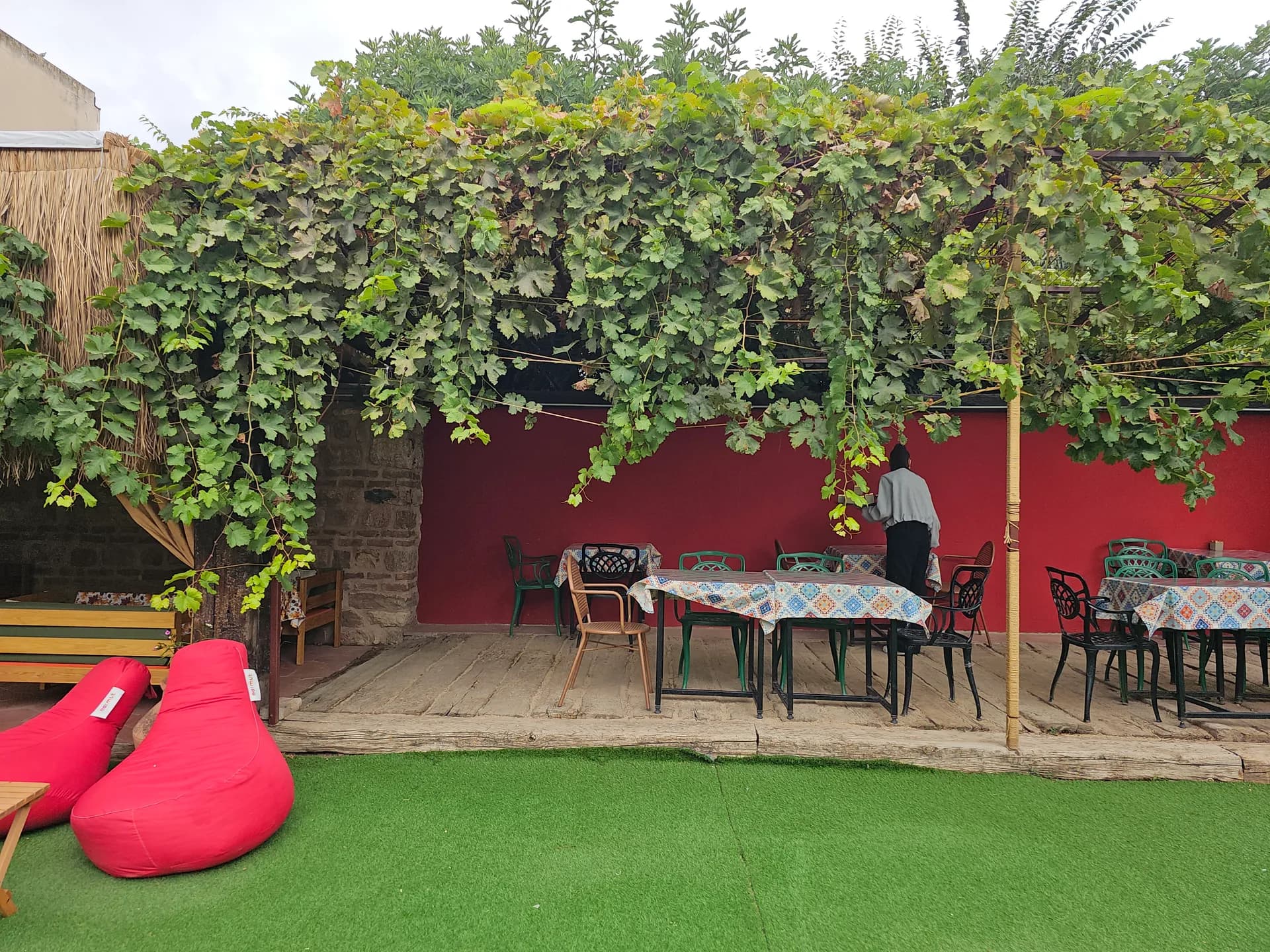
Breakfast
A generous Turkish breakfast spread in the garden
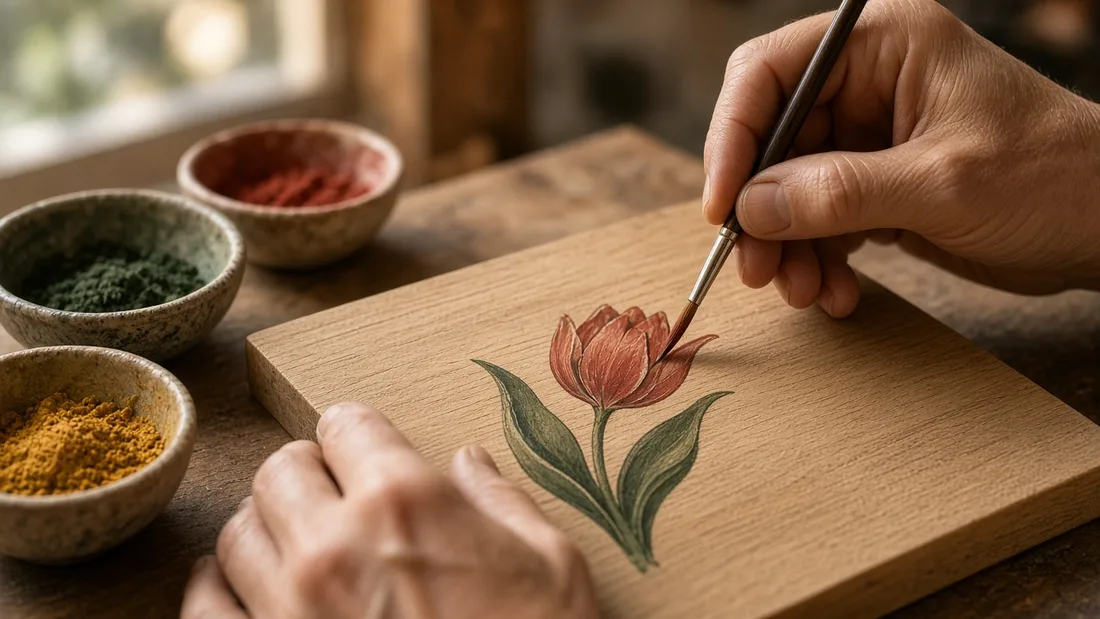
1. Preparing the ground: The wood surface is smoothed with sandpaper and a filler called "Ottoman putty". 2. Primer and ground colour: A primer of earth pigment is applied to the surface. The ground is usually green, light blue, brown or a dull yellow. 3. Transferring the pattern: The prepared motif is copied from paper onto the surface. 4. Tahrir (outlining): The outer lines of the motifs are drawn with a fine-tipped brush. 5. Painting and gilding: The motifs are filled with earth pigments, and gold leaf is applied where needed. Light and dark tones give the flowers shading and depth. 6. Lacquer: Finally, the piece is coated with varnish or lacquer.
According to TDV, the colours most used on wooden pieces were gold gilding, green, sesame green, purple, yellow, saffron, brown and red. In architectural applications, especially on the undersides of mosque galleries, some motifs are slightly raised with a mixture of plaster and shellac and then covered with gold leaf.
Edirnekâri motifs
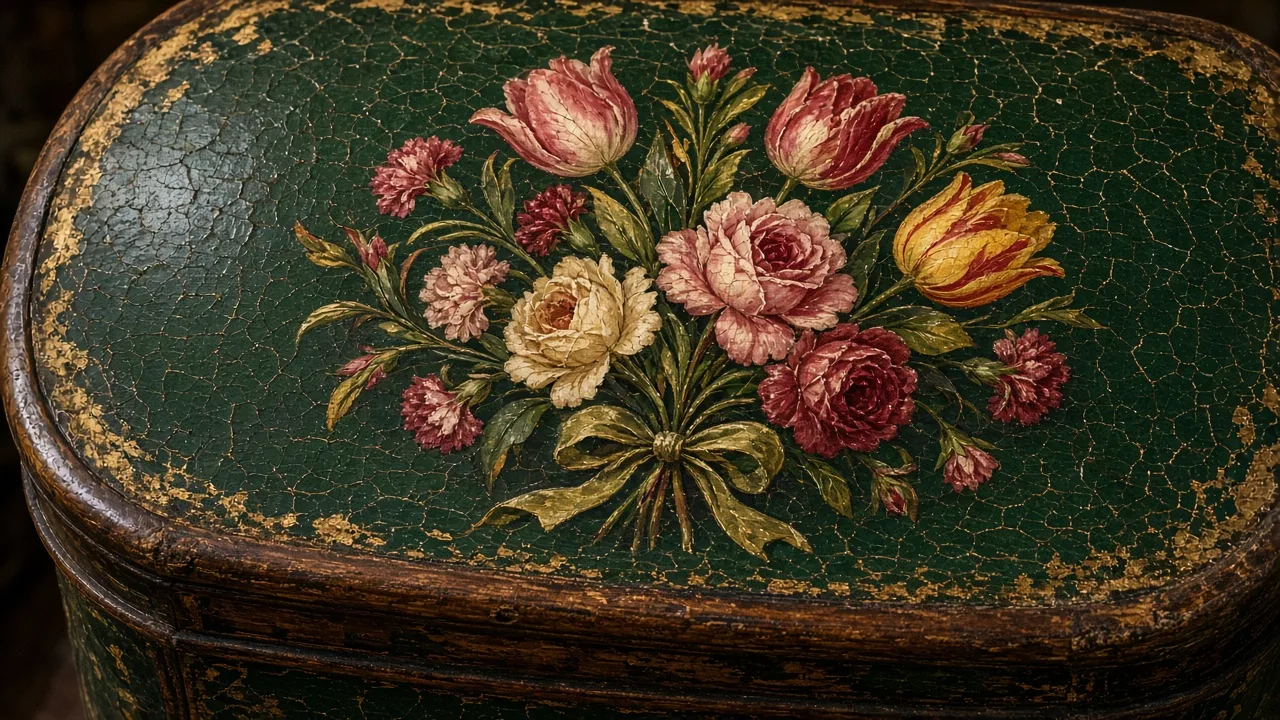
The language of Edirnekâri is flowers. Rose, carnation, tulip, hyacinth and chrysanthemum, known in Turkish decorative arts as the "şükûfe style", are the most common motifs. The flowers are painted on their own, inside a vase or as a bouquet tied with a ribbon in the middle. Fruit bowls and curling branches are also used often. Earlier examples feature Chinese cloud and rumi motifs. Geometric patterns, as the sources all emphasise, are quite rare.
Edirne Work Objects: From Chests to Writing Sets
Edirnekâri is part of both the home and the building. The areas of use listed by TDV and the Provincial Directorate of Culture and Tourism form a long list:
- Household items: Dowry chests, cupboard doors, bedding cupboards (yüklük), turban stands, stands for trays and candlesticks, wall clock cases, lamp stands
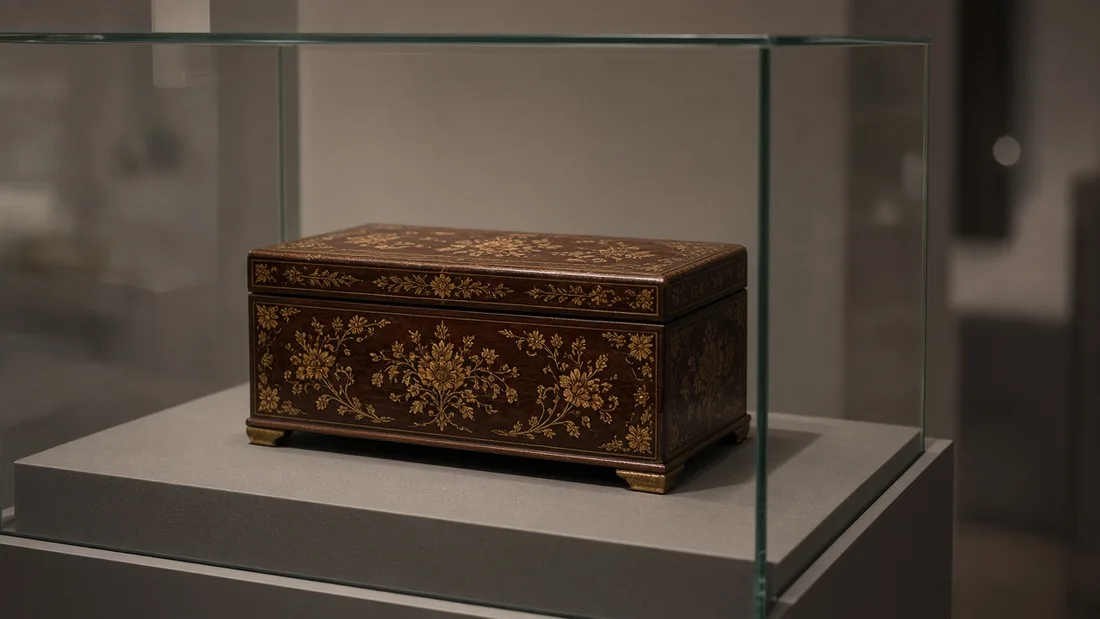
- Writing and reading: Writing sets, inkwells, writing and money drawers, Qur'an cases, Qur'an stands (rahle), book bindings
- Architecture: Ceilings, door leaves, window shutters and frames, banister posts, mosque galleries
On turban stands, gold-gilded flowers on a green ground were preferred. From the 19th century onwards, rococo-influenced plant motifs also appear on the ceilings of Edirne houses. This is why the fabric of a historic mansion in Edirne is worth reading together with Edirnekâri.
Where to See Edirnekâri: The Museums and Selimiye
In Edirne, the three main stops for seeing Edirnekâri are around the Selimiye Mosque.
| Stop | What you see | Note |
|---|---|---|
| Selimiye Mosque muezzin's gallery | Gold-leaf Edirnekâri painted decoration | On 12 marble columns; mind prayer times |
| Mihran Hanım Konağı (Mihran Hanım Mansion) | The ceiling of the historic room | The only mansion with Edirnekâri on its ceiling |
| Museum of Turkish and Islamic Arts | 18th-century writing and money drawers, an Edirnekâri bedding cupboard, dowry chests | Dârülhadis Madrasa in the Selimiye complex |
| Edirne Museum (Archaeology and Ethnography) | 18th–19th-century bedding cupboard and cupboard doors, tray stands | About 50 m from Selimiye's eastern gate |
The muezzin's gallery of the Selimiye Mosque, as described by Edirne Municipality, rests on 12 marble columns and, with its gold-leaf Edirnekâri painted decoration, is one of the finest examples of the classical period. The gallery was overhauled in a restoration that began in November 2021, preserving its original state. For visiting hours, see our Edirne Selimiye Mosque visiting hours article.
The Museum of Turkish and Islamic Arts is the continuation of the city's first museum, founded in 1925, and has carried this name since 1971. According to the Edirne Governorship, rooms 13 and 14 of the museum form the Woodwork Room. Here, 18th-century writing and money drawers, an Edirnekâri bedding cupboard and dowry chests are on display.
The Edirne Museum (Archaeology and Ethnography) opened on 13 June 1971. The bridal and circumcision room corner in the ethnography hall holds bedding cupboard and cupboard doors that are, in TDV's words, the finest examples of 18th–19th-century Edirnekâri. TDV counts the museum's writing drawers with inventory numbers 1283, 1286 and 1288 among the finest examples of their kind.
Both museums are run by the Ministry of Culture and Tourism, and their closing time for the 2026 tourist season was announced as 19:00. Hours may be shorter in winter; confirm the current hours on müze.gov.tr before you go. For the full list of the city's other museums, see our Edirne museums guide.
Edirnekâri Today: Protection, Courses and Masters
Edirnekâri is included in the Ministry of Culture and Tourism's Intangible Cultural Heritage (SOKÜM) Türkiye National Inventory. In the list announced by the Edirne Provincial Directorate of Culture and Tourism in 2015, Edirnekâri is counted among the city's elements in the national inventory, together with Kırkpınar, Hıdrellez, ebru (paper marbling), çini (tile art) and talik calligraphy.
In the records of the Turkish Patent and Trademark Office, however, there is no registered geographical indication under the name Edirnekâri. In 2021 the Edirne Chamber of Commerce and Industry announced that geographical indication work was also under way for Edirnekâri. The city's registered products include Edirne Badem Ezmesi (almond paste, No: 656) and Edirne Mis Meyve Sabunu (fruit-shaped soap, No: 452).
For those who want to learn the art, the main institutional options are:
- Edirne Olgunlaşma Enstitüsü (Maturation Institute, Ministry of National Education): In its Edirnekâri workshop, products such as panels, chests and paintings are made with traditional and original patterns.
- Edirne Halk Eğitimi Merkezi (Public Education Centre): Applications for courses that are opened or requested are made through e-Yaygın (e-Devlet). The centre's administrative building is opposite the Selimiye Mosque.
- Ministry of Culture and Tourism Public Cultural Education Courses: Edirnekâri is among the traditional handicraft branches opened on a master–apprentice model.
- Trakya University: Edirnekâri was taught at the university as an elective outside the main field. The Faculty of Fine Arts hosted an Edirnekâri exhibition of student work on 28 March–1 April 2019.
Course periods change every year; ask the relevant institution for the current schedule.
How to Recognise Real Edirnekâri: Tips When Buying Souvenirs
Not every box sold in the bazaars as "Edirne work" is handmade. For an informed purchase, look at these points:
- Brush marks: In handwork, the outlines of the motifs vary slightly in thickness. In a print or a sticker, the line looks flawless and the colour flat and single-layered.
- Layers and depth: Real Edirnekâri has light-to-dark tone transitions in the petals. Hold it to the light and you can make out the layers of paint.
- Lacquer surface: The surface should be glossy but look natural. A single thick coat of varnish that feels like plastic suggests mass production.
- Wood: Look at the edges and the inner surface. Sources state that solid woods such as walnut, linden, mulberry and chestnut were used. Pressed board is a sign of mass production.
- Motif language: Tulip, hyacinth, carnation, rose and bouquet compositions are classic. Unrelated patterns may be "Edirnekâri-inspired" but are not traditional.
- Registration claims: Edirnekâri does not yet have a geographical indication. If a product says "geographically indicated Edirnekâri", ask the seller for the source.
A handmade piece takes days of work; do not hesitate to ask the master which paints they use. For almond paste, fruit-shaped soap and other local products, our Edirne's historic bazaars article is a good place to start.
An Edirnekâri Route: Museum, Bazaar and a Break
A half-day Edirnekâri route starts at Selimiye: the muezzin's gallery, then the Museum of Turkish and Islamic Arts in the same complex and the Edirne Museum fifty metres away. In the afternoon you can browse for souvenirs in the Selimiye Arasta and the Ali Paşa Çarşısı (Ali Paşa Bazaar). For a Turkish coffee break between visits, take a look at our café in Kaleiçi, Edirne page.
Staying in Kaleiçi makes it easier to visit the museums at opening time in the morning. With our stay in Kaleiçi, Edirne, Selimiye is a 12–15 minute walk away. Our location in Kaleiçi, Edirne (Google Maps) is at İzmir Caddesi No: 18. For all our options, see our places to stay in Edirne page.
Frequently Asked Questions
What does Edirnekâri mean?+
Edirnekâri means "Edirne work". It is a decorative art in which flower motifs are painted onto wood, cardboard and leather surfaces with paint, gold leaf and lacquer. It got its name because it was first practised by Edirne's craftsmen. It is not a carpet type, and the name comes from the craftsmen of this city.
In which century did Edirnekâri emerge?+
The TDV Encyclopaedia of Islam places the technique between the 14th and 19th centuries. The Edirne Provincial Directorate of Culture and Tourism states that the art was developed in the second half of the 15th century. Its golden age was the 18th–19th centuries, under baroque and rococo influence. One source spreads the technique over several centuries, another puts its development in the later fifteenth century, and the richest period is the eighteenth and nineteenth. A single century on a caption is only part of that.
Which motifs are used in Edirnekâri?+
Tulip, hyacinth, carnation, rose and chrysanthemum are used most often. The flowers are painted on their own, in a vase or as a bouquet tied with a ribbon. Fruit bowls and curling branches are also common; geometric patterns are rare. Fruit and scrolling stems appear too; strict geometry is uncommon.
Does Edirnekâri have a geographical indication?+
No, there is no geographical indication registered under the name Edirnekâri in the Turkish Patent records. In 2021 the Edirne Chamber of Commerce and Industry announced that work in this direction was ongoing. The art is, however, included in the SOKÜM Türkiye National Inventory. Nothing is registered under this name yet, though the chamber has said work towards that continues, and the art sits on the national inventory. A seller calling it already protected is ahead of the register.
Where can you see Edirnekâri examples in Edirne?+
The main stops are the muezzin's gallery of the Selimiye Mosque, the Museum of Turkish and Islamic Arts in the Selimiye complex and the Edirne Museum (Archaeology and Ethnography) to the east of Selimiye. All three are within walking distance of each other. Do them as one outing.
Where are Edirnekâri courses held?+
The Edirne Olgunlaşma Enstitüsü has an Edirnekâri workshop. Applications for Edirne Public Education Centre courses are made via e-Yaygın. The Ministry of Culture and Tourism's master–apprentice courses also include an Edirnekâri branch; confirm the periods with the institution. The institute workshop, public-education enrolment and the ministry's master-apprentice line are the routes in. Confirm the term before you travel to Edirne, because a course is not running every week.
How can you tell handmade Edirnekâri?+
Look for brush marks in the outlines, light-to-dark tone transitions in the petals and whether the wood is solid. Flat, single-layered patterns with flawless lines are usually prints.
When do the oldest surviving Edirnekâri bookbindings date from?+
According to the TDV, the oldest surviving Edirnekâri bookbinding examples date from the reign of Murad III, 1574 to 1598. A lacquer album cover bearing the tughra of Ahmed III, inventory number 2653 in the Ahmed III Library at the Topkapı Palace Museum, carries the date 1727–28. In the 18th and 19th centuries, baroque and rococo patterns were added, and the writing drawers of that period are counted among the finest examples.
What are the three groups of Edirnekâri?+
The work is divided into carved, inlaid and painted pieces. Typical surfaces are wood, cardboard and leather, finished with earth pigments, gold leaf and lacquer. The Provincial Directorate of Culture and Tourism dates the art to the second half of the 15th century and gives it a history of about six centuries.
You may also like: Accommodation, Breakfast, Events.